Landmarks in Valletta
320 monuments in half a square kilometre, built by the Knights Hospitaller from the 1570s.
Valletta occupies a narrow peninsula of just over half a square kilometre between the Grand Harbour and Marsamxett Harbour, packed with roughly 320 monuments raised after the Knights Hospitaller began building the city in the 1570s. The oldest survivor of the group, Fort Saint Elmo, actually predates the city itself by two decades, having guarded the peninsula since 1552. The Maltese architect Girolamo Cassar shaped much of the new city in a restrained Mannerist idiom from 1573 onward. Later generations reworked and rebuilt: the cathedral's interior was recast in high Baroque in the following century, and grand masters kept replacing earlier structures with grander Baroque ones into the 1740s, layering styles within the same small walled area.
St. John's Co-Cathedral
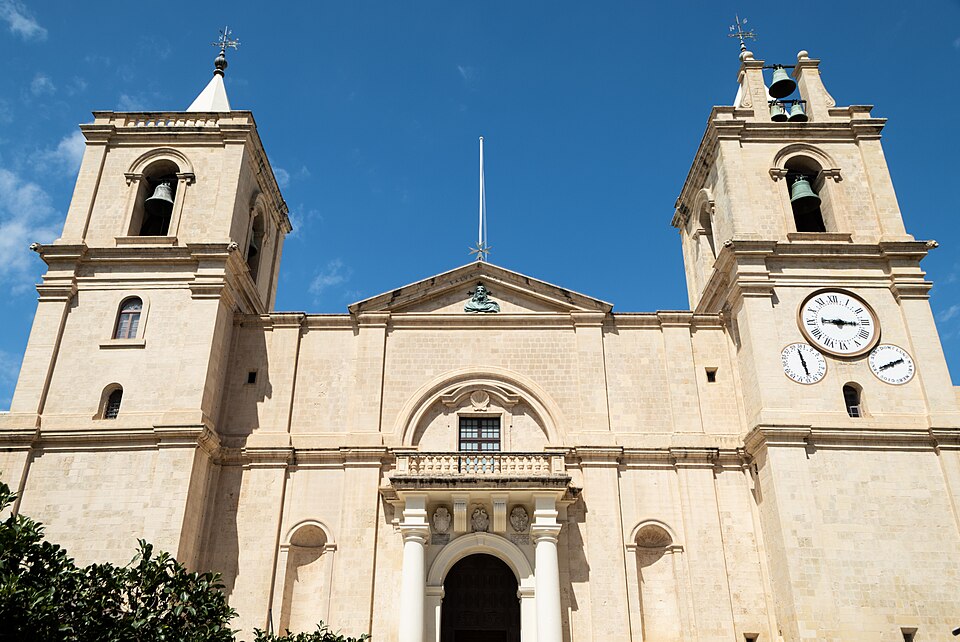
1573–1578 · Girolamo Cassar
Its interior was entirely redone in the 17th century by the painter Mattia Preti, turning a plainly built 1570s conventual church into one of the most densely worked examples of Baroque decoration anywhere in Europe.
This Catholic church was built by the Order of St John between 1573 and 1578, commissioned by Grand Master Jean de la Cassière as the order's conventual church and designed by the Maltese architect Girolamo Cassar, who shaped several of the city's other prominent buildings. In the 17th century its interior was redecorated in Baroque style by the painter Mattia Preti and others, work now considered among the finest high Baroque church interiors in Europe. It later gained co-cathedral status.
- Girolamo Cassar, its architect, also designed the Grandmaster's Palace and several other of the city's founding buildings.
Photo: Julian Lupyan (CC0)
Grandmaster's Palace
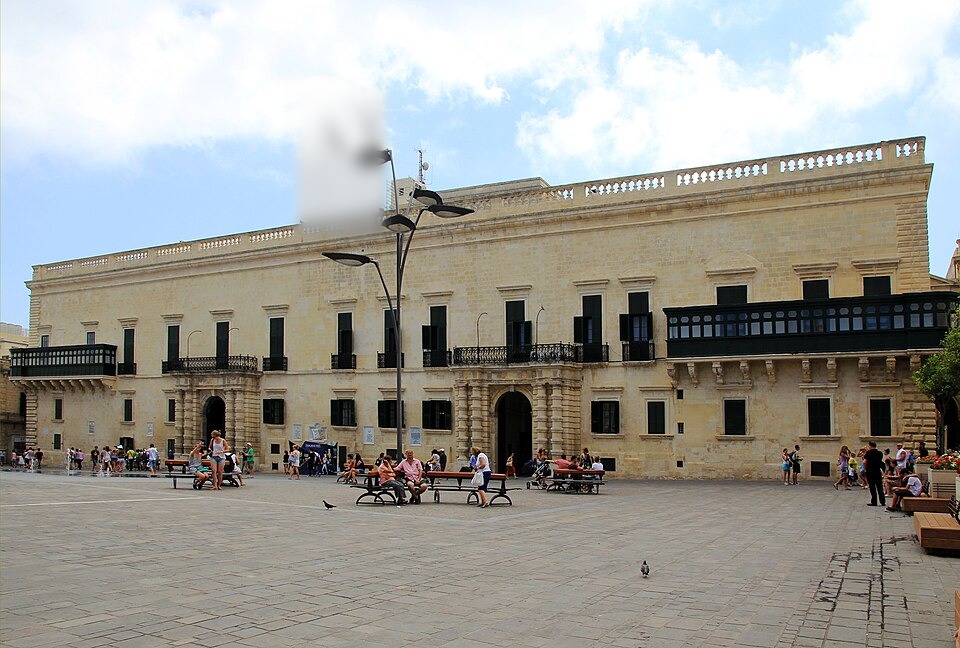
1574–18th century · Girolamo Cassar
Built in the Mannerist style from the 1570s, the palace's state rooms and armoury of historic weapons are now open as a museum after a major restoration completed in 2024.
Designed by Girolamo Cassar from 1574, this Mannerist palace was built for the Grand Master of the Knights Hospitaller, who ruled the island from 1530 to 1798, and grew over the following centuries. It became the National Palace under French rule, then the Governor's Palace and an occasional royal residence under the British from 1800. It housed the Parliament of Malta until 2015 and now holds the Office of the President, with its State Rooms and Armoury open to the public as a museum after a 2024 restoration.
- It was used as a residence by British sovereigns during their stays on the island.
- It housed the country's parliament right up until 2015.
Photo: Karelj (Public domain)
Fort Saint Elmo
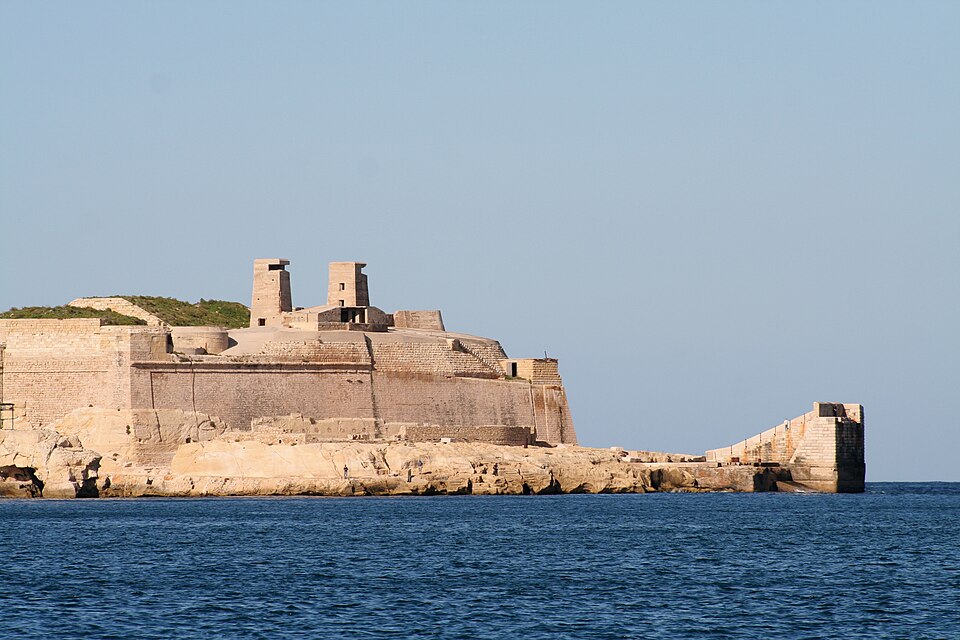
1552
A star-shaped bastioned fort sits at the tip of a peninsula between two harbours, positioned with two sister forts on the opposite shorelines to command both harbour entrances.
This star fort stands on the seaward shore of the Sciberras Peninsula, which divides Marsamxett Harbour from the Grand Harbour, and was built in 1552 to command the entrances to both, together with Fort Tigné and Fort Ricasoli on the opposite shores. It is best known for its role in the Great Siege of Malta in 1565, when it withstood a prolonged Ottoman assault before falling. It holds Grade 1 heritage protection.
- It shares the job of guarding the two harbour entrances with two other forts, Fort Tigné and Fort Ricasoli, built on the facing shores.
Photo: John Haslam (CC BY 2.0)
Auberge de Castille
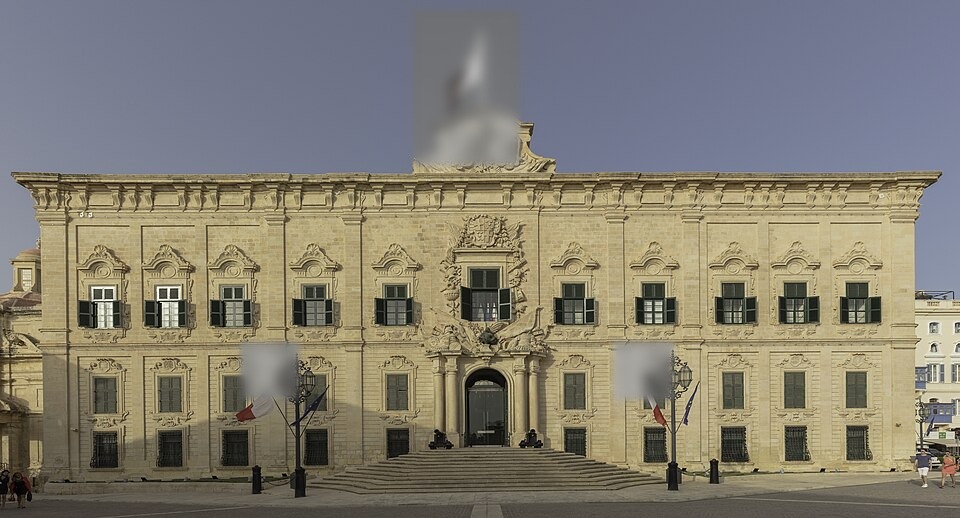
1744
An ornate Baroque facade completed in the 1740s crowns the highest point of the city, giving it commanding views over the neighbouring town and the Grand Harbour beyond.
This auberge, or lodging house, sheltered knights from the langue of Castile, León and Portugal within the Order of St John. The Baroque building seen today was raised in the 1740s under the magistracy of Grand Master Manuel Pinto da Fonseca, replacing an earlier 1574 building designed by Girolamo Cassar. It sits at the highest point of the city, close to the Upper Barrakka Gardens, overlooking the neighbouring town and the Grand Harbour, and carries Grade 1 heritage protection.
- The Baroque building standing today replaced an earlier 1574 structure by Girolamo Cassar, the architect behind several of the city's other founding buildings.
Photo: Diego Delso (CC BY-SA 4.0)
Fort St. Angelo
A bastioned fort in the Grand Harbour, headquarters of the Order of Saint John during the 1565 Great Siege of Malta. Reconstructed in the 1690s, it was garrisoned by the British from 1800 to 1979 and restored after World War II damage.
Ħal Saflieni Hypogeum
A Neolithic subterranean structure in Paola dating from the Saflieni phase, about 3300 to 3000 BC, thought to be a sanctuary and necropolis. It holds remains estimated at more than 7,000 people and is among the best-preserved examples of the Maltese temple building culture.
Basilica of Our Lady of Mount Carmel
A Carmelite minor basilica and one of Valletta's major churches, part of the UNESCO World Heritage Site covering the whole city. The present building was constructed between 1958 and 1981 on the site of a 16th-century church destroyed in World War II.
St George's Square
The principal urban square of Valletta, commonly called Palace Square because it faces the Grandmaster's Palace. It is bounded by Republic Street, Old Theatre Street, and Archbishop Street, and links south to Republic Square.
Tritons' Fountain
A fountain in Floriana with three bronze Tritons holding up a basin, one of Malta's most important Modernist landmarks. Designed by sculptor Vincent Apap and draughtsman Victor Anastasi and built between 1952 and 1959, its sculptural group dramatically collapsed on 1 March 1978.
Castellania
A former courthouse and prison on Merchants Street, built by the Order of St. John between 1757 and 1760. Designed by architect Francesco Zerafa, its interior includes former court halls and a statue of Lady Justice; the building now houses the health ministry.
Is-Suq tal-Belt
A 19th-century market hall, also known as the Covered Market, notable as the first building in Malta built mostly of iron. Severely damaged in World War II and long in decline, it was renovated in 2016–17 and reopened as a food market in January 2018.
Auberge d'Aragon
The only surviving auberge in Valletta with its original Mannerist design by Girolamo Cassar, built in 1571 for knights of the langue of Aragon. It served as a hospital in World War II and housed the Office of the Prime Minister from 1921–33 and 1947–72.
Inquisitor's Palace
The seat of the Maltese Inquisition from 1574 to 1798, originally a 16th-century courthouse in Birgu. A museum since 1966 and the National Museum of Ethnography since 1992, it is one of the few such palaces in the world open to the public.
San Anton Palace
The official residence of the president of Malta, originally built in the early 17th century as a country villa for Antoine de Paule. It was expanded into a palace after de Paule became Grand Master in 1623 and has been the presidential residence since 1974.
Royal Opera House
An opera house designed by English architect Edward Middleton Barry and erected in 1866. Destroyed by aerial bombing in 1942, its ruins were redesigned by Renzo Piano and reopened as a performance venue, Pjazza Teatru Rjal, in 2013.
Barrakka Lift
A lift built in 2012 on the site of an earlier lift that operated from 1905 to 1973. Set inside the ditch of Valletta's fortifications, it links Lascaris Wharf to the Upper Barrakka Gardens, giving access from the Grand Harbour to the city.
National Library of Malta
A reference library in Republic Square, founded in 1776 by Grand Master Emmanuel de Rohan-Polduc. Designed by architects Stefano Ittar and his son Sebastiano, it has been a legal deposit library since 1925 and holds the largest collection of Melitensia.
Auberge de Provence
An auberge built in the 16th century to house knights of the Order of Saint John from the langue of Provence. It now houses the National Museum of Archaeology.
Fort Ricasoli
The largest fort in Malta, built by the Order of Saint John between 1670 and 1698. It has been on the UNESCO World Heritage tentative list since 1998, seeing use through the 1798 French invasion and World War II before its 1960s decommissioning.
Old University Building
The original campus of the University of Malta, adjacent to the Church of the Jesuits, begun in 1595 as a Jesuit college. Established here in 1769, the University of Malta moved to a larger campus in the 1960s, though the building still houses university departments.
Statue of Queen Victoria
A marble statue of Queen Victoria in Republic Square, sculpted by the Sicilian artist Giuseppe Valenti, depicting the seated Queen wearing a shawl of Maltese lace. It was installed on 5 August 1891, replacing an earlier bronze statue of António Manoel de Vilhena.
Admiralty House
A palace originally built as two private houses in 1569–1570, rebuilt into a single residence in 1761–1763. From 1821 to 1961 it was the residence of the Commander-in-Chief of the British Mediterranean Fleet, and later housed the National Museum of Fine Arts until 2016.
History
The city was founded after the Great Siege of 1565, when the Knights Hospitaller withstood an Ottoman invasion and resolved to build a fortified new capital on the Sciberras peninsula, naming it for their Grand Master Jean Parisot de Valette. That peninsula was already defended by Fort Saint Elmo, built in 1552, and from 1573 the Maltese architect Girolamo Cassar laid out the new city's churches, palaces and auberges in a restrained Mannerist style. Later generations reworked and replaced those early buildings in Baroque, adding Neo-Classical and Modern buildings over the following centuries. The Second World War left lasting scars, destroying the Royal Opera House among other buildings. The dense historic core was recognised as a UNESCO World Heritage Site in 1980, and the city served as European Capital of Culture in 2018.