Landmarks in Phuket
Buddhist temple compounds and a marble-clad hilltop Buddha define this island's skyline.
Phuket's landmarks span roughly two and a half centuries in two different registers. Two are Buddhist temple compounds, or wats, founded well before tourism reshaped the island: one traced to around 1750, the other established in 1837 and later absorbed into a market of its own. Both belong to an older, inland pattern of religious building that predates the shift from tin and rubber to visitors. The newest landmark breaks that pattern: a colossal seated Buddha statue, faced in marble over concrete, raised on a forested hill above Chalong Bay only in the last two decades. Where the temples read as lived-in sites folded into daily commerce, the statue is a single deliberate monument, still being enlarged years after construction began.
Wat Chalong
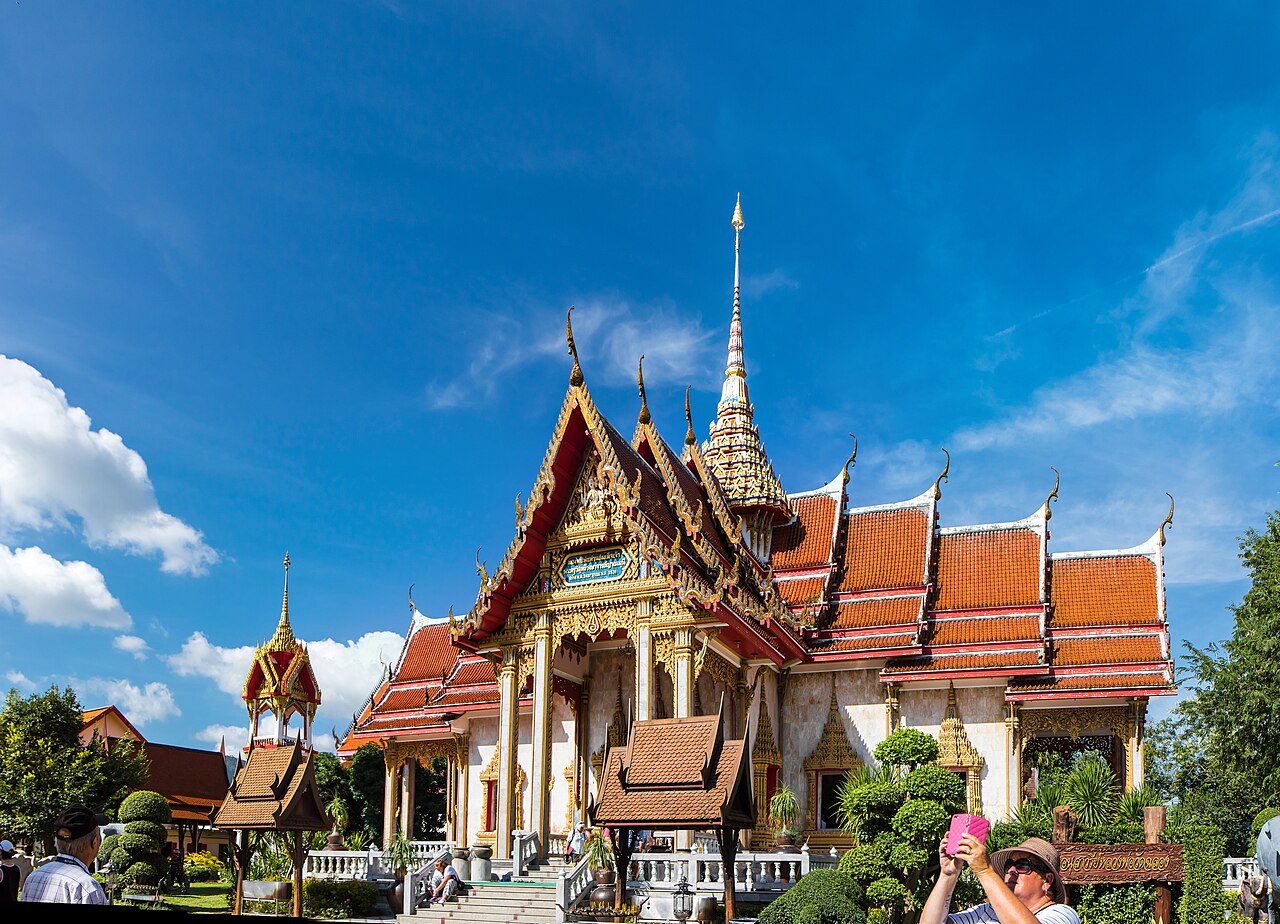
1837
Distinguished less by a single silhouette than by the market that spills directly into its grounds: stalls selling trinkets crowd up to the entrance of the main prayer hall, where monks store some of the merchandise, while amplified pop music and advertisements for Thai boxing carry across the compound.
Wat Chalong, officially Wat Chaiyathararam, is the most prominent of twenty-nine Buddhist temples on the island, founded in 1837 in what is now the Chalong subdistrict. It is dedicated to two monks, Luang Pho Chaem and Luang Pho Chuang, who led local resistance to a rebellion by Chinese labourers in 1876 and used their knowledge of herbal medicine to treat the wounded. Registered as a Thai historic site, its grounds today host a market selling trinkets alongside the working prayer hall.
- Its market spills directly into the temple grounds, complete with amplified pop music and advertisements for Thai boxing.
- Monks assist the trinket trade by storing boxes of merchandise inside the main prayer hall.
Photo: Максим Улитин (CC BY 3.0)
Phuket Big Buddha
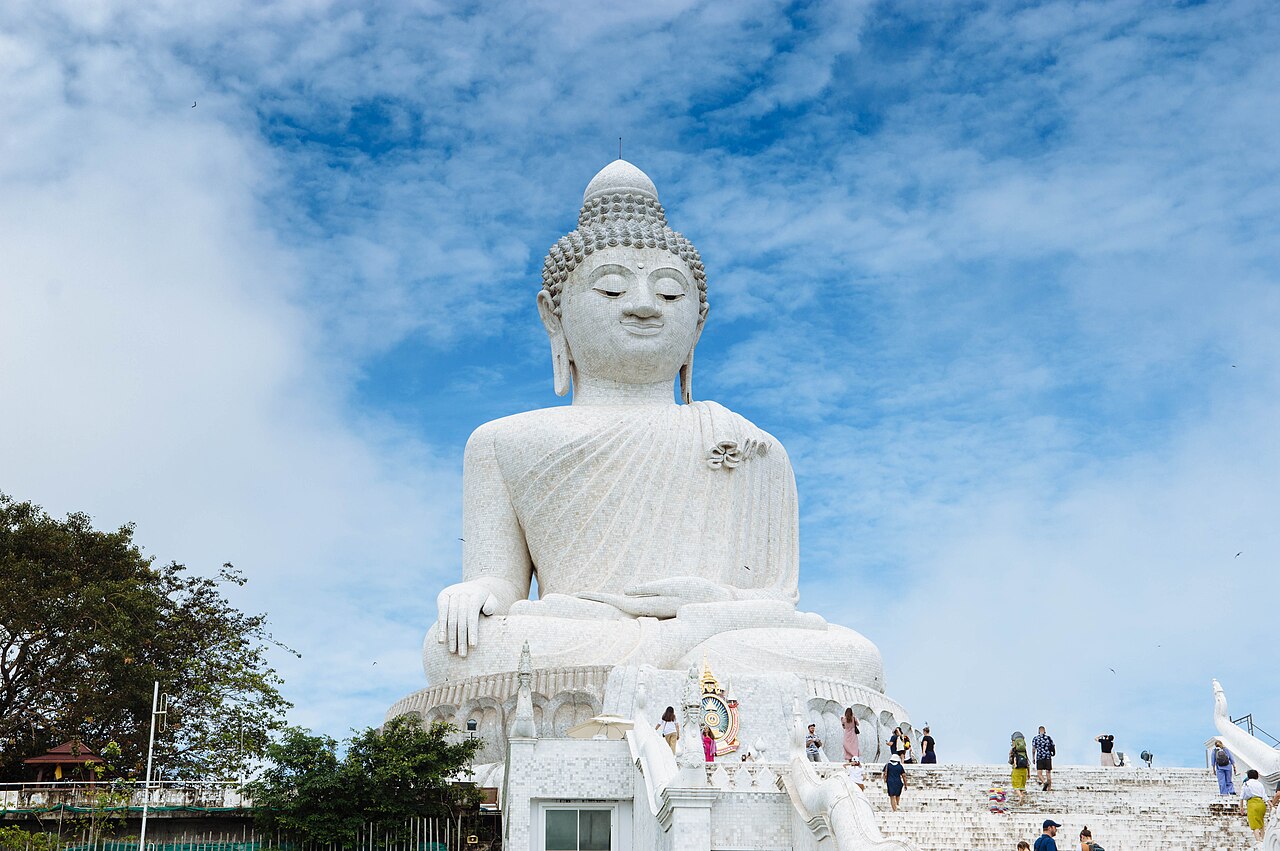
2004
A gleaming white, seated Buddha figure roughly 45 metres tall and over 25 metres wide, its surface faced in Burmese marble over a concrete core, set on a hilltop and turned to look out over the bay below.
Known officially as Phra Phutta Ming Mongkol Eknakiri, this seated Buddha sits atop Nakkerd Hill facing Chalong Bay as the principal image of the Wat Kitthi Sankaram temple. Construction began in 2004, funded mainly by donations, and had reached only about 80 percent completion by 2017, its base still being enlarged years after work started. In 2008 the Supreme Patriarch of Thailand declared it the province's Buddhist Treasure. It ranks as the third-tallest statue in the country.
- It is the third-tallest statue in Thailand, behind only the Great Buddha of Thailand and Luangpho Yai.
- Its base was still being expanded more than a decade after construction began in 2004.
- Trainees from a nearby Muay Thai camp traditionally finish tryouts with a punishing run up the hill it stands on.
Photo: Subhrajyoti07 (CC BY-SA 4.0)
Wat Phra Thong
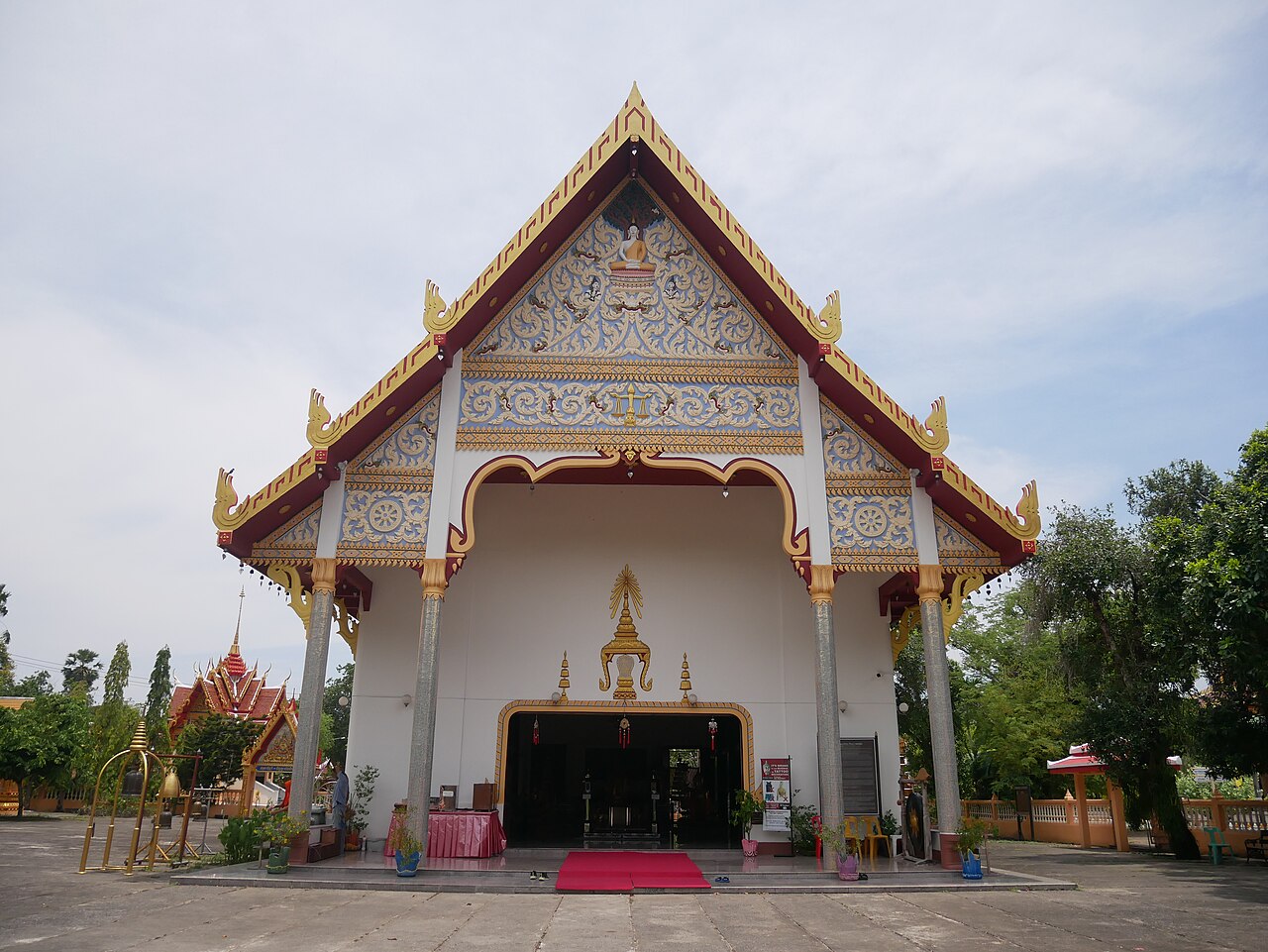
1750
As a wat, it follows the temple-and-monastic-quarters layout common to Thai Buddhist compounds, though no further distinguishing detail about its buildings or setting is recorded in the sources gathered here.
Wat Phra Thong is a Buddhist temple in Phuket province with a history reaching back to around 1750, making it one of the island's older religious foundations. Beyond its founding period and its classification as a wat, the standard term for a Thai Buddhist monastery compound, no further record of its dedication, builders or architecture survives in the material gathered for this entry.
Photo: กสิณธร ราชโอรส (CC BY-SA 4.0)
Phuket FantaSea
A Thai nighttime cultural theme park on Phuket, covering 60 acres, opened to the public on 20 December 1998. Built at a cost of over 3,500 million baht, it includes a Thai cultural theatrical show, a buffet restaurant and a shopping street.
History
Long before tourism, Phuket's economy rested on tin and rubber, and its position on a shipping route between India and China put it in the logs of Portuguese, French, Dutch and English vessels, though no European power colonised it. The island's older temples belong to that period: Wat Phra Thong dates to around 1750, and Wat Chalong, founded in 1837, grew in local importance after two of its monks organised medical care for people wounded while putting down a rebellion by Chinese labourers in 1876; a market has since spread into its grounds. The newest landmark reflects the later tourism era instead. Phuket Big Buddha, faced in Burmese marble over concrete on Nakkerd Hill, began construction in 2004 funded mainly by donations, its base still being expanded more than a decade later, a reminder of how recent this addition to the skyline actually is.