Landmarks in Bangkok
River temples and a walled palace line the centre; marble halls rise inland, built later.
Bangkok's principal landmarks sit close together on and around Rattanakosin Island, the stretch of the Chao Phraya River chosen as the new royal centre in 1782. Within a short distance stand a walled palace complex, two of the city's oldest temple compounds, and a swing-shaped ritual structure from the same founding decades. Materials and styles shift with period: the brick, stucco and gilded spires of the Rattanakosin era give way, a few kilometres inland in Dusit, to white marble and Renaissance Revival stonework added during a later phase of royal building. Across the river, a single-spire temple traces its origins to the mid-seventeenth century, older than the royal district itself, though its landmark tower was largely rebuilt long after.
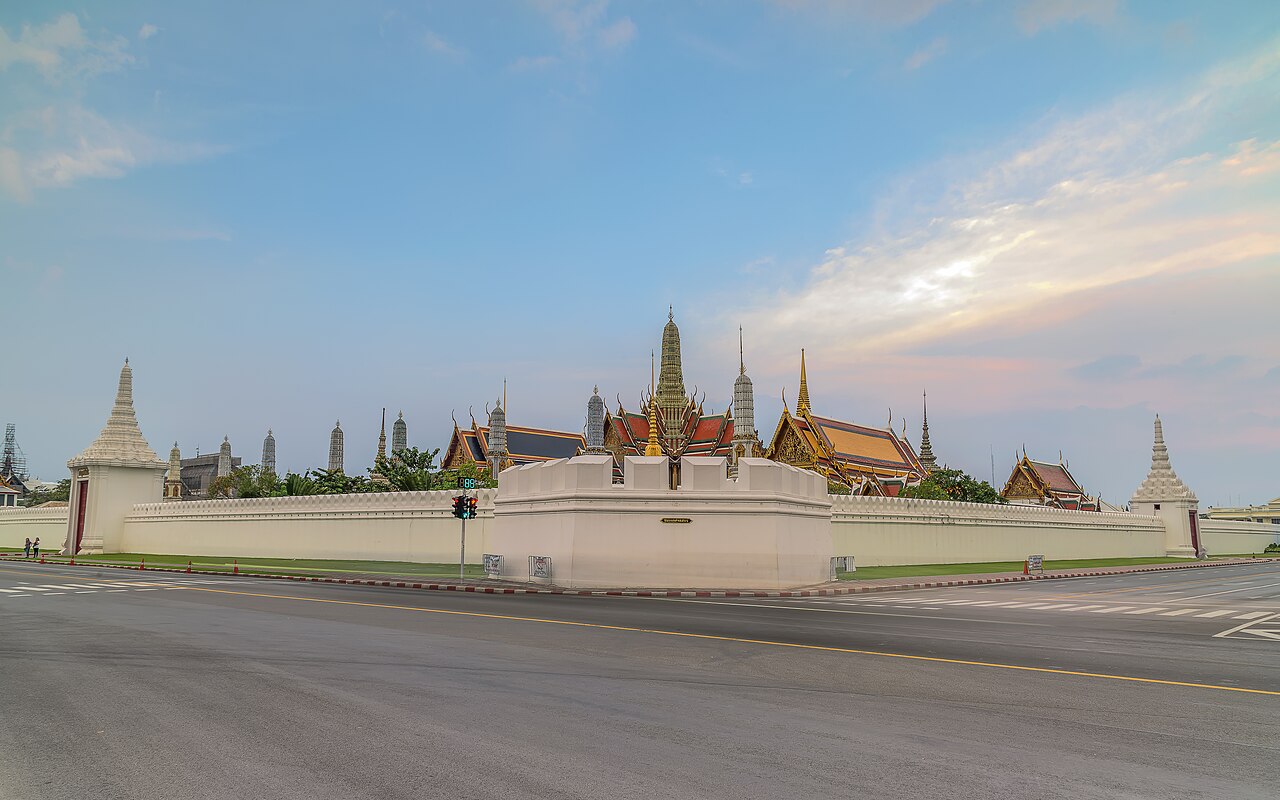
Grand Palace
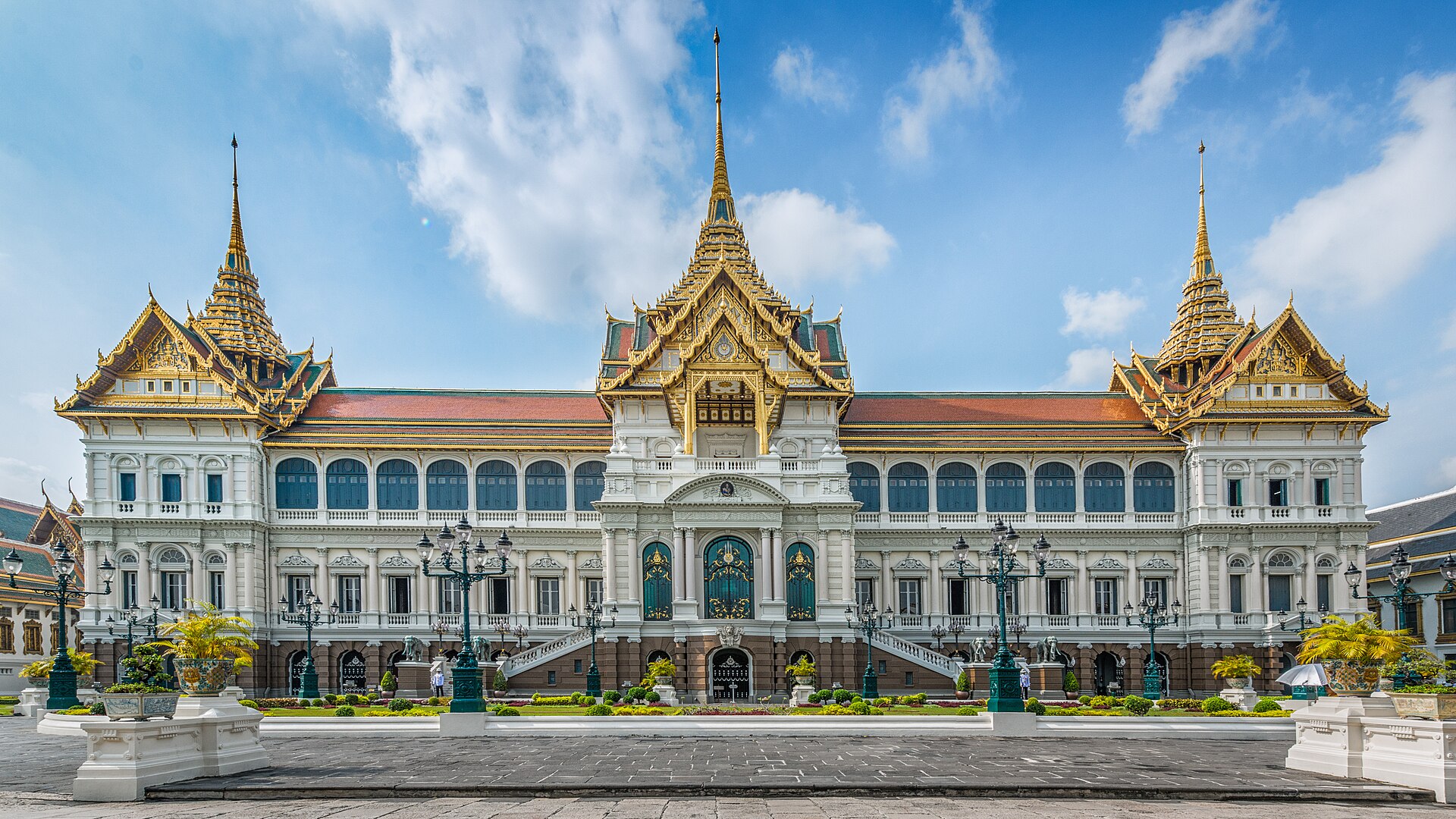
1782
Encloses a mix of Thai-style temple and palace buildings alongside sections built in a Western architectural idiom, all set within one long perimeter wall.
Construction began in May 1782, when a newly enthroned monarch moved the capital across the river and ordered a walled compound built to serve as royal residence and seat of government. Later reigns added buildings within the walls, particularly in the late nineteenth century. The king, his court and the government were based here until 1925; after the monarchy became constitutional in 1932, the compound stopped being a permanent residence but is still used for state ceremonies and draws millions of visitors a year.
- The king, his court and the entire government lived and worked inside the walls until 1925.
- The site draws over eight million visitors a year, despite its formal registration as a historic site having been declined.
Photo: Andy Marchand (CC BY-SA 3.0)
Wat Arun
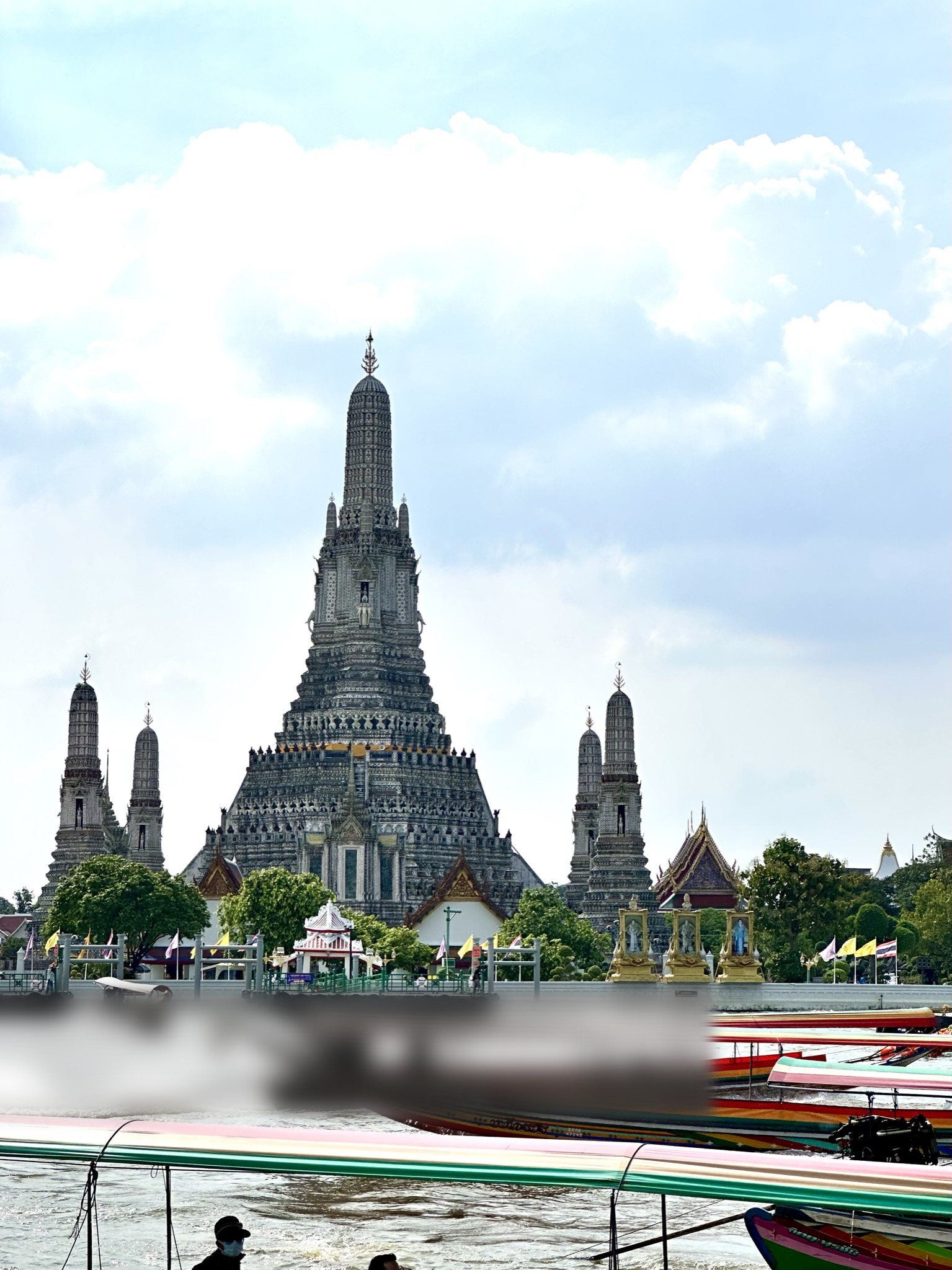
1656
A single tall, tapering central spire rises above the surrounding temple halls right at the water's edge — the most rebuilt and most distinctive part of the site, added long after its founding.
The temple takes its name from a deity associated with the dawn and stands on the river's west bank, facing the old royal district across the water. Part of the site dates to at least the seventeenth century, but the tall central spire recognised today was built in the early nineteenth century, over two successive reigns. Its design layers Hindu and Buddhist symbolism onto local temple tradition, reflecting the mixed influences absorbed by the city's early religious architecture.
- Its landmark spire was not part of the original temple; the structure seen today was largely built in the early nineteenth century, under two successive reigns.
- It is named after a Hindu deity linked to the light of dawn, despite being a Buddhist temple.
Photo: Slyronit (CC BY-SA 4.0)
Wat Pho
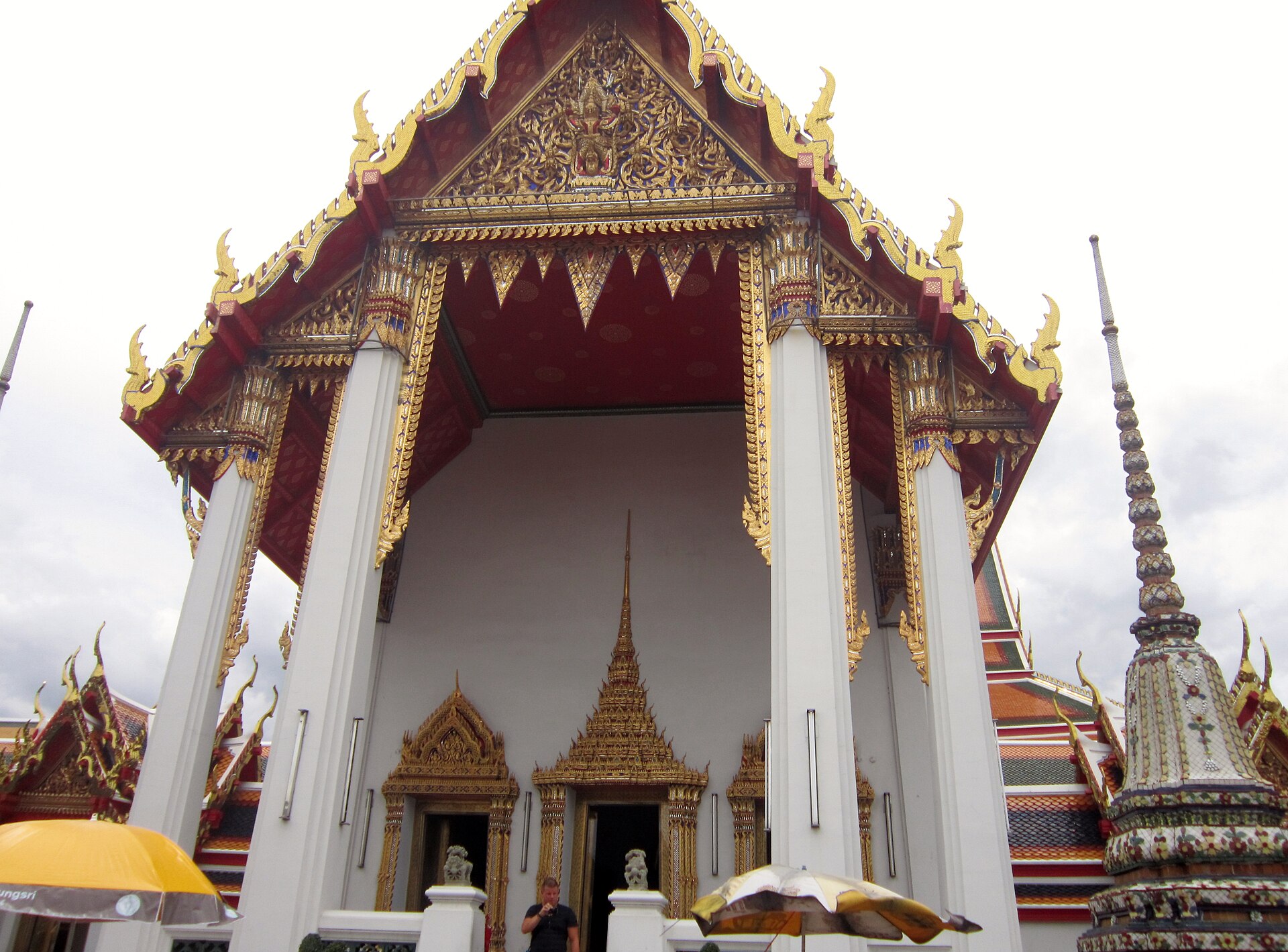
1788
Recognisable from outside by tall chedis and several temple halls inside a walled compound directly beside the former palace grounds; the reclining Buddha the temple is best known for is kept indoors, out of view from the exterior.
The temple stands on the same river island as the Grand Palace, immediately to its south, and ranks among the six temples classed at Thailand's highest grade of royal temple. It was rebuilt on an earlier temple site by the founding king of the ruling dynasty and later expanded and renovated under a subsequent reign. It holds the country's largest collection of Buddha images, including a reclining figure 46 metres long, and a school of traditional medicine still operates on the grounds.
- Its reclining Buddha figure measures 46 metres long, the largest in the temple's collection of Buddha images.
- Inscriptions placed around the complex for public instruction have been recognised by UNESCO's Memory of the World programme.
- A school of traditional medicine still operates within the temple grounds.
Photo: Michelle Maria (CC BY 3.0)
Wat Benchamabophit
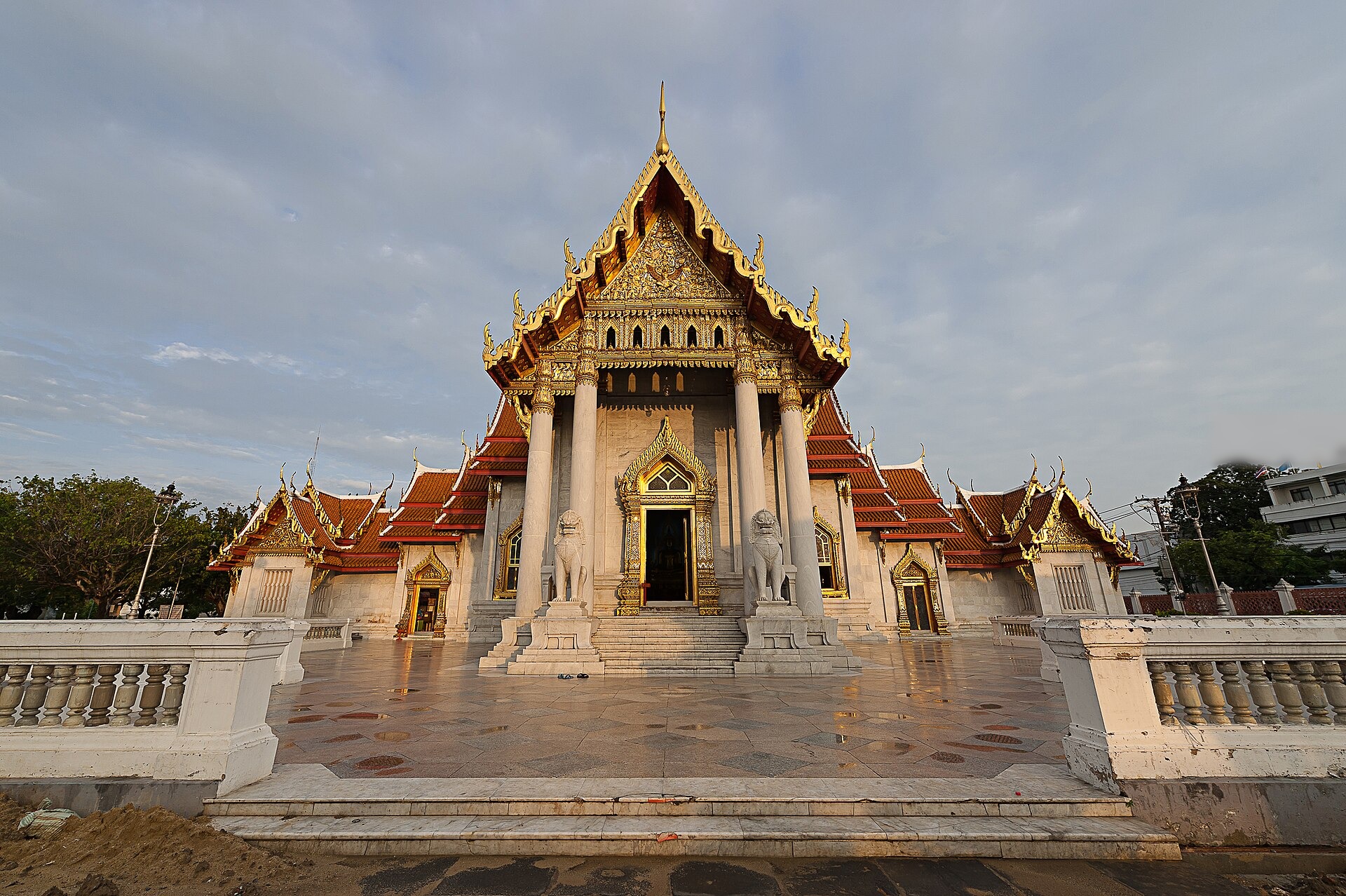
1911 · Narisara Nuwattiwong
Clad almost entirely in white marble, with steeply tiered roofs, tall gables and elaborate finials — a use of stone that sets it apart from the brick and stucco of most other temples in the city.
Completed in 1911 to a design by Narisara Nuwattiwong, the temple is built almost entirely of white marble, which gave rise to its popular English name, the Marble Temple. Its composition of high gables, multi-tiered roofs and elaborate finials exemplifies Bangkok's ornate temple style, while its layout and decoration blend Thai religious tradition with European architectural influence from the reign in which it was built. It remains one of the city's most visited religious sites.
- Its popular English name, the Marble Temple, comes directly from being built almost entirely in white marble.
Photo: Preecha.MJ (CC BY-SA 4.0)
Democracy Monument
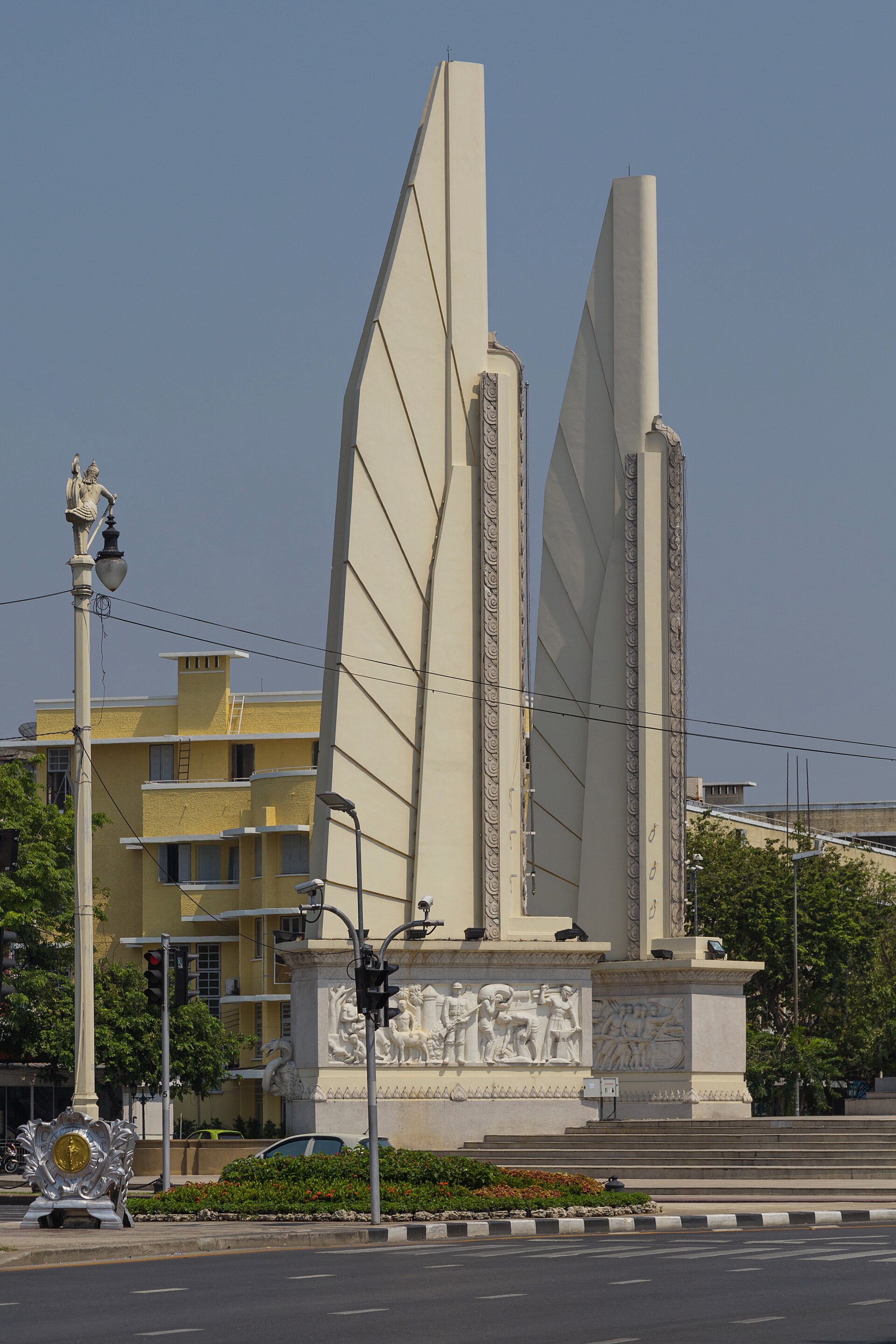
1939
Stands alone at the centre of a large traffic circle on a broad, straight avenue, with open road on every side and no other structure sharing the roundabout.
The monument occupies a traffic circle at the intersection of two roads on one of the city's principal avenues, roughly midway between a former royal cremation ground and another well-known temple. It marks the shift from absolute to constitutional monarchy and was completed in 1939. Two metro lines, once built, are planned to serve the site directly, at a station that will carry the monument's name.
- A future metro station named after the monument is planned to be served by two separate subway lines once they are built.
Photo: Marcin Konsek (CC BY-SA 4.0)
Ananta Samakhom Throne Hall
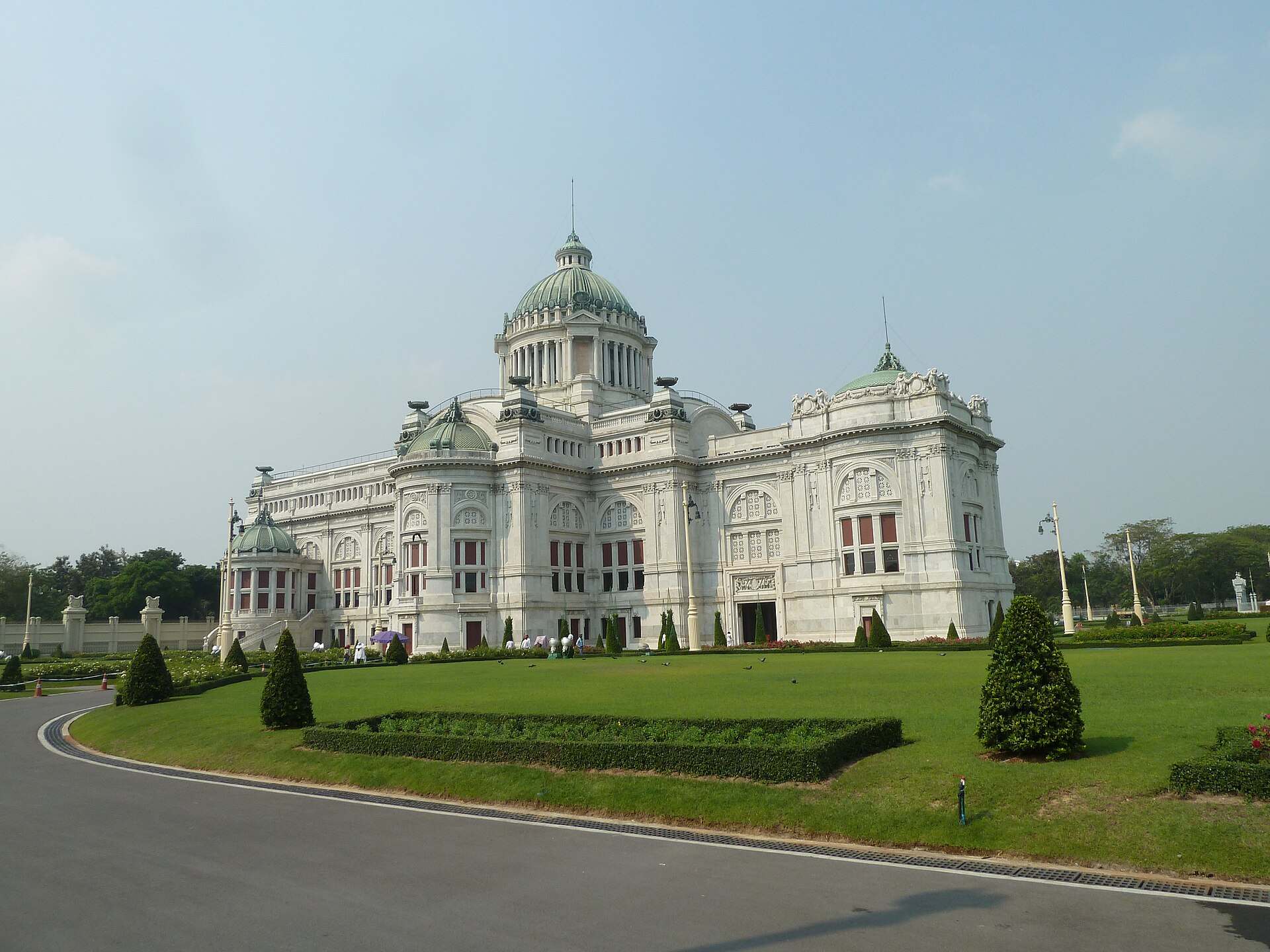
1915 · Mario Tamagno
Built in a European Renaissance Revival style rather than a traditional Thai temple form — a pale stone hall standing within a palace complex, still used occasionally for state occasions.
Commissioned in 1908 as a royal reception hall within a palace complex, the building was not finished until 1915, five years after the death of the monarch who ordered it. It was designed by Mario Tamagno in a Renaissance Revival style unusual among the city's royal buildings and is now used only occasionally for state functions. Until it closed indefinitely in October 2017, part of the building operated as a museum displaying royally sponsored handicrafts.
- Construction outlasted the monarch who commissioned it: work continued for five years after his death in 1910.
- Until an indefinite closure in October 2017, part of the building operated as a public museum of royally sponsored handicrafts.
Photo: deror_avi (CC BY-SA 3.0)
Giant Swing
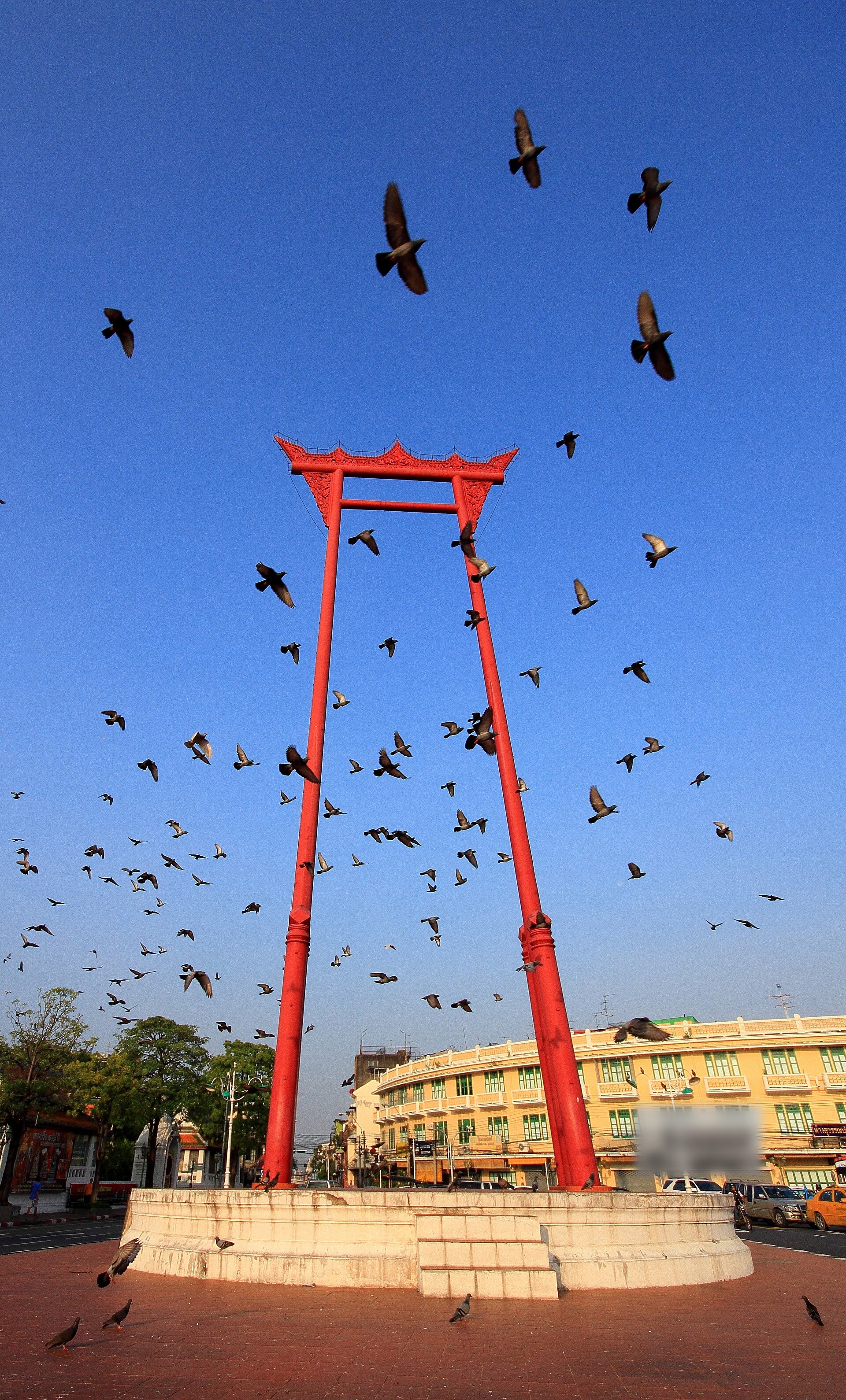
1784
A single freestanding swing frame roughly 21 metres tall, standing in an open plaza in front of a temple — its height and shape, rather than any surrounding building, are what set it apart.
Standing about 21 metres tall, the structure once held a wooden swing used in a Brahmin ceremony performed before a temple; the ritual is no longer held, and the structure survives today as a landmark and tourist attraction. It stands directly in front of the temple and before a royal Brahmin office building tied to the same religious tradition, in a district named after the swing itself.
- The ceremony once performed here drew on the recitation of Tamil devotional hymns, an Indian religious tradition embedded in a local royal ritual.
- The swinging ritual it was built for is no longer performed; the structure now survives only as a landmark.
Photo: Yakuzakorat (CC BY-SA 3.0)
Wat Phra Kaew
1783
The ordination hall's roof is covered in blue, yellow and orange glazed tiles, its gable ends carved with a Hindu deity riding a mythical half-man, half-bird creature that grips a serpent in each hand; a low wall studded with small spired pavilions holding gilded boundary stones encloses the hall.
The complex stands within the walls of a former royal palace, commissioned in 1783 by Rama I, the first king of the Chakri dynasty, and modelled partly on a temple that had served an earlier capital's palace. Unlike an ordinary monastery, it keeps no resident monks; those who perform rites here are invited from elsewhere and leave afterwards. Its statue, moved from a temple across the river, was installed in 1785 and is venerated as the country's palladium. Rama III ordered a major renovation of the exterior in 1831, and the site remains the setting for major state ceremonies today.
- The venerated statue at the centre of the complex was captured from Vientiane, Laos, in 1779 and kept at a temple on the opposite riverbank before its ceremonial transfer here in 1785.
- Although built inside a royal palace, the temple houses no living quarters for monks; those performing rituals are invited from other temples and leave once the rite is finished.
- The gold garments draped over the statue are ceremonially changed three times a year to mark the change of season, a rite performed by the king or a royal appointee.
Photo: Nawit science (CC BY-SA 4.0)
Erawan Shrine
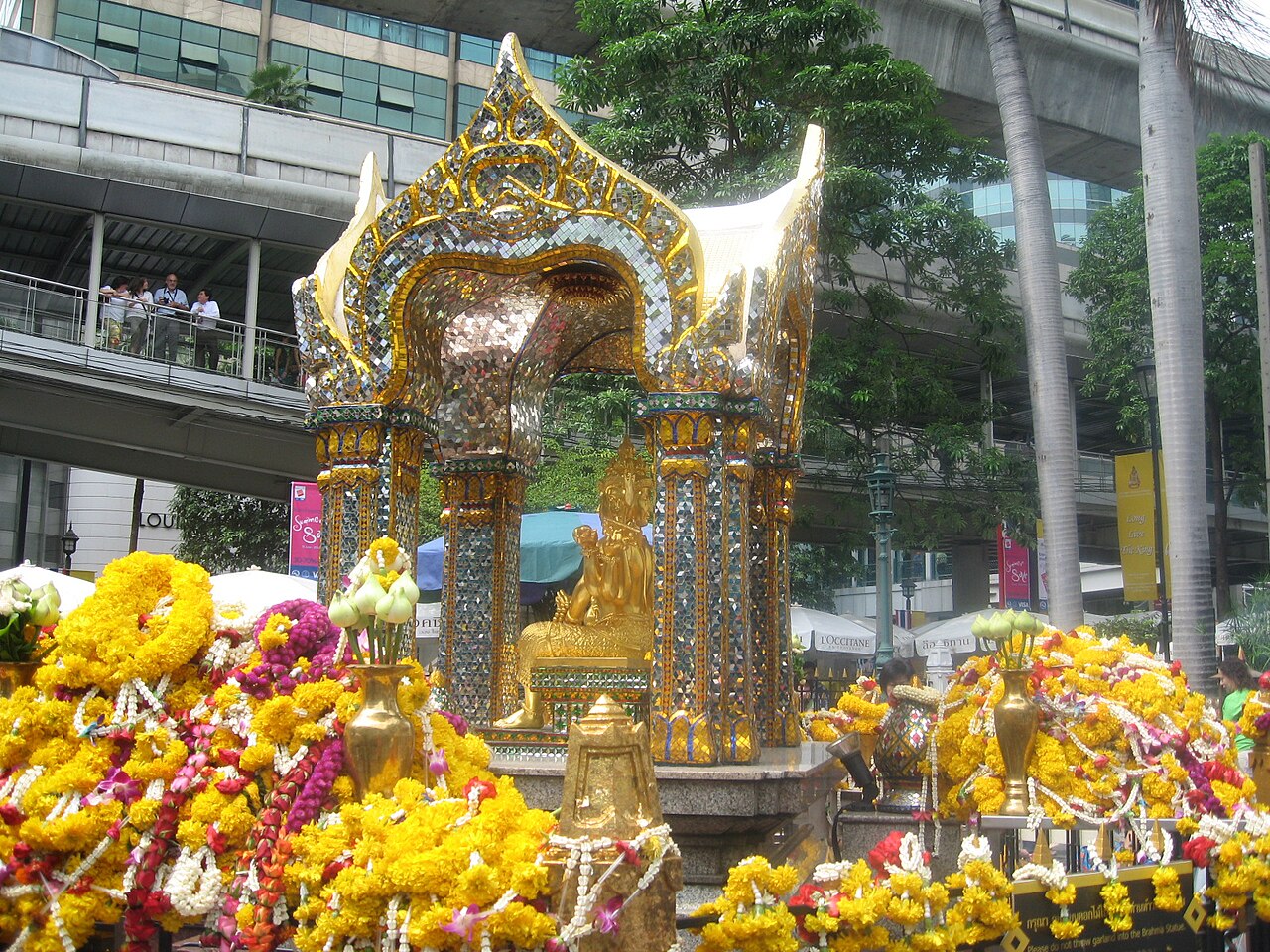
1956
The gilded image at the centre of the shrine has four faces and six arms and sits enthroned in an open-air pavilion at a busy street corner ringed by shopping malls and hotel towers; costumed dancers are sometimes hired to perform beside it in fulfilment of a granted wish.
An astrologer's advice shaped the shrine's origin: built in 1956 as part of the government-owned Erawan Hotel after construction there was plagued by cost overruns, injuries and a lost shipload of marble, blamed on the site's foundation being laid on the wrong date. The Fine Arts Department designed and cast the original statue of Phra Phrom, a Thai form of the Hindu god Brahma worshipped chiefly as a guardian spirit. That statue was destroyed by a hammer-wielding man in 2006; the current, visually identical statue, installed the same year, incorporates some of its fragments.
- The man who destroyed the original statue with a hammer in 2006 was beaten to death by bystanders soon afterward.
- The replacement statue was installed on 21 May 2006 at the exact moment the sun stood directly overhead.
- A duplicate of the statue, cast in the same mould entirely in metal, is kept at the National Museum of Thailand for safekeeping.
Photo: Terence Ong (CC BY 2.5)
Wat Saket
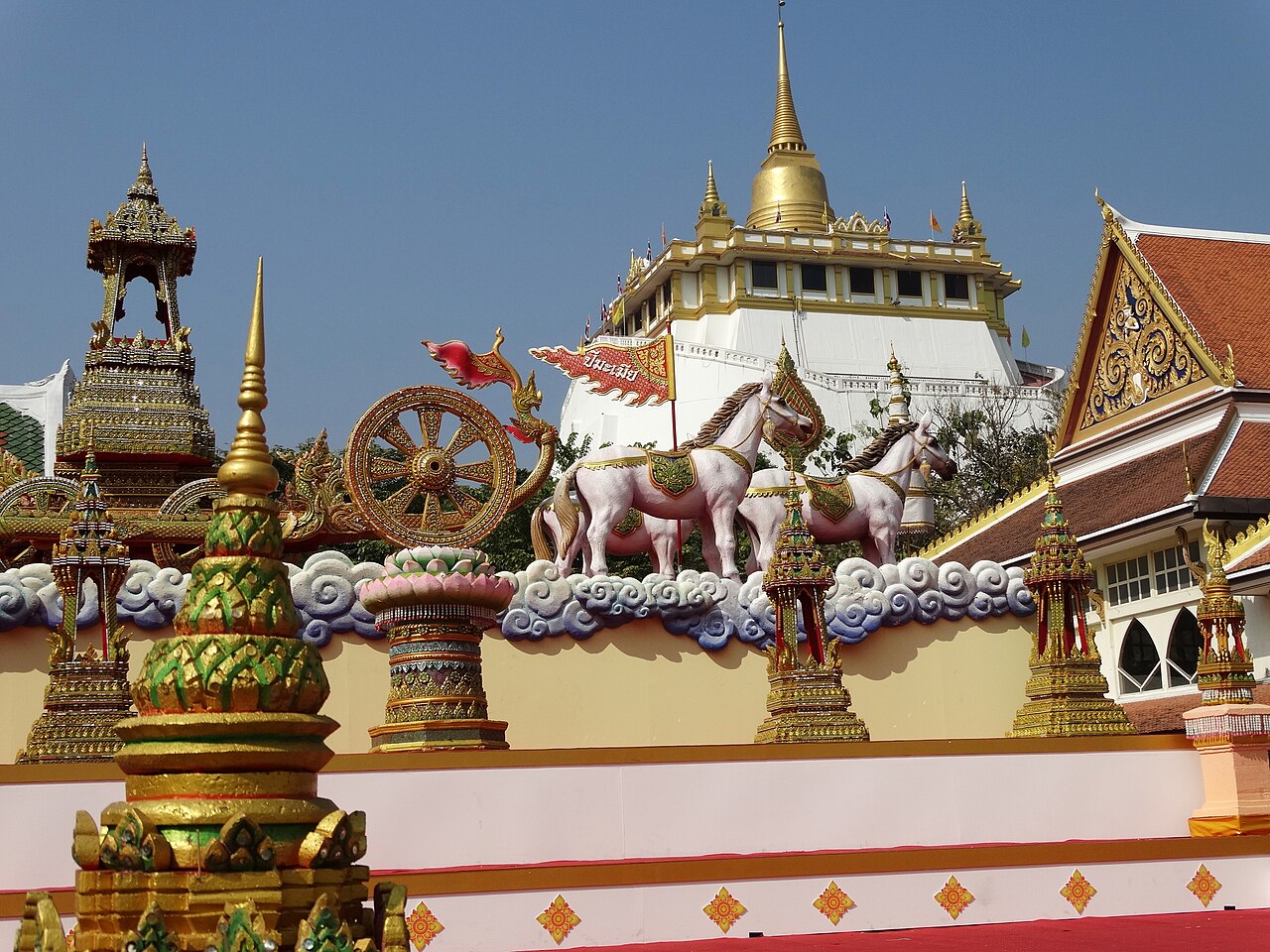
A tree-covered artificial hill rises within the compound, its irregular, rounded profile the result of a collapsed, abandoned construction rather than deliberate design; a small chedi sheathed in gold sits at its summit, and concrete retaining walls added in the 1940s ring its base to halt erosion.
The temple dates to the Ayutthaya period, when it was known as Wat Sakae. After Bangkok became the capital, Rama I renovated it and gave it its present name, meaning 'to wash the hair', recalling his stop here to bathe after a military campaign. Its best-known feature, an artificial hill crowned with a small gold-covered chedi, began as a giant chedi commissioned by Rama III that collapsed under its own weight during construction; the mound was later completed as a chedi under Rama IV and Rama V, and a relic of the Buddha brought from Sri Lanka was enshrined inside.
- The hill's grassy mound was for a time used as a lookout post by soldiers watching for approaching enemy armies, before its still-unfinished chedi was completed decades later.
- During a severe 1820 cholera outbreak that killed more than 30,000 people in the city, unburied corpses left in the temple grounds drew flocks of vultures, giving rise to a saying that entered popular speech.
- Every November, a long red cloth is carried up the hill in a candlelight procession and wrapped around the chedi at its summit, a tradition observed since the reign of Rama V.
Photo: Adam Jones (CC BY-SA 2.0)
Hua Lamphong Railway Station
The former central railway station of Bangkok, in Pathum Wan district, operated by the State Railway of Thailand. It served as the country's railway hub until long-distance trains moved to the new Krung Thep Aphiwat Central Terminal in 2023.
Wat Suthat
A first-class royal temple in the Inner Rattanakosin area, distinguished by the Giant Swing standing in front of it. Construction began under King Rama I in 1807 and continued through the reigns of Rama II and Rama III, who completed it around 1847-1848.
National Museum
The main branch of Thailand's National Museums, occupying the former palace of the vice king between Thammasat University and the National Theater. Established in 1874 by King Chulalongkorn to display his father's royal collections, it is one of the largest museums in Southeast Asia.
Art and Culture Centre
A contemporary arts centre in the Siam area, hosting art, music, theatre, film and design events alongside cafes, commercial galleries and an art library. Annual visitors rose from 300,000 in its opening year of 2007 to 1.7 million by 2017.
Mandarin Oriental
A five-star hotel on the Chao Phraya River, whose original structure opened in 1876 as The Oriental, the first hotel built in Thailand. It is now one of two flagship properties of the Mandarin Oriental Hotel Group.
Golden Buddha
A 5.5-tonne solid gold seated Buddha statue at Wat Traimit, hidden for almost 200 years under stucco to conceal its value. The gold was revealed in 1955 when the plaster chipped during a relocation, and it is recognised as the world's largest solid gold sculpture.
Lumphini Park
A 57.6-hectare park regarded as the first public park in Bangkok and Thailand, with an artificial lake, boat rentals and jogging paths around 2.5 kilometres long. It is bordered by Witthayu, Rama IV and Ratchadamri roads and gave rise to the Lumpinee Boxing Stadium.
Victory Monument
A military monument erected in June 1941 to commemorate the Thai victory in the Franco-Thai War, standing at the center of a traffic circle in Ratchathewi District. It has since become a regular gathering point for protests, alongside the Democracy Monument.
Rama VIII Bridge
A cable-stayed bridge over the Chao Phraya River, built from 1999 to 2002 to ease traffic on the nearby Phra Pinklao Bridge. Its asymmetrical design uses a single inverted-Y pylon and an 84-cable, 300-metre span, among the largest of its kind when completed.
Sanam Luang
A 74.5-rai open field in front of Wat Phra Kaew and the Grand Palace, in the historic Phra Nakhon District. Once known as Thung Phra Men, the royal cremation ground, it held royal cremation pyres between the Royal Palace and the Front Palace.
Vimanmek Mansion
A former royal villa within the Dusit Palace complex in Dusit District. As of 2019 it had been dismantled for foundation repairs, with rebuilding planned upon completion.
Assumption Cathedral
The principal Catholic church of Thailand, on Oriental Avenue in the Bang Rak District and seat of the Archdiocese of Bangkok. It hosted both papal visits to the country, by Pope John Paul II in 1984 and Pope Francis in 2019.
Sri Maha Mariamman Temple
A South Indian-style Hindu temple on Silom Road, built in 1879 by Vaithi Padayatchi, a Tamil Hindu immigrant. It is also known locally as Maha Uma Devi Temple or Wat Khaek.
Wat Bowonniwet Vihara
A major Buddhist temple established in 1824 by viceroy Mahasakti Pol Sep under King Rama III, and center of the Thammayut Nikaya order. It is the final resting place of Kings Vajiravudh and Bhumibol Adulyadej, and houses a Buddha image dating to around 1357.
Old Parliament House
The building that served as the main meeting place of Thailand's bicameral National Assembly from 1974 to 2018, in the Dusit District. The legislature moved to a new building, the Sappaya-Sapasathan, in 2019.
Iconsiam
A mixed-use development on the Chao Phraya River, whose shopping mall opened on 9 November 2018 alongside hotels and residences, jointly built by Siam Piwat, MQDC and Charoen Pokphand Group. It includes Thailand's tallest building, the 70-floor Magnolia Waterfront Residences.
Asiatique
A large open-air mall on the former docks of the East Asiatic Company, facing the Chao Phraya River and Charoen Krung Road. The complex opened in 2012 after extensive renovation of the site.
Pak Khlong Talat
The primary flower market of Bangkok, on Chak Phet Road near Memorial Bridge, open around the clock but busiest before dawn when flowers arrive from nearby provinces. Its name, meaning 'the market on the mouth of the canal', comes from its riverside location.
Devasathan
A Hindu temple near Wat Suthat, founded in 1784 by King Rama I as the official centre of Hinduism in Thailand. It is home to the Court Brahmins, descended from an ancient priestly lineage from Rameswaram, Tamil Nadu, who perform royal ceremonies each year.
Benjakitti Park
A public park in the Khlong Toei District, open since 1992. It has become a popular destination for outdoor recreation and exercise.
Front Palace
The residence of the uparaja, or viceroy, built alongside the Grand Palace following Rama I's founding of Rattanakosin as the capital in 1782. Located at the northern end of the old fortified city, it was largely built under Surasinghanat before further additions and modifications.
History
The city's monumental core dates to 1782, when a new capital was founded on the Chao Phraya after the earlier capital at Thonburi, and construction began the same year on a palace compound. Nearby temples were founded or rebuilt soon after: one was established in 1788, and a swing-shaped structure used in a royal ceremony went up around 1784. A temple tower predating the new capital by more than a century was substantially rebuilt in the early 1800s. Decades later, as the monarchy pursued European-influenced modernization, a marble temple was completed in 1911 and a Renaissance Revival throne hall in 1915, both shaped by foreign-trained architects. A public monument raised in 1939 marked the shift to constitutional government.