Landmarks in Cordoba
A former caliphal capital where a mosque still frames a cathedral built into its centre.
Córdoba's protected historic centre gathers its oldest monuments within a short walk of the Guadalquivir: a former mosque turned cathedral, a fourteenth-century royal fortress, a Roman-founded bridge rebuilt by Arab engineers, and the fortified gate that once stood alongside it. Together they trace three building periods on the same ground: a Roman river crossing, an Islamic-era mosque and caliphal palace-city, and Christian conversion and construction after the Reconquista. Eight kilometres west, the ruined palace-city of Medina Azahara, begun in 936 as a new caliphal capital, repeats the same layering at civic scale: reception halls, a mosque, workshops and baths built for a court that used them for barely a generation before the city stopped serving as capital.
Mosque-Cathedral of Cordoba
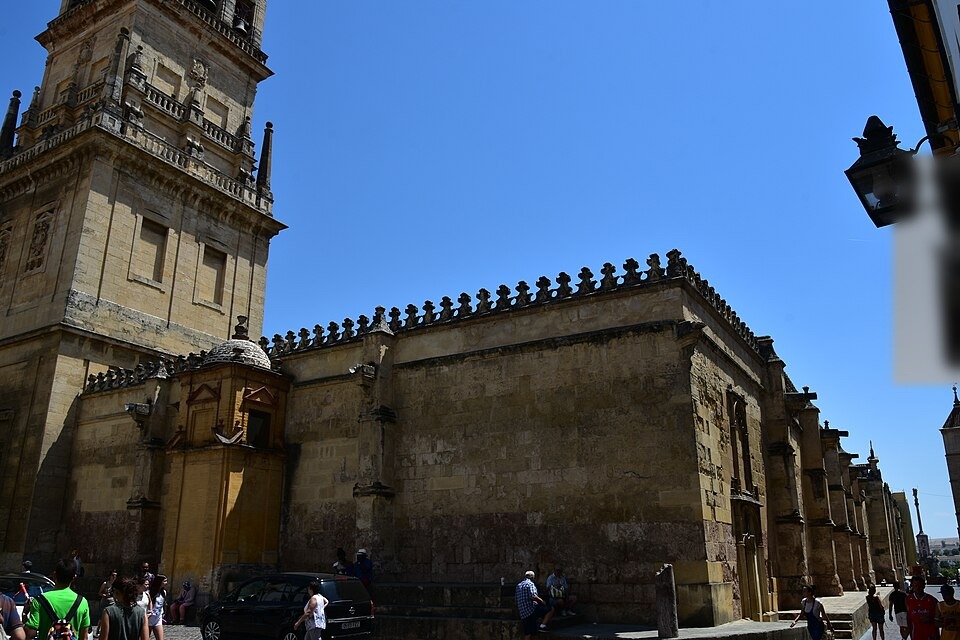
785–987
A minaret finished in 958 rises beside what was once a vast prayer hall, next to a richly decorated mihrab and screened maqsurah section completed in 971. In the sixteenth century a Renaissance cathedral nave was built directly into the centre of that older structure, an insertion still visible today.
Founded in 785 as the Great Mosque of Córdoba under Abd al-Rahman I, the building was enlarged repeatedly by his successors, gaining a minaret in 958 and a decorated mihrab and maqsurah in 971. Christian forces converted it into a cathedral in 1236, and in the sixteenth century a Renaissance nave, associated with Hernán Ruiz and Juan de Ochoa, was built into its centre. It is a bien de interés cultural and part of a World Heritage Site.
- Despite its conversion to a cathedral in 1236, it kept its Arabic name and is still commonly called the Mezquita.
- Its official name, rarely used, is the Cathedral of Our Lady of the Assumption.
Photo: Richard Mortel from Riyadh, Saudi Arabia (CC BY 2.0)
Roman Bridge
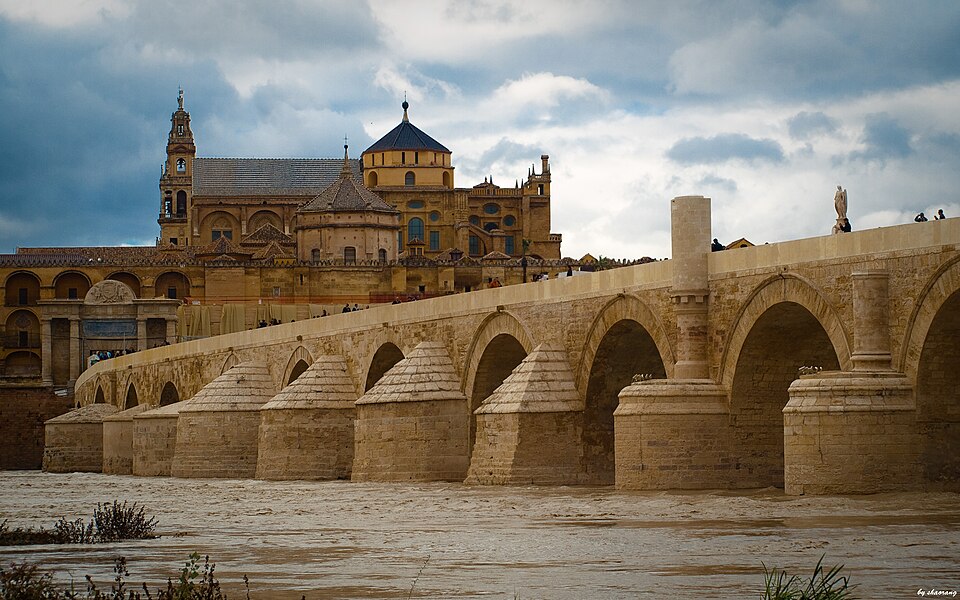
8th century
It carries a single roadway across the Guadalquivir at the point where the historic centre's monuments cluster, historically flanked by a fortified gate and gatehouse, within a protected riverside stretch of gardens and former mills known as the Sotos de la Albolafia.
Originally raised across the Guadalquivir in the early first century, the bridge was largely rebuilt by Arab engineers in the eighth century, and most of what stands today dates from that reconstruction. For two thousand years it was the only bridge in the city, earning it the local name Old Bridge, until the San Rafael Bridge was built in the mid-twentieth century. It was declared a bien de interés cultural in 1931 and a World Heritage Site in 1984.
- It remained the city's only bridge across the river for roughly two thousand years, until the mid-twentieth-century San Rafael Bridge was built.
Photo: shaorang (CC BY-SA 2.0)
Alcazar of the Christian Monarchs
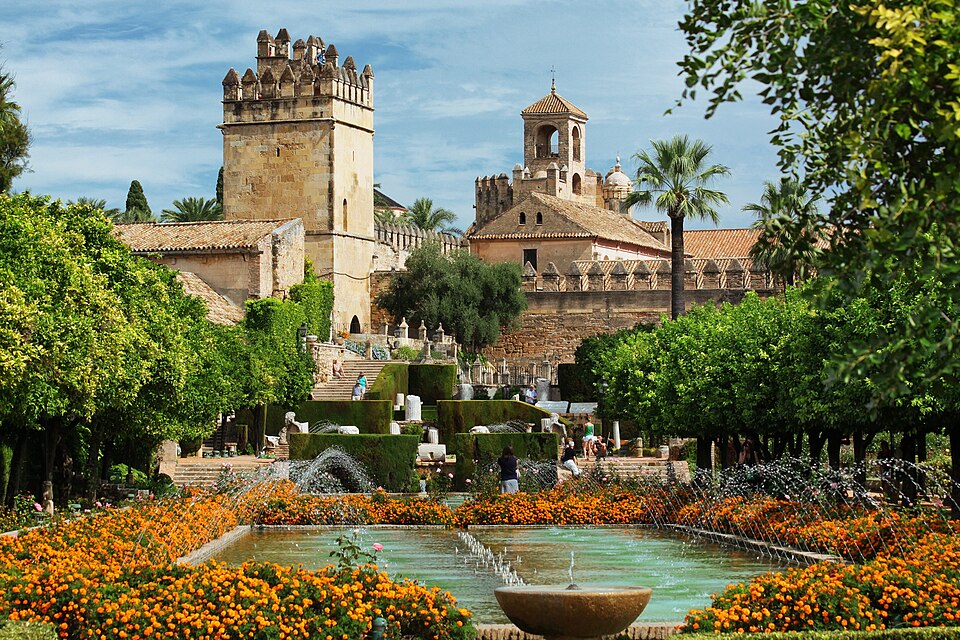
1328
Blank, fortress-like stone walls give little hint of the tiered gardens, pools and courtyards built in a Mudéjar-influenced style inside, so that the interior reads as a different building from the exterior.
Alfonso XI of Castile ordered this fortress built in 1328 on the site of an earlier Islamic-era alcázar, itself built over the former residence of the Roman governor and a customs building. It served as one of the primary residences of Isabella I of Castile and Ferdinand II of Aragon. Its exterior is sober and military, while the interior holds gardens and courtyards in a Mudéjar-influenced style. It has been a bien de interés cultural since 1931.
- It served as one of the primary residences of Isabella I of Castile and Ferdinand II of Aragon.
- The site had already been a Roman governor's residence and a customs building before this fortress was raised on top of it in 1328.
Photo: Pixels4Free (CC0)
Calahorra Tower
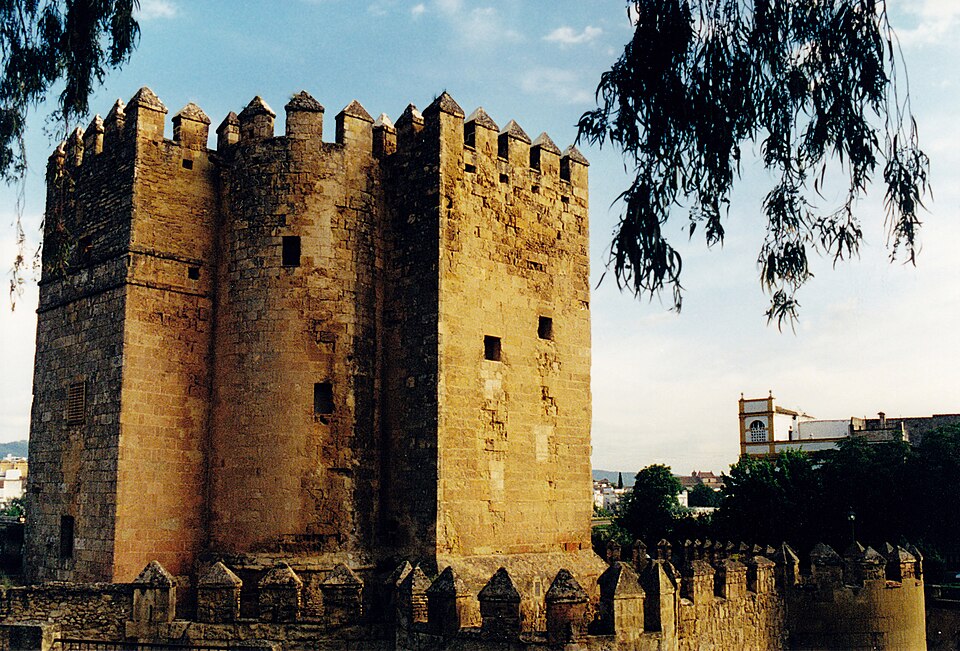
1369
A single fortified gate structure of Islamic origin stands in the historic centre, grouped in 1931 with a nearby bridge for heritage protection as part of the same monument listing.
The Calahorra tower is a fortified gate in the historic centre of Córdoba, of Islamic origin, with its present structure dated to 1369. In 1931 it was declared a bien de interés cultural in the monument category, together with the nearby Roman bridge and the Puerta del Puente, as part of the same protected grouping of historic structures within the city's historic centre.
Photo: EmDee (CC BY-SA 3.0)
Medina Azahara
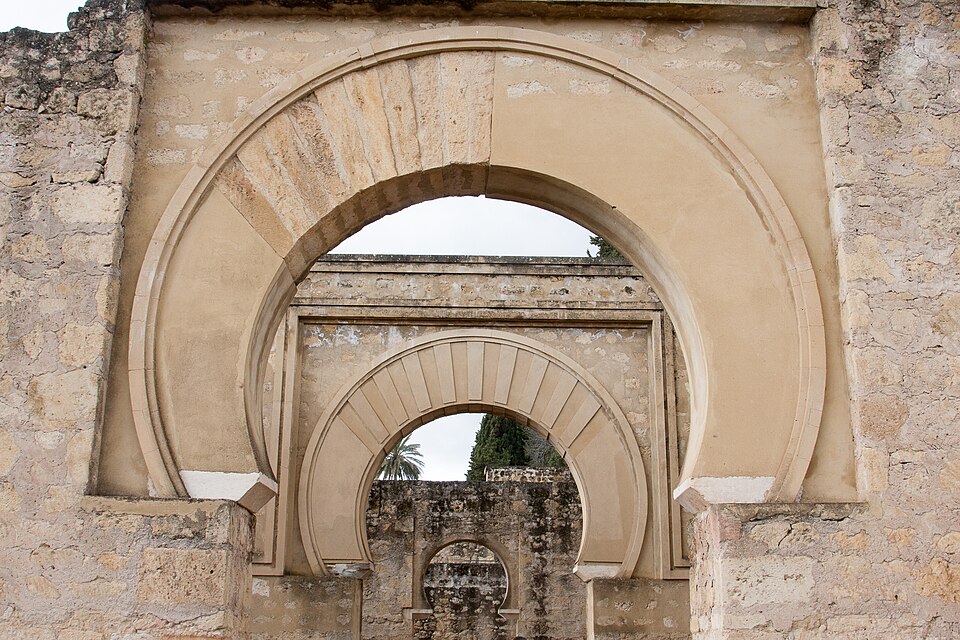
936–940
Extensive ruins of a planned palace-city spread across the western outskirts, including reception halls, a mosque, workshops, baths and gardens once fed by aqueducts, now explored as an open archaeological site with an adjoining museum.
Abd ar-Rahman III, first caliph of the Umayyad dynasty in al-Andalus, had this palace-city built from 936 after declaring himself caliph in 929, seeking to outshine the rival Fatimid and Abbasid caliphates. Construction continued through his reign and that of his son al-Hakam II, adding ceremonial halls, a mosque, government offices, residences, gardens, a mint, workshops, barracks and baths, supplied by aqueducts. It served as the Caliphate of Córdoba's capital until al-Hakam II's death, after which it stopped functioning as one.
- Abd ar-Rahman III built an entirely new capital partly to outdo the rival Fatimid and Abbasid caliphs after declaring himself caliph in 929.
- The city served as a capital for barely a generation, ceasing in that role soon after al-Hakam II's death.
Photo: piet theisohn from Leverkusen, Germany (CC BY 2.0)
Córdoba Synagogue
A former synagogue in the Jewish Quarter, completed in 1315 in the Mudéjar style attributed to Isaac Makheb. Used for worship until 1492, then for other purposes, it was restored and reopened in 1985 as a Jewish museum.
Albolafia
A medieval waterwheel on the Guadalquivir River, close to the Roman Bridge and the Christian Alcázar. It is commonly believed to date from the city's Islamic era, though its exact origins remain uncertain.
Puerta del Puente
A Renaissance gate built in the 16th century to commemorate a visit by King Philip II, on the site of earlier Roman gates. Declared a Bien de Interés Cultural in 1931, it lies within the historic centre, inscribed as a World Heritage Site in 1984.
Caliphal Baths
An Islamic bathhouse complex in the historic centre, declared a UNESCO World Heritage Site in 1994. Once contiguous with the Caliphal Palaces of the Umayyads, now the Alcázar de los Reyes Cristianos, it has been partially reconstructed and opened as a museum.
Roman Temple
The remains of a Pseudoperipterus, hexastyle Roman temple 32 metres long, discovered in the 1950s during the expansion of City Hall. Construction began under Emperor Claudius, between 41 and 54 AD, and finished some forty years later under Domitian.
Royal Collegiate Church of Saint Hippolytus
A Catholic church founded in 1343 at the initiative of King Alfonso XI of Castile, later granted in perpetuity to the Society of Jesus. It contains the tombs of King Ferdinand IV and his son, Alfonso XI.
Torre de Belén
A tower in the San Basilio neighbourhood, part of the historic centre of Córdoba inscribed as a UNESCO World Heritage Site. It is a fine example of a former defensive gate that once gave access to a walled enclosure.
Roman Walls
Ancient defensive walls of the Roman colonia of Corduba, capital of the province of Hispania Baetica, stretching 2,650 metres. Built after the Romans captured the city in 206 BC, they now form part of the historic centre, a UNESCO World Heritage Site since 1984.
Julio Romero de Torres Museum
A museum holding the largest collection of work by the Cordoban painter Julio Romero de Torres, housed in the old Hospital de la Caridad. The same building also contains the Museum of Fine Arts of Córdoba, and has been a protected monument since 1962.
Alegría watermill
A watermill on the right bank of the Guadalquivir, downstream of the San Rafael bridge, housing the Roberto Wagner Museum of Paleobotany in the Botanical Garden. It is one of eleven Mills of the Guadalquivir declared a Bien de Interés Cultural in 2009.
San Juan y Todos los Santos
A Catholic church on the Plaza de la Trinidad, also known as Iglesia de la Trinidad, built in the Baroque style. It stands on the site of a former convent established shortly after King Fernando III conquered the city in 1236.
Roman Mausoleum
A cylinder-shaped funerary monument in the Jardines de la Victoria, built in the 1st century AD and discovered during excavations in 1993. Its scale, and similarities to mausoleums in Rome, suggest it may have been designed by an Italian architect for a wealthy family.
Al-Morabito Mosque
A mosque built during the Spanish Civil War as a gift for General Francisco Franco's Muslim soldiers, considered Spain's first modern mosque. After decades as a specialized library on Islam, it reopened for prayer in 1992 following a request from the city's Muslim association.
Andalucía Bridge
A cable-stayed bridge across the Guadalquivir River, carrying a road that connects the city's airport with an industrial zone. It opened to traffic on 28 February 2004.
Museo de Bellas Artes
A State-owned art museum located in the city of Córdoba.
Archaeological and Ethnological Museum
A museum in the city of Córdoba, owned by the Spanish State. Its management has been transferred to the Ministry of Culture of the Junta of Andalusia.
San Bartolomé
A funerary chapel in the historic centre, dated to between 1390 and 1410. Richly decorated, it is considered one of the city's finest examples of Mudéjar art.
Santa María Magdalena
A church in the Mudéjar style, one of twelve built by Fernando III after he conquered the city in 1236. It combines Romanesque, Gothic and Mudéjar elements, with a rose window over the entrance and a 17th-century tower that narrows toward the top.
Santa Marina
One of the 'Fernandine' churches built in the city after Ferdinand III of Castile's conquest of 1236. It combines proto-Gothic and Mudéjar elements, with late-Romanesque features to a lesser degree.
History
Building here began beside the river, where a crossing raised in the early first century was rebuilt by Arab engineers in the eighth century into the bridge that remained the city's only river crossing for two thousand years. The Great Mosque, founded in 785 under Abd al-Rahman I, grew through the tenth century with a new minaret and a decorated mihrab, while Abd ar-Rahman III founded Medina Azahara in 936 as a rival capital to the Fatimid and Abbasid caliphates, a palace-city abandoned not long after his son's death. After the Reconquista reached the city in 1236, the mosque became a cathedral; Alfonso XI raised a fortress over earlier Roman and Islamic remains in 1328; and a Renaissance nave was built into the older mosque's centre in the sixteenth century.