Landmarks in Podgorica
A capital rebuilt mostly after 1946, keeping only scattered Ottoman-era river relics.
Podgorica's oldest standing landmarks cluster near where the Ribnica meets the Morača, in the historic quarter of Stara Varoš: a seventeenth-century clock tower and the city's oldest bridge, an Ottoman-period rebuild over Roman-era foundations. Both are among the few structures from before the Second World War still standing, since the city was heavily bombed and then, renamed Titograd, grew rapidly around new heavy industry rather than around what had stood before. A late nineteenth-century palace and an early eighteenth-century mosque are the only other landmarks recorded here. Compared with Cetinje, which held the Montenegrin throne for most of the country's history, Podgorica's surviving older fabric is modest.
Clock Tower
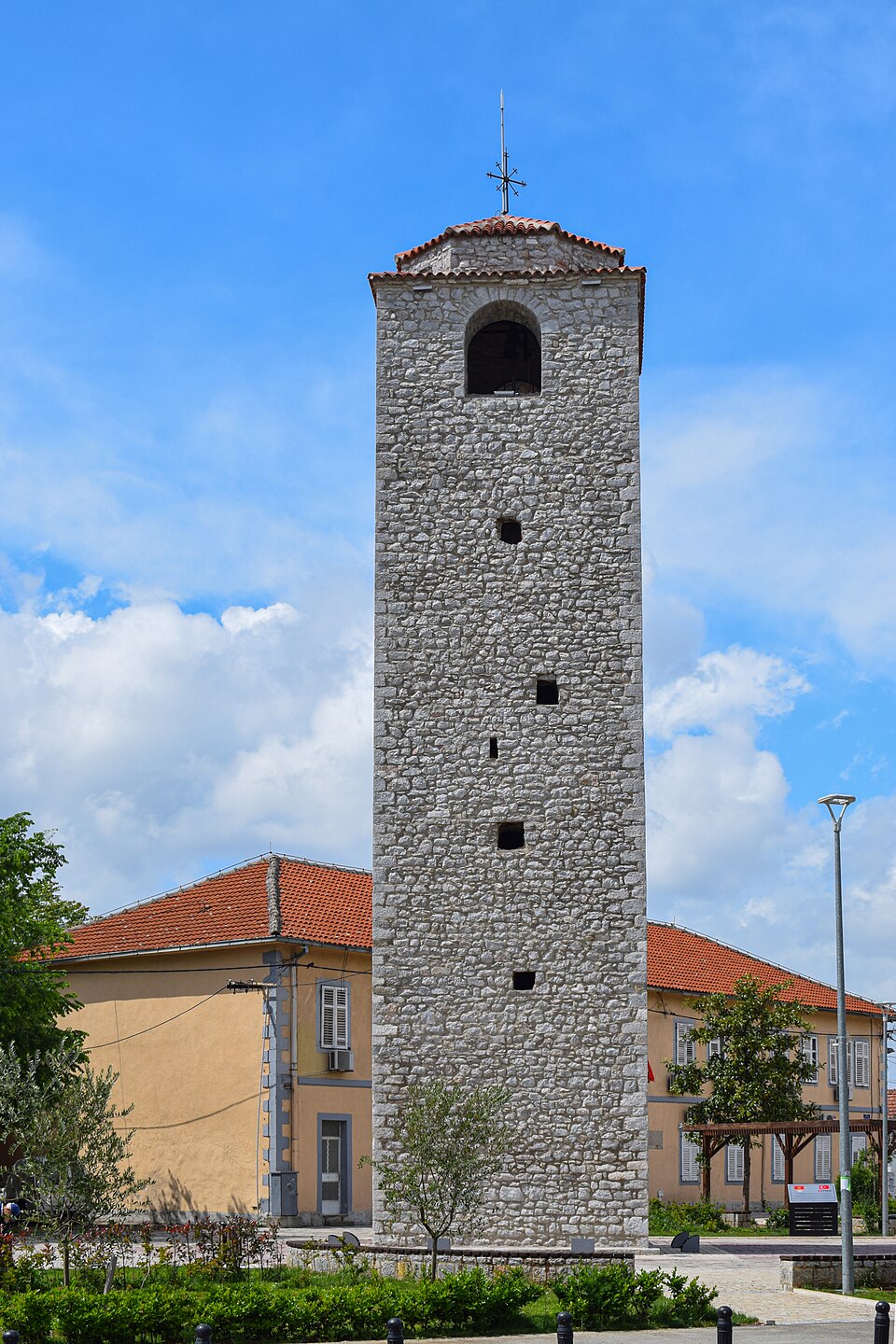
1667
Known locally as Sat kula, this tower stands over Bećir Beg Osmanagić square in Stara Varoš, Podgorica's old town, its clock face still marking one of the city's few surviving pre-war corners.
The Clock Tower stands at Bećir Beg Osmanagić square in Stara Varoš, Podgorica's old town, and is known locally as Sat kula (Turkish: Saat Kulesi). Built in 1667, it served the neighbourhood through the Ottoman period and remains one of the few structures from that era still standing after the district was bombed during the Second World War. It survives today largely intact, a rare marker of the city's pre-twentieth-century fabric in a capital that was otherwise substantially rebuilt.
Photo: Liridon (CC BY-SA 4.0)
Ribnica Bridge
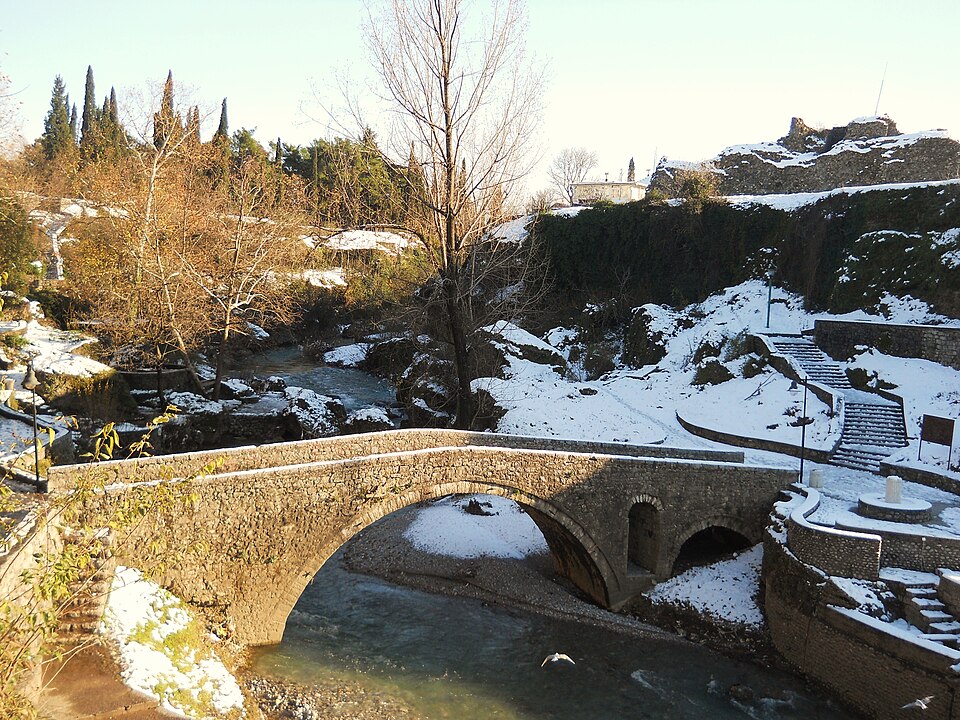
Roman era–18th century
Also known as Adži-paša's bridge, it is the oldest bridge in Podgorica, crossing the Ribnica just above where it meets the Morača, its low stone arch shaped mainly by an eighteenth-century rebuild over Roman-era foundations.
Known as Adži-paša's bridge, this is the oldest bridge in Podgorica, spanning the Ribnica river close to its confluence with the Morača. It was first built during the period of Roman rule and underwent a major reconstruction in the eighteenth century, consistent with the Ottoman architectural character it shows today. The bridge has functioned as a river crossing continuously since, linking the older quarters on either bank and predating almost everything else standing in the city.
- It carries three recorded names: the Old Bridge over Ribnica, Adži-paša's bridge, and, in Montenegrin, Stari most na Ribnici.
Photo: Rasho992 (CC BY-SA 3.0)
Osmanagic Mosque
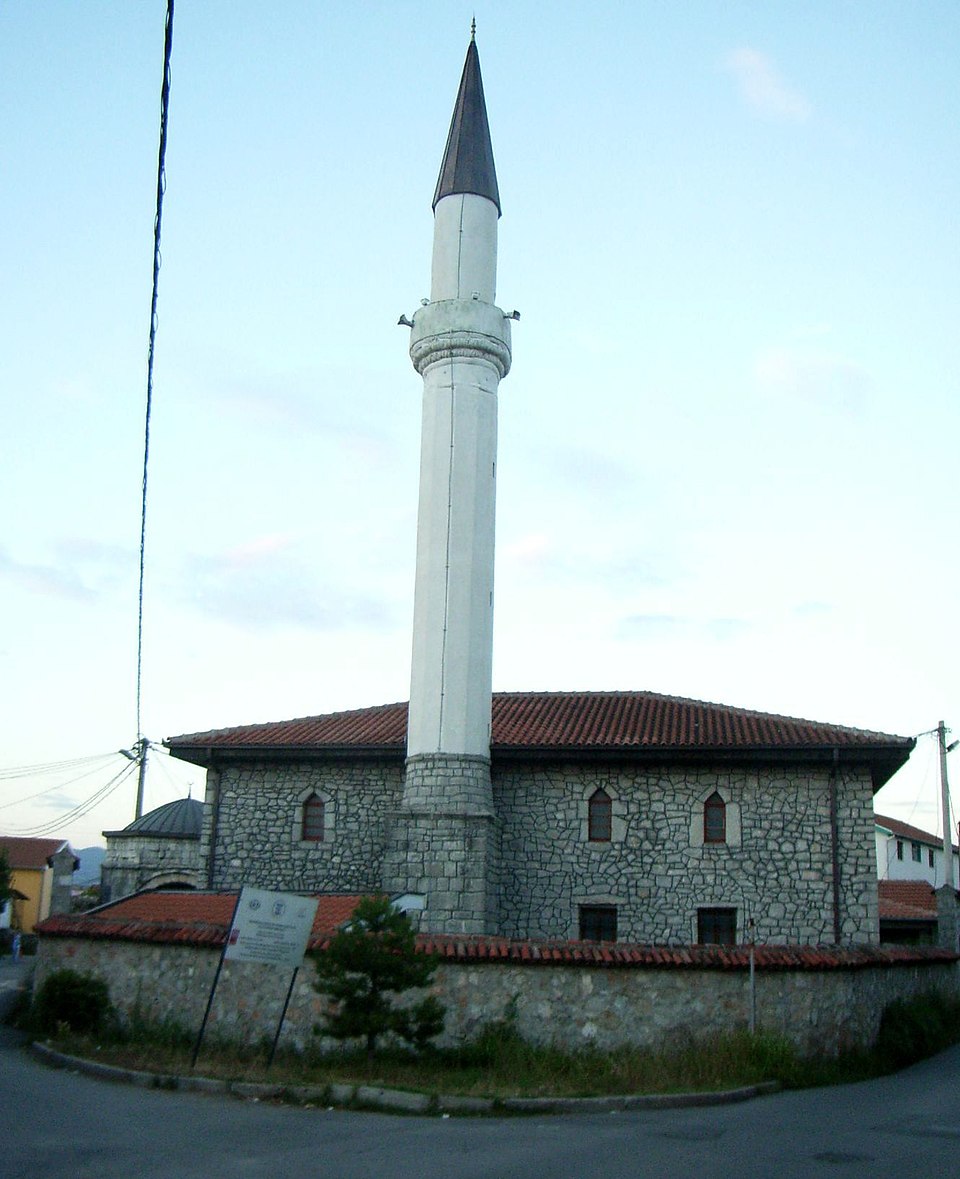
1700
Named for the Osmanagić family, this early eighteenth-century mosque has no further structural or decorative detail recorded in the available sources.
The Osmanagic Mosque is dated by the catalogue to 1700, taking its name from the Osmanagić family associated with it. No Wikipedia entry, architectural style, heritage designation or architect is recorded for the building anywhere in the available sources, leaving only its name and founding year as confirmed detail. It stands as the most thinly documented of Podgorica's catalogued landmarks, with its current appearance and condition unconfirmed.
Photo: Mazbln (CC BY-SA 3.0)
Cathedral of the Resurrection of Christ
An Eastern Orthodox church that serves as the cathedral of the Metropolitanate of Montenegro and the Littoral. It falls under the jurisdiction of the Serbian Orthodox Church.
Podgorica Royal Palace
A winter residence built between 1891 and 1894 by King Nicholas I, also known as the Petrović Palace or Kruševac. Converted into a hospital during the Balkan Wars, it now hosts the Petrović Palace Contemporary Art Centre, an arm of Montenegro's Museum of Contemporary Art.
Independence Square
The central square of Podgorica, formerly known as Republic Square, in the Nova Varoš district that forms the city's administrative and cultural heart. Covering 5,000 square metres, it is home to the Radosav Ljumović city library and the Art state gallery.
History
The Ribnica bridge, Podgorica's oldest crossing, was built during Roman rule and rebuilt under Ottoman administration in the eighteenth century; the clock tower nearby in Stara Varoš dates to 1667 and is one of the few structures from that period left after the city was bombed during the Second World War. The Allied victory was followed in 1946 by the town's renaming as Titograd and its designation as capital of the Socialist Republic of Montenegro, which set off rapid growth that turned a small town into a primate city holding nearly a third of the country's population; its Yugoslav-era economy, built on heavy industry and manufacturing, later gave way to services. The name Podgorica was restored in 1992, and the city became capital of independent Montenegro in 2006, by which point its central position had already made it the country's rail, road and air hub.