Famous Landmarks in Nice
A seafront of Belle-Époque hotels backs onto Baroque churches from the city's Savoy era.
Nice's landmarks fall into two eras. Along the seafront promenade, palace hotels such as the Hotel Negresco rose in the years before the First World War, built for the European visitors who wintered here. Inland, the old quarter keeps a Baroque cathedral begun in 1650 under Savoyard rule, when the city belonged to the House of Savoy rather than France. Growth after the 1860 union with France brought a second wave of religious building on a larger scale: a Gothic Revival basilica on Avenue Jean Médecin, modelled on a cathedral elsewhere in France, and a Russian Revival cathedral built for the resident Russian community. Above the rooftops, an observatory on Mount Gros represents the same period's other ambition, scientific rather than devotional.
Hotel Negresco
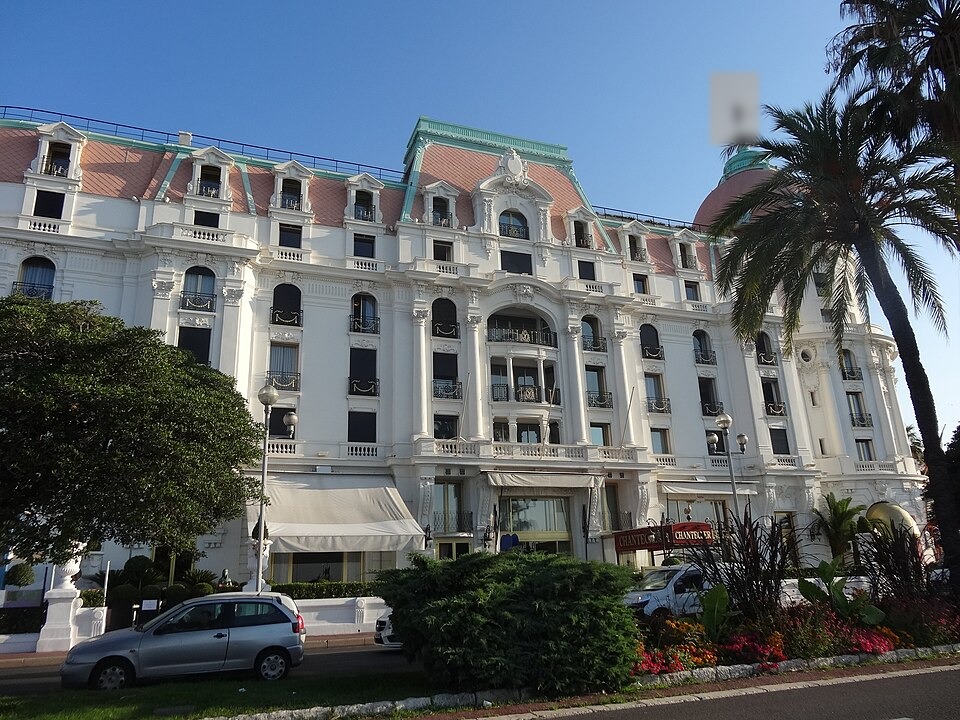
1912 · Édouard Niermans
A large palace hotel occupying a stretch of seafront promenade at the edge of a wide bay, named after the man who had it built rather than after any place.
The Hotel Negresco is a luxury hotel on the Promenade des Anglais, overlooking the Baie des Anges. It was built for the hotelier Henri Negresco, who opened it in 1912 and gave it his name. The hotel houses the restaurant Le Chantecler and is protected as a classified historical monument. It was designed by the architect Édouard Niermans, who died in 1928.
Photo: Jordiferrer (CC BY-SA 4.0)
Nice Cathedral
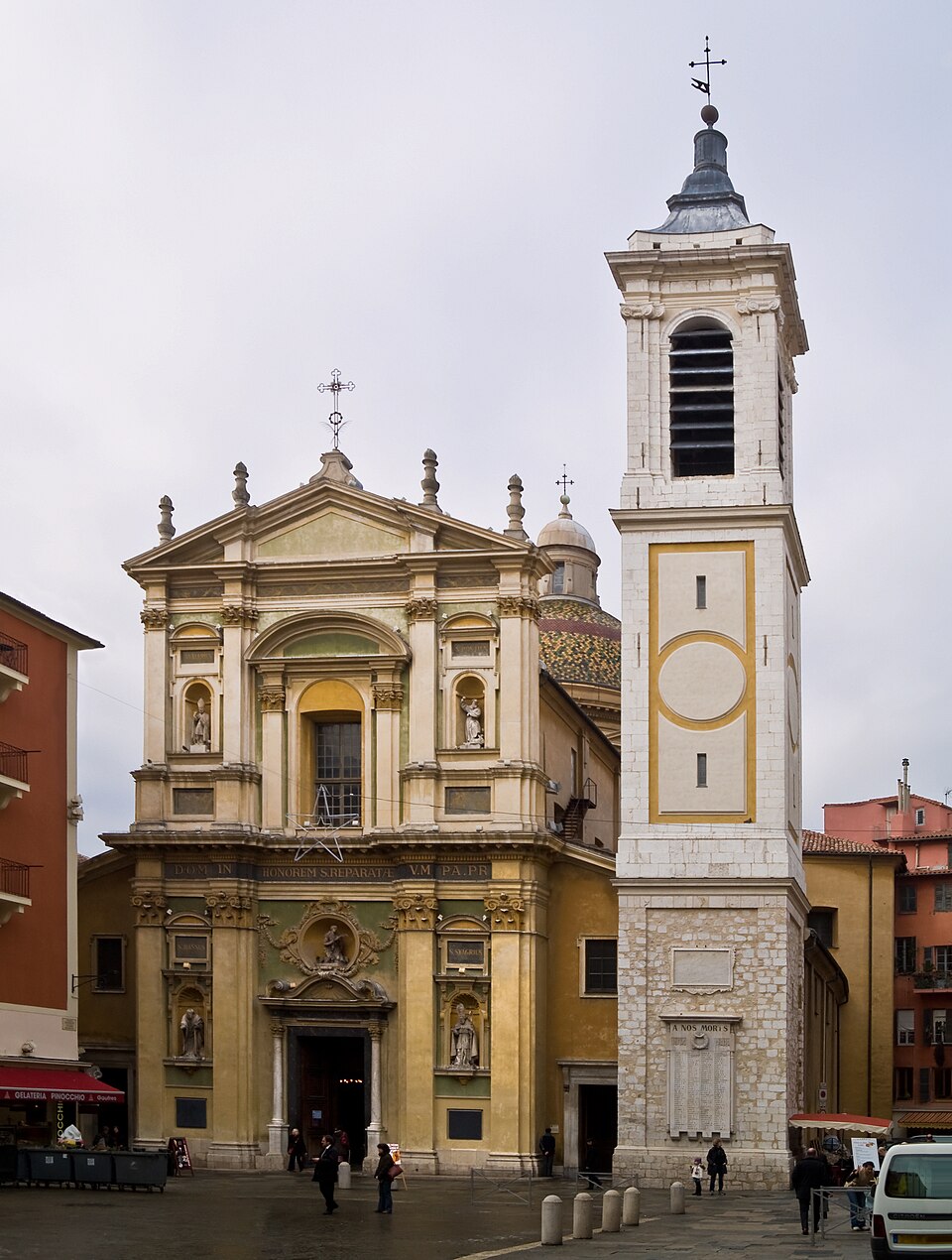
1650–1685 · Jean-André Guiberto
Built in the Baroque style, unlike the plainer parish churches around it, and dedicated to the Assumption of the Virgin Mary and Saint Reparata.
Nice Cathedral is the seat of the Diocese of Nice, dedicated to the Assumption of the Virgin Mary and Saint Reparata. Construction of the main body began in 1650 under the architect Jean-André Guiberto and finished in 1685; the building was consecrated in 1699. It is built in the Baroque style and ranks as a minor basilica. It has been classified as a national historical monument since 1906.
- Decorative work and new structures continued to be added until 1949, almost three centuries after construction began in 1650.
Photo: Myrabella (CC BY-SA 3.0)
St. Nicholas Orthodox Cathedral
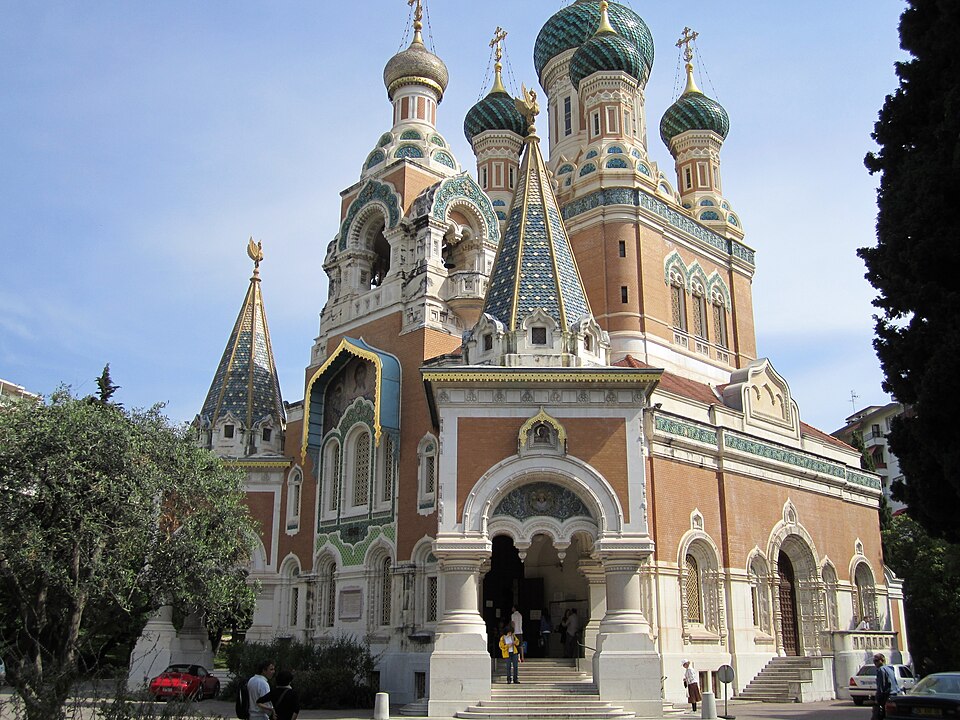
1912
Built in the Russian Revival style, it is the largest Eastern Orthodox cathedral in Western Europe, a scale that sets it apart from the smaller parish churches nearby.
The St Nicholas Orthodox Cathedral is an Eastern Orthodox cathedral built in the Russian Revival style, the largest of its kind in Western Europe. It opened in 1912 with the support of Russia's Tsar Nicholas II. From 1931 its parish belonged to a Paris-based exarchate under the Church of Constantinople, until a 2011 ruling by France's highest court placed the building's ownership with the Russian state and its congregation under the Moscow Patriarchate.
- The cathedral is legally the property of the Russian Federation despite standing in France, following a 2011 ruling by France's highest court.
Photo: Montgomery06 (CC BY-SA 3.0)
Basilica of Notre-Dame de Nice
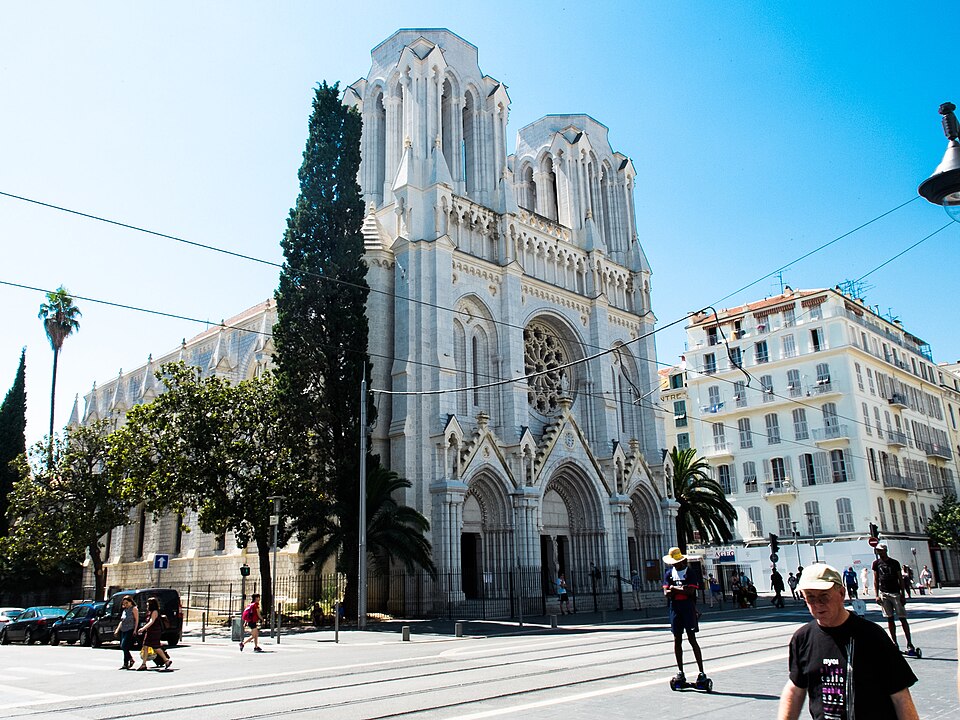
1864–1868 · Charles Lenormand
Two square towers roughly sixty-five metres high frame the east front, above a large rose window depicting scenes from the Assumption of Mary; built in the Gothic Revival style and modelled on Angers Cathedral.
The Basilica of Notre-Dame de Nice is a Roman Catholic basilica on Avenue Jean Médecin, built between 1864 and 1868 to designs by the architect Charles Lenormand. It is the largest church in the city, though not its cathedral. Two square towers about sixty-five metres high rise above the east front, over a rose window depicting the Assumption of Mary. On 29 October 2020, three people were killed inside the church in a terrorist attack.
- The Gothic style was chosen partly to assert French architectural character after the county of Nice passed from the Kingdom of Sardinia to France.
- The design was modelled on Angers Cathedral, hundreds of kilometres away in western France.
Photo: Romain Sartorio (CC BY 3.0)
Nice Observatory
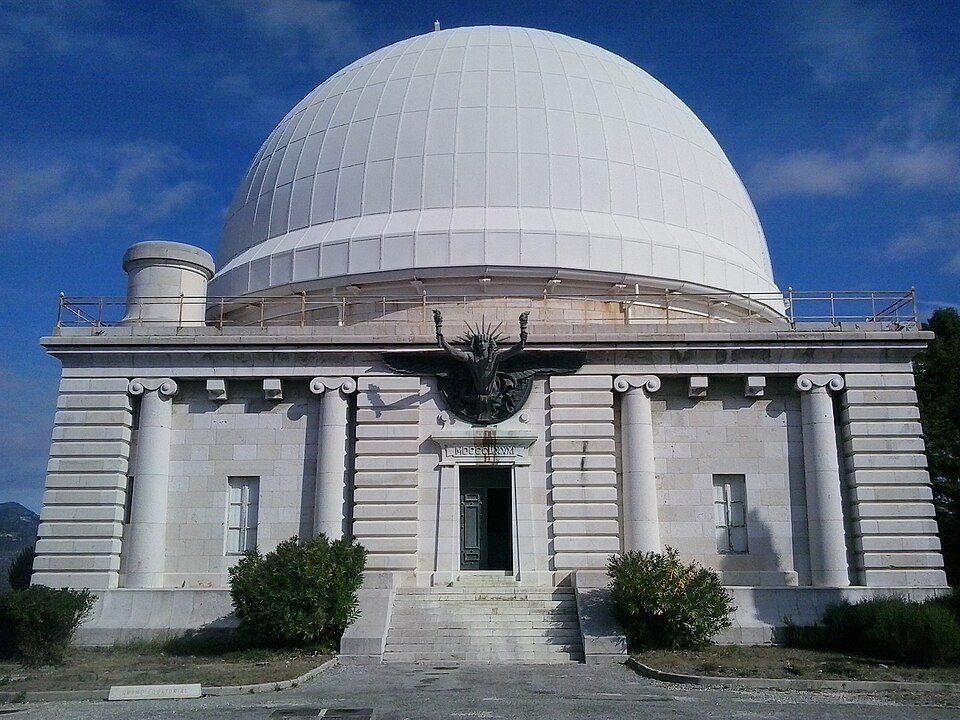
1887 · Charles Garnier
Sits on a hilltop above the city, its main dome designed by Gustave Eiffel; it once housed the Grand Lunette, the largest refracting telescope in the world when it debuted in 1886.
The Nice Observatory is an astronomical observatory on the summit of Mount Gros, founded in 1879 by the banker Raphaël Bischoffsheim. Charles Garnier was the architect, and Gustave Eiffel designed the main dome. In 1886 it installed the Grand Lunette, then the largest refracting telescope in the world. The site is listed as a classified historical monument and among France's protected twentieth-century heritage.
- The observatory's main dome was designed by Gustave Eiffel, though Charles Garnier was the architect for the rest of the building.
- In 1886 it installed the largest refracting telescope in the world, the Grand Lunette.
Photo: ClaireL28 (CC BY-SA 3.0)
History
Nice passed to the House of Savoy in 1388 and remained under Savoyard rule for most of the following five centuries; its Baroque cathedral was raised in the old town between 1650 and 1685. France annexed the surrounding county in 1860, and the following decades turned the seafront into a winter resort for European visitors, with palace hotels culminating in the Hotel Negresco, built for the hotelier whose name it carries and opened in 1912. Religious building expanded at the same time: a Gothic Revival basilica went up on Avenue Jean Médecin between 1864 and 1868, and a Russian Orthodox cathedral, built for the resident Russian community, opened in 1912. An observatory founded on Mount Gros in 1879 added a scientific institution to the same skyline.