Landmarks in Macau
A 15th-century temple, 17th-century churches and forts sit blocks from towering casinos.
Macau's landmarks sit on a narrow peninsula only a few kilometres long, so a fifteenth-century Chinese temple, a row of sixteenth- and seventeenth-century Portuguese churches, a hilltop fort and lighthouse, and a former colonial senate building all stand within walking distance of each other in the downtown core. That density, and the mix of Portuguese, Chinese and other European building traditions in a single small district, is why UNESCO listed it as the Historic Centre of Macau in 2005. The oldest surviving structure, the A-Ma Temple, may predate the Portuguese settlement itself. The newest addition, the 338-metre Macau Tower, stands apart from this cluster, a telecommunications and entertainment structure built in 2001 on ground removed from the old colonial streets.
Ruins of St. Paul's
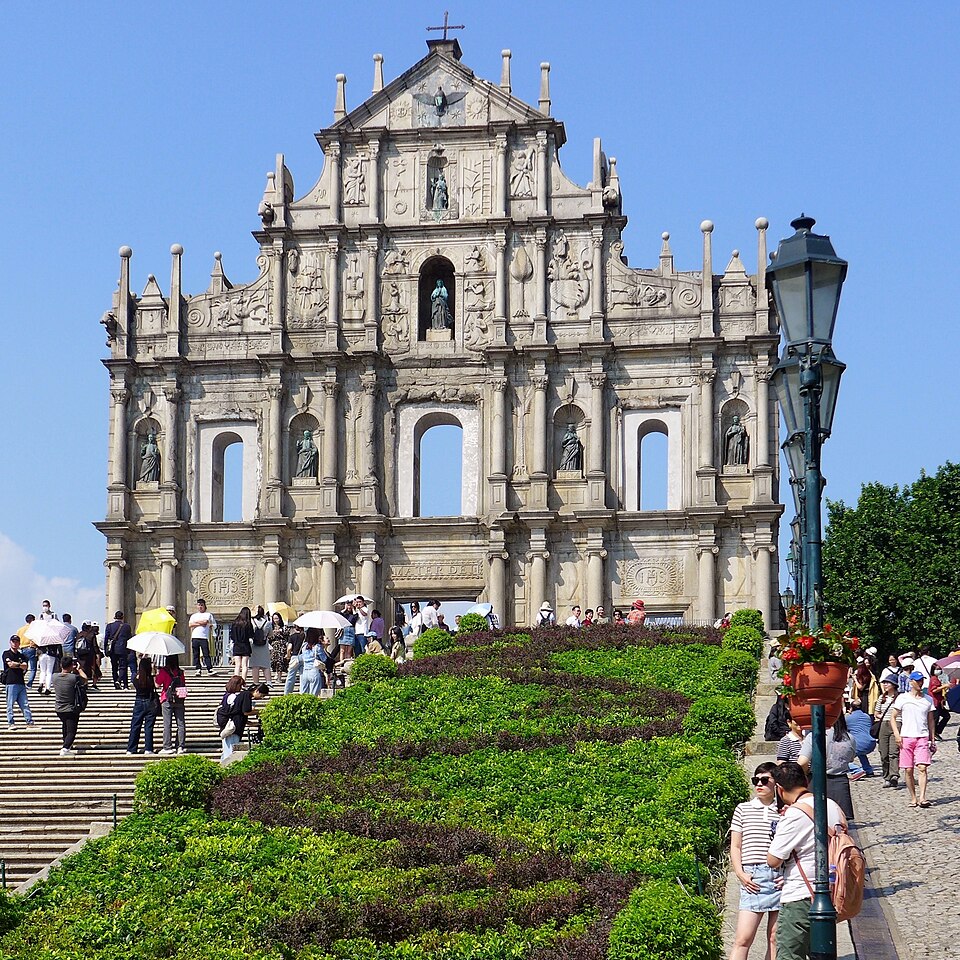
1602 · Charles Spinola
A freestanding stone facade carved in tiers of niches and statues stands at the top of a wide staircase with no building behind it, the surviving front wall of a former Catholic church and college.
The ruins are what remains of St. Paul's College and its attached church, the Church of St. Paul, also called Mater Dei, a Catholic complex finished in 1602. Charles Spinola is named as its architect. Today only the church's carved stone facade stands; the rest of the complex is gone. In 2010 the Portuguese government named it one of the Seven Wonders of Portuguese Origin in the World, and in 2005 it was listed within the Historic Centre of Macau, a UNESCO World Heritage Site.
- Named one of the Seven Wonders of Portuguese Origin in the World by the Portuguese government in 2010.
- The surviving facade is the front wall of a church whose college and nave are otherwise gone.
Photo: Bahnfrend (CC BY-SA 4.0)
A-Ma Temple
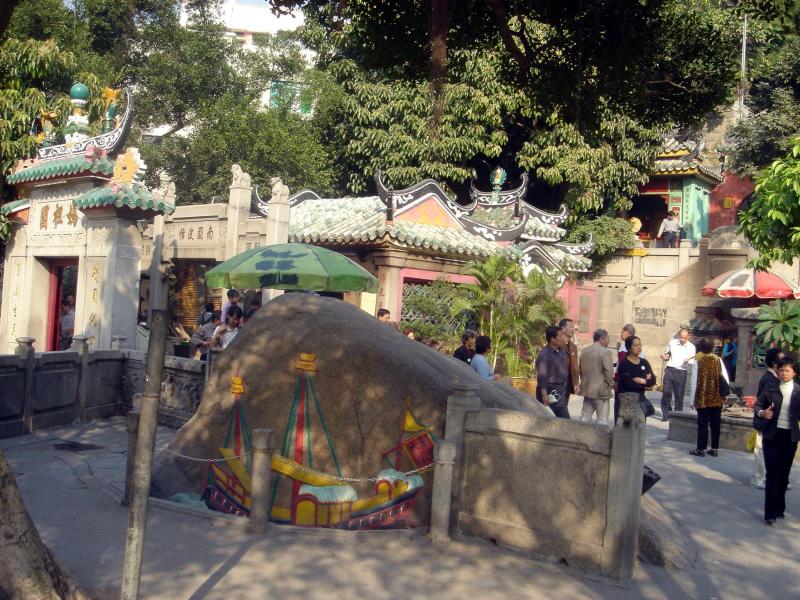
1488
A temple dedicated to a sea goddess, notable less for a single monumental building than for predating the modern city around it and reportedly giving that city its name.
The A-Ma Temple is dedicated to Mazu, a Chinese sea goddess, and dates to 1488, making it one of the oldest religious buildings in the area. Tradition holds that the settlement later built beside it took its name from the goddess, a link Macau's own name is said to preserve. The temple is recognised among Macau's Classified Immovable Properties and, since 2005, forms part of the Historic Centre of Macau, a UNESCO World Heritage Site.
- Tradition holds that the city took its name from this temple's goddess.
Photo: Jorge Láscar from Australia (CC BY 2.0)
Macau Tower
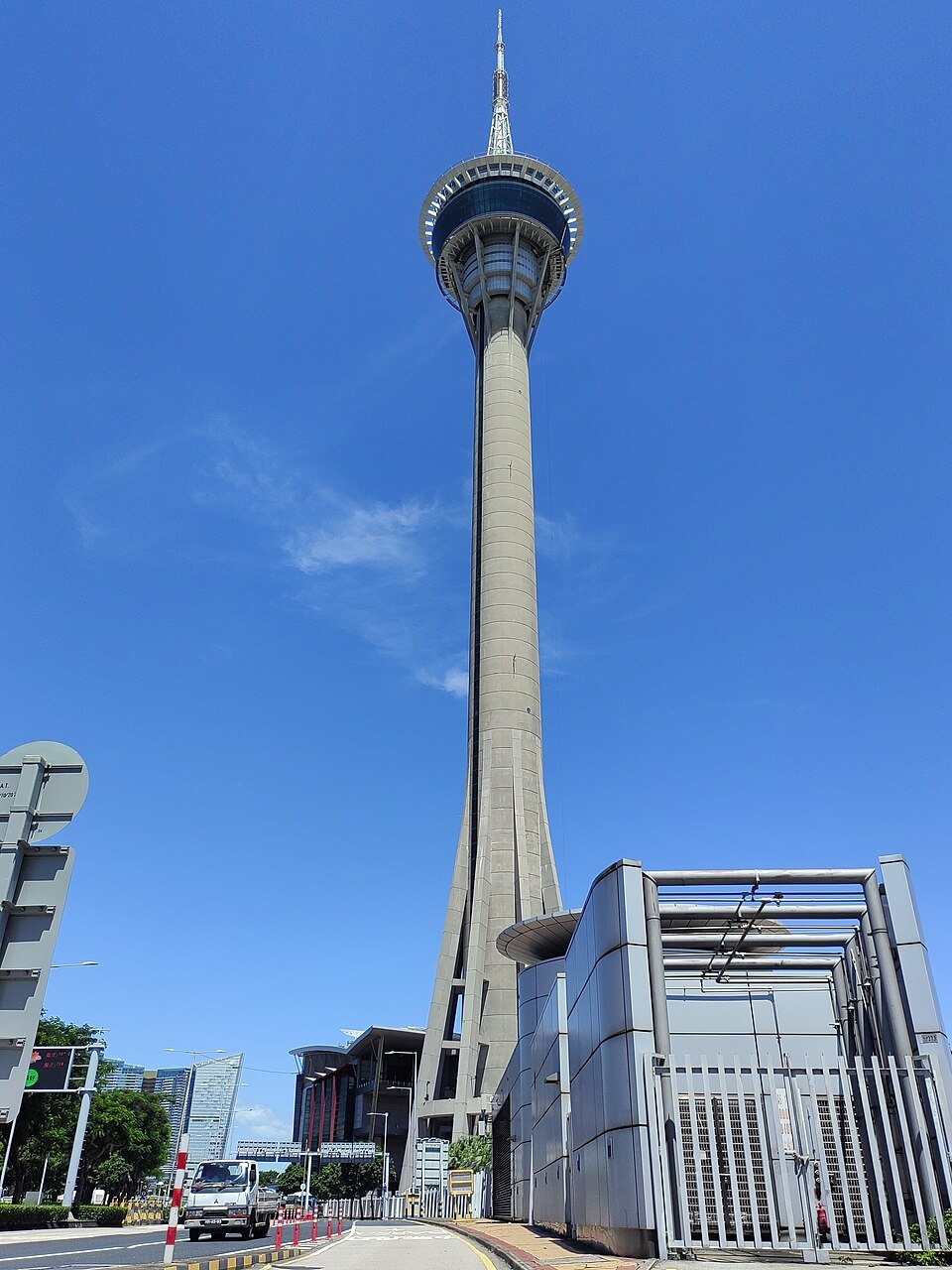
2001 · Moller Architects
A slender tower rising to 338 metres, its observation deck ringed by an outer-rim walkway called Skywalk X; alongside the Grand Lisboa hotel, it is described as one of the two most recognisable shapes on the Macau skyline.
The Macau Tower Convention and Entertainment Centre was created by Moller Architects and completed in 2001, reaching 338 metres from ground level to its highest point. Besides an observation deck, restaurants, theatres and shopping malls, it carries Skywalk X, a walkway around its outer rim, and hosts a tethered skyjump advertised as the world's highest commercial skyjump, plus a bungee jump. It also serves telecommunications and broadcasting, and belongs to the World Federation of Great Towers.
- Its 233-metre skyjump is advertised as the highest commercial skyjump in the world.
- That descent is the second-highest commercial decelerator facility anywhere, after the Stratosphere tower in Las Vegas at 252 metres.
- The tower belongs to the World Federation of Great Towers.
Photo: Yumeto (CC BY-SA 4.0)
Leal Senado Building
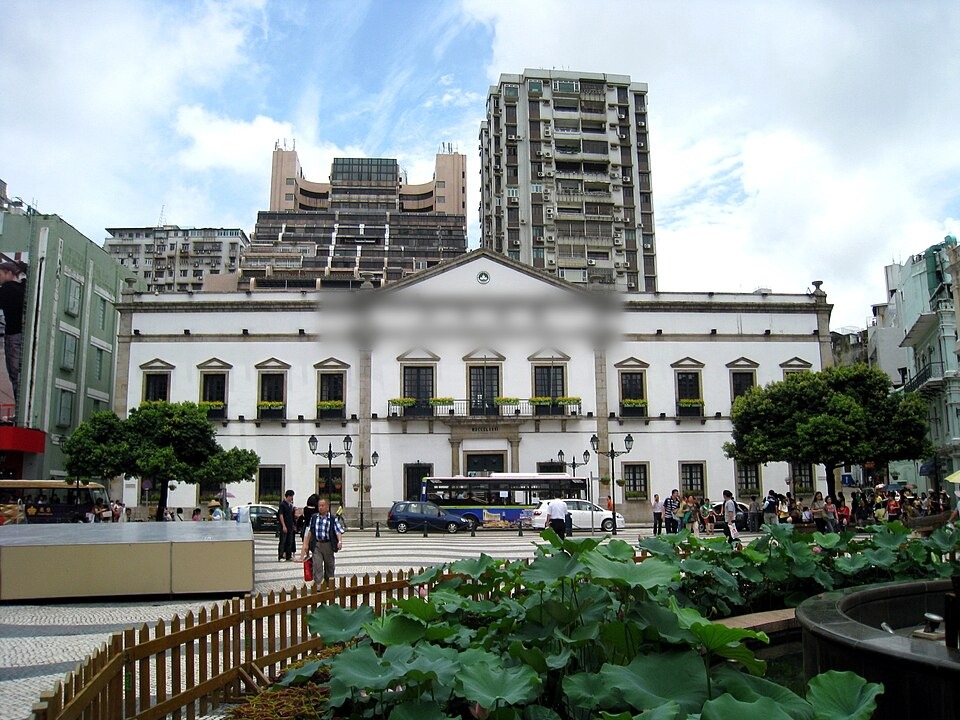
1784
A symmetrical Neoclassical facade fronts the square at the centre of the old town, set apart from the churches and forts nearby by its formal civic, rather than religious or military, design.
The Leal Senado Building served as the seat of Portuguese Macau's government, housing the Legislative Assembly of Macau and the Municipal Council of Macau, at one end of a square in Sao Lourenco. Built in 1784 in the Neoclassical style, it survived the end of colonial rule and continues in civic use: it now houses Macau's Municipal Affairs Bureau. It is recognised for the Heritage of Portuguese Influence and forms part of the Historic Centre of Macau, a UNESCO World Heritage Site.
- More than two centuries after it was built as a colonial council chamber, it still houses a public administrative bureau.
Photo: WiNG (CC BY 3.0)
Guia Lighthouse
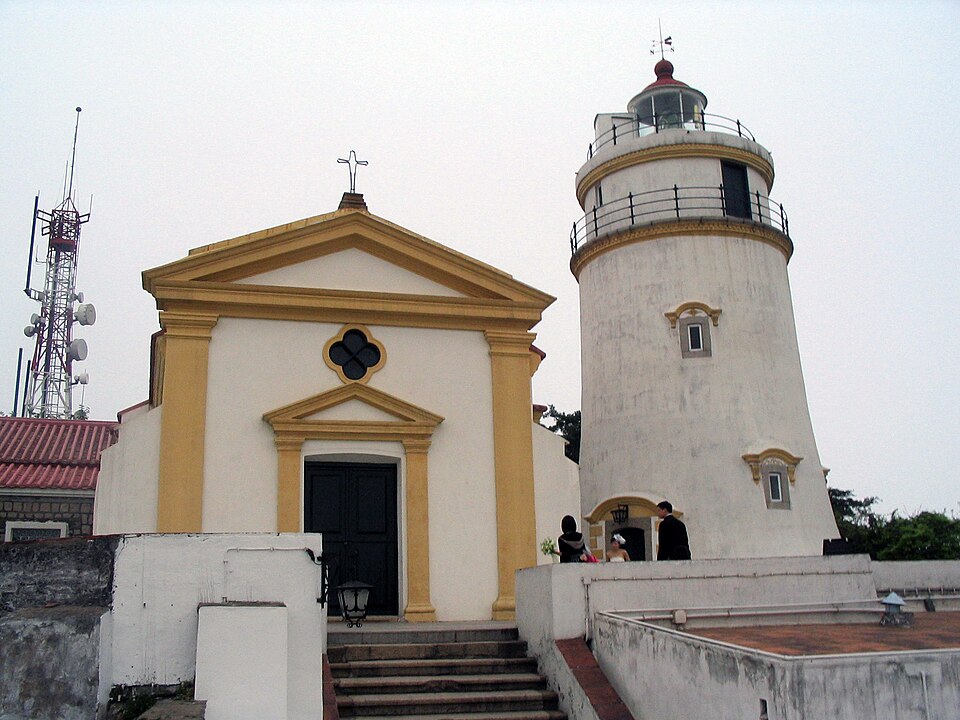
1865
A lighthouse tower rises from within a walled fort that also holds a small chapel, an ensemble whose long-open outlook has, since 2010, been obstructed by a tall building constructed beside it.
The Guia Fortress is a walled complex combining a seventeenth-century colonial military fort, a chapel, and a lighthouse added in 1865. It forms part of the Historic Centre of Macau, a UNESCO World Heritage Site, and is recognised for the Heritage of Portuguese Influence. Since 2010, the view of the fortress and lighthouse has been blocked by the Macau Liaison Office building constructed nearby, a change local citizens and scholars have criticised as a failure of heritage-minded urban planning.
- Since 2010 the fortress and lighthouse have had their view blocked by a nearby government building, a change critics call a failure of heritage-conscious planning.
Photo: No machine-readable author provided. Minghong assumed (based on copyright claims). (CC BY-SA 3.0)
St. Dominic's Church
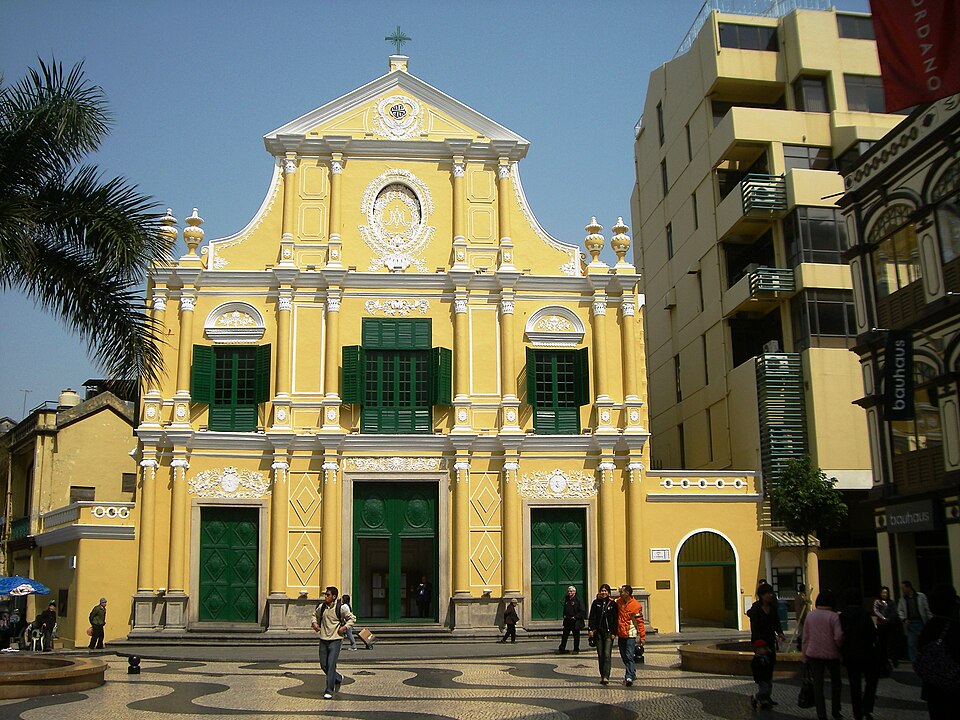
1587
A Baroque church facade at the Largo de Sao Domingos, near the Leal Senado Building in Macau's historic downtown; due to renovation and reconstruction, the structure seen today dates mainly from the early 1600s rather than 1587, when it was first finished.
St. Dominic's Church is a Baroque-style Catholic church at the Largo de Sao Domingos, near the Leal Senado Building in Macau's historic downtown. It was finished in 1587 under the oversight of three Spanish Dominican priests, though renovation and reconstruction mean the structure standing today dates mainly from the early seventeenth century. It is one of Macau's Classified Immovable Properties and one of the 29 sites forming the Historic Centre of Macau, a UNESCO World Heritage Site.
- Building was overseen by three Spanish Dominican priests.
- It is one of 29 sites that together make up the Historic Centre of Macau UNESCO World Heritage Site.
Photo: Whhalbert (CC BY-SA 4.0)
Grand Lisboa
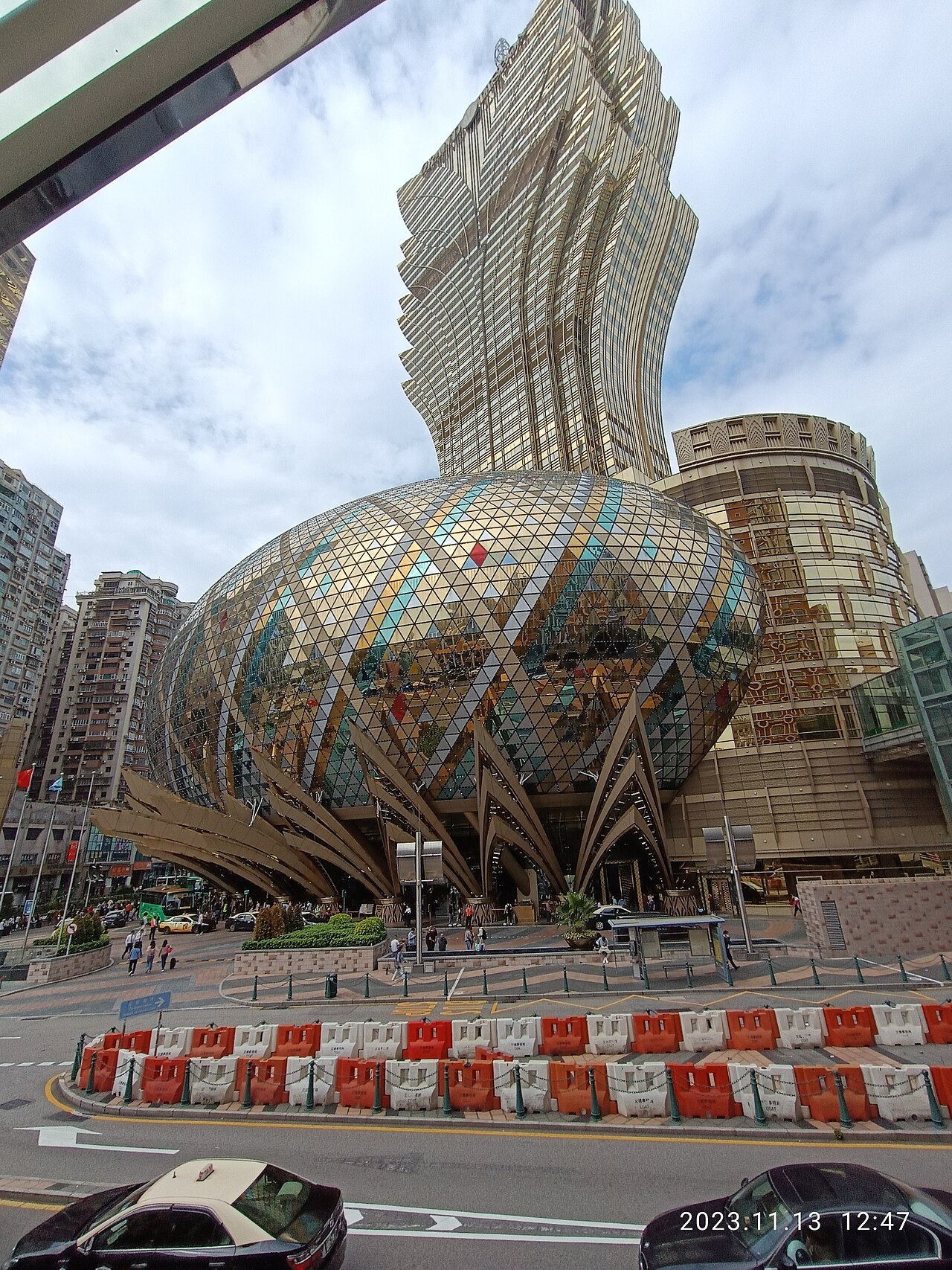
2007–2008 · Dennis Lau and Ng Chun Man
At 261 metres over 47 floors, it is the tallest building on the Macau skyline and, by its own account, its most visually distinctive one; a widely noted photograph taken sideways from a nearby street has been said to make its outline resemble an alien invasion.
The Grand Lisboa is a hotel and casino owned by Sociedade de Jogos de Macau, its casino and restaurants opened in February 2007 and its hotel in December 2008. Designed by Hong Kong architects Dennis Lau and Ng Chun Man, with interiors by Khuan Chew, it rises 47 floors to 261 metres, making it the tallest building in Macau. The casino, with 800 gaming tables and 1,000 slot machines, was the first in the territory to offer Texas hold 'em poker and craps. In 2024 it added a 60-terminal electronic gaming stadium.
- Its casino displays the Star of Stanley Ho, a 218.08-carat diamond that the Gemological Institute of America rates as the largest cushion-shaped, internally flawless D-colour diamond in the world.
- Its hotel restaurant held three Michelin stars as early as 2008 under an earlier name, Robuchon a Galera, and the Miele Guide later named it the top restaurant in Asia.
Photo: Kamfutiam Georgez (CC0)
The Venetian Macao
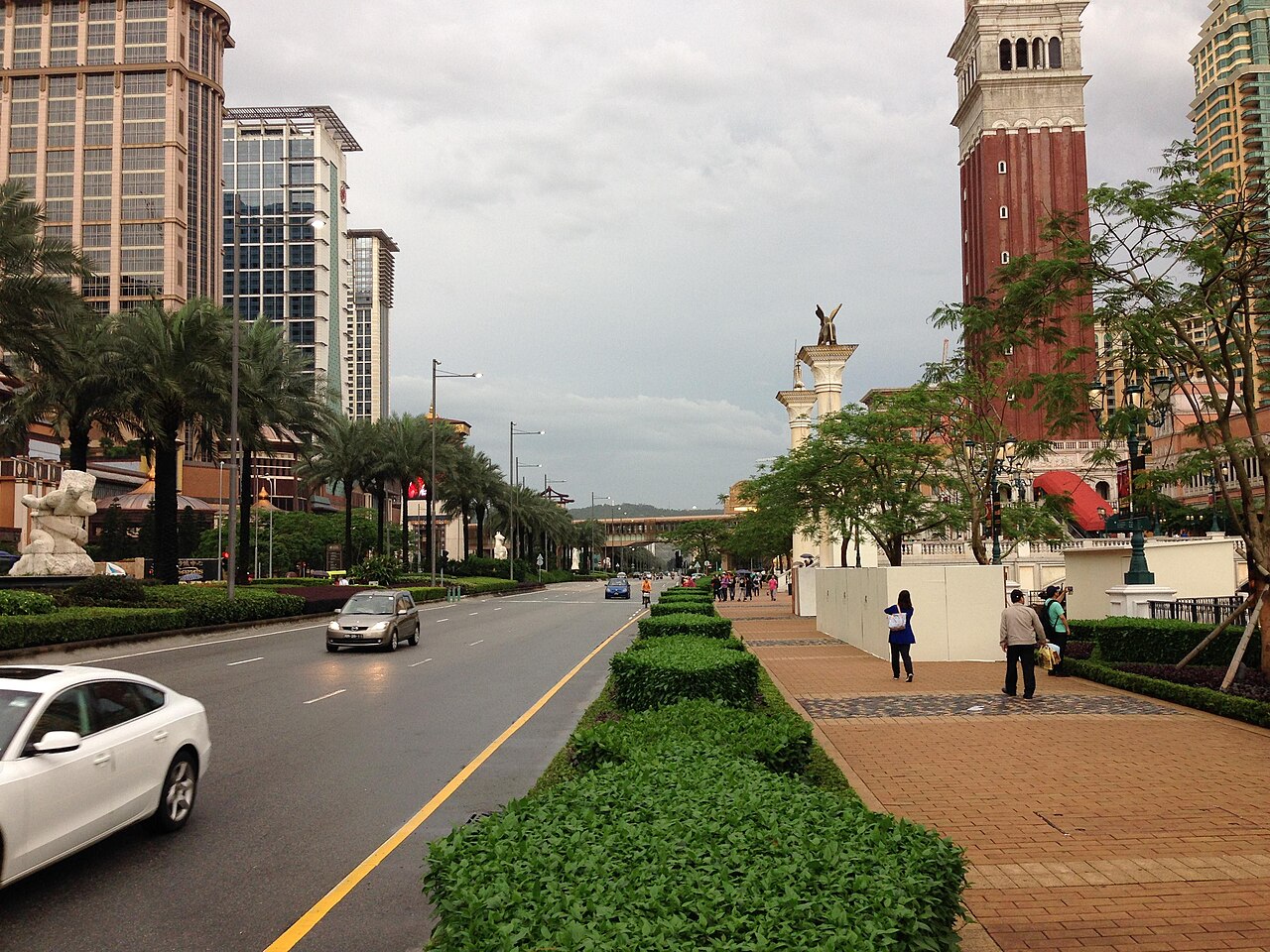
2007 · Aedas
A 39-storey resort building whose retail arcade contains an indoor artificial canal, set amid a strip of other billion-dollar casino resorts; built as a near-replica of its similarly named sister casino in Las Vegas, it is the largest single-structure hotel in Asia by floor area.
The Venetian Macao is a hotel and casino resort designed by Aedas and HKS, built as a close copy of its sister property in Las Vegas and opened in August 2007. Set on reclaimed land supported by 1,530 concrete pilings, it holds about 3,000 suites, an indoor canal running through its retail arcade, and a 15,000-seat arena for concerts and sport. A 2008 slowdown in construction cost thousands of jobs, and by 2017 its parent company had paid nearly $16 million combined to settle United States Foreign Corrupt Practices Act investigations into its Macau operations.
- Its foundation rests on 1,530 concrete pilings driven into reclaimed land.
- In November 2008 its owner halted construction projects in Macau and laid off roughly 11,000 workers.
- In 2010 authorities reportedly found more than 100 prostitutes inside the casino during a sex-trade crackdown.
Photo: Seader (CC0)
Fortaleza do Monte
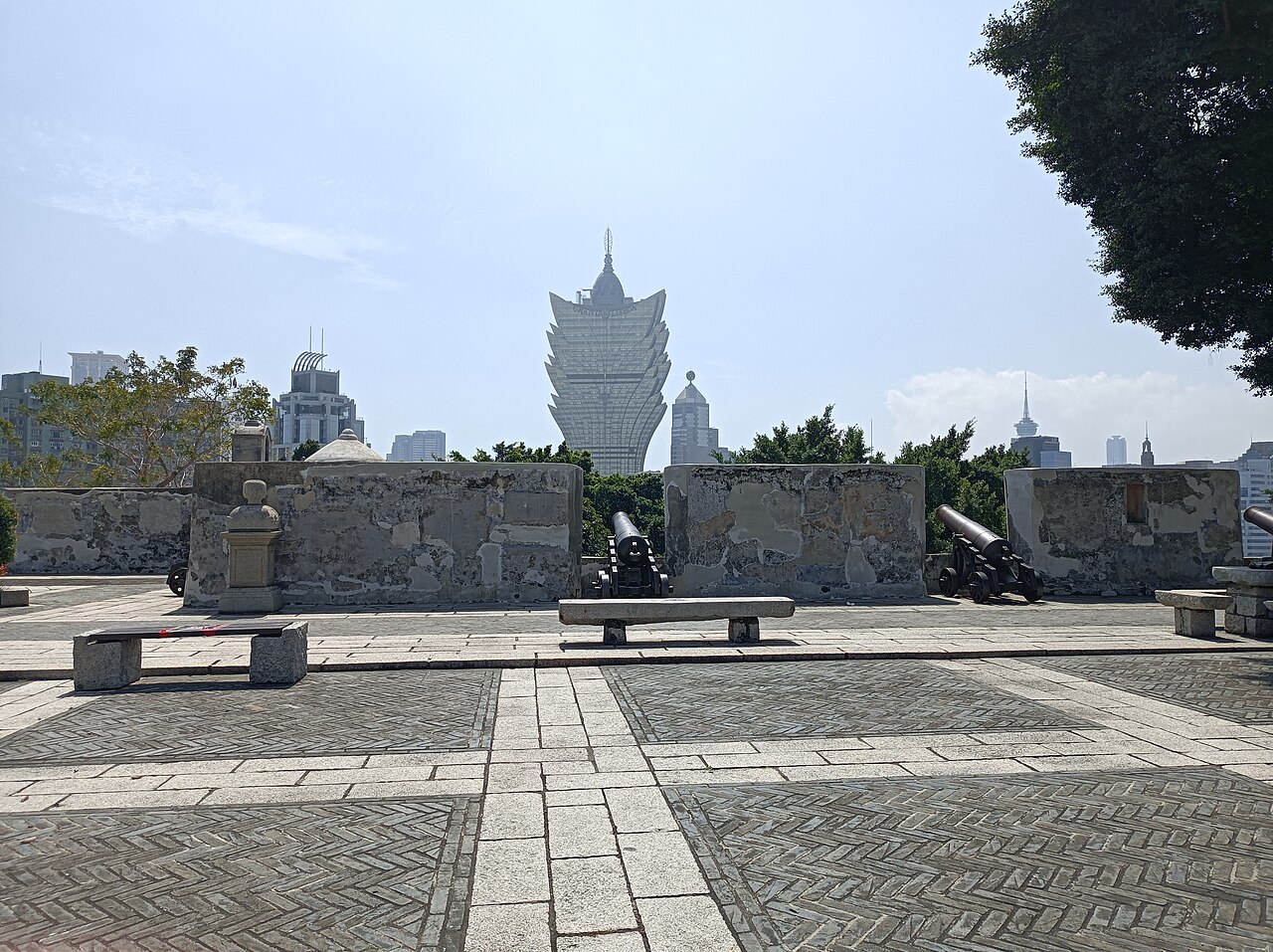
1617–1626
A tree-covered hilltop park enclosed by stone fortress walls mounting rows of old muzzle-loading cannon, with small watchtowers at the wall's southeastern corner and a low museum building filling the interior, all giving a panoramic view over the surrounding rooftops.
Built between 1617 and 1626 on a 52-metre hill, this fort was raised to protect nearby Jesuit properties from pirate attack, its walls mounting thirty-two muzzle-loading cannon and two small watchtowers at the southeastern corner. It helped repel a Dutch invasion attempt in 1622 and served as the residence of the territory's first governor from 1623 to 1749. Restricted to military use until 1965, its barracks later housed a weather observatory before demolition made way for a museum, opened on the site in 1998.
- It helped repel an attempted Dutch invasion in 1622, only a few years into its own construction.
- Its barracks served as a weather observatory from 1966 to 1996 before being demolished to make way for a museum.
- It was the residence of the territory's first governor from 1623 until 1749.
Photo: K.Y.K.Z.K. (CC BY-SA 4.0)
Guia Fortress
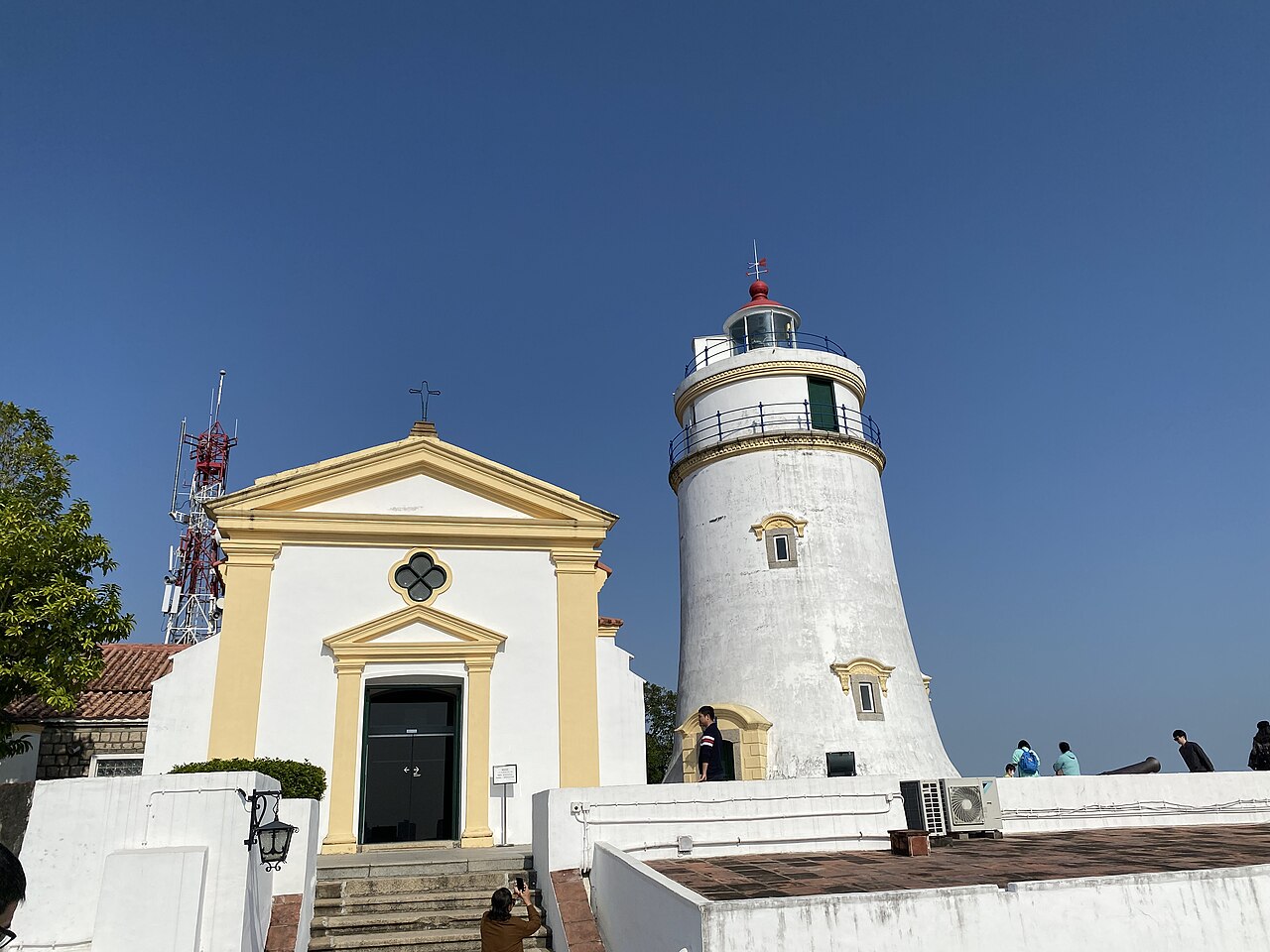
1622–1638
A low stone fort walls a small whitewashed chapel at the summit of the peninsula's highest hill, its seventeenth-century masonry predating the taller lighthouse tower that rises within the same walled enclosure.
The fort and chapel forming this hilltop complex were built between 1622 and 1638, the fort already partly standing when it helped repel an attempted invasion by Dutch forces that same year, its position offering an advantageous line of fire over the coast below. The chapel, raised inside the fort's walls, gained a taller lighthouse tower beside it only in 1865. Conservation work in 1998 uncovered frescoes on the chapel's walls combining Western and Chinese decorative themes, a discovery made more than three centuries after the building went up.
- Conservation work in 1998 uncovered frescoes on the chapel's walls combining Western and Chinese decorative themes.
- The fort was already partly built when it helped repel an attempted Dutch invasion in 1622.
Photo: LN9267 (CC BY-SA 4.0)
Casino Lisboa
A three-storey integrated resort built in the late 1960s, its original casino and twelve-storey round hotel tower added in 1970 by Stanley Ho. A 270-room extension followed in 1991, and the Grand Lisboa tower was added in 2006, bringing it to 2,362 rooms by 2010.
The Parisian Macao
A casino resort on the Cotai Strip featuring a half-scale Eiffel Tower replica as one of its landmarks. Originally expected to open in late 2015, it opened later than planned, on 13 September 2016.
Old Protestant Cemetery
A cemetery established by the British East India Company in 1821 for Protestants lacking burial ground in the Catholic Portuguese colony. It holds the graves of artist George Chinnery, missionary Robert Morrison, and a Royal Navy officer who was a great-great-granduncle of Winston Churchill.
Government Headquarters
The official office of the Chief Executive of Macau since 1999, located in São Lourenço. It was formerly known as the Governor's Palace.
Kun Iam Temple
A Chinese Buddhist temple founded in the 13th century to venerate Kun Iam, the Bodhisattva of Mercy, more formally named Pou Chai Sim Un. It is regarded as one of the oldest temples in Macau and one of its three largest and richest Buddhist temples.
Mandarin's House
A historic residential complex in São Lourenço, the home of Qing theoretician and reformist Zheng Guanying, who completed his masterwork Shengshi Weiyan there. Covering 4,000 square metres, it is among the largest family houses in Macau.
Portas do Cerco
An area known for the Barrier Gate the Portuguese built in 1849 to replace a crumbling wall the Chinese had erected in 1573. The gate followed the Passaleão incident, an 1849 clash between Qing China and Portugal that extended Macau's border northward.
Fort São Tiago da Barra
A fort at the base of Barra Hill, facing Lapa Island, once one of the most important fortresses in the city.
Na Tcha Temple
A Chinese folk religion temple in Santo António, built in 1888. It is dedicated to the deity Na Tcha, also known as Sam Tai Tsz.
Cathedral of the Nativity of Our Lady
The Roman Catholic cathedral of the Diocese of Macau, also known as the Church of the Nativity of Our Lady. It is listed among the historical monuments of the Historic Centre of Macau, part of China's UNESCO World Heritage Sites.
Dom Pedro V Theatre
A historical theatre at Largo de Santo Agostinho, one of the first Western-style theatres in East Asia. It remains an important regional landmark and still hosts public events and celebrations today.
Our Lady of Penha Chapel
A church on Penha Hill, in the São Lourenço parish of the Macau Peninsula.
Moorish Barracks
A historical barracks in São Lourenço, also known as the Port Authority Building, now serving as headquarters of the Marine and Water Bureau. It was designated a historic site of the Historic Centre of Macau, a UNESCO World Heritage Site, in 2005.
Luís de Camões Garden
A public park in Santo António established in the 19th century on the grounds of a former 18th-century estate, spanning 26,063 square metres. Once home to the British East India Company's Macau headquarters, it now holds a grotto dedicated to Portuguese poet Luís de Camões.
Wynn Palace
The second luxury integrated resort from Wynn Resorts, following Wynn Macau, located in Cotai with a 28-storey hotel of 1,706 rooms, suites, and villas. Its features include the 3.2-hectare Performance Lake, with choreographed water, music, and light, and a cable car called the SkyCab.
City of Dreams
A casino resort in Cotai built and managed by Melco Resorts & Entertainment, opened on 1 June 2009. Called a "mega-casino" by The Guardian, it was the third-largest casino in the world in 2020, with three casinos, four hotels, and about 2,270 hotel rooms.
Sun Yat Sen Memorial House
A museum in São Lázaro occupying the former home of Sun Yat-sen's family members. It marks his stay in Macau in the early 20th century, when the city served as the starting point for his travels abroad and a venue for his revolutionary activities.
Lou Kau Mansion
A historical house in Sé, built in 1889. It is one of the designated historical sites of the Historic Centre of Macau, a UNESCO World Heritage Site.
Red Market
A three-storey wet market building in Santo António, officially the Almirante Lacerda Municipal Market. It is popularly known as the Red Market.
Museum of Art
An art museum in Sé, established on 19 March 1999.
Tam Kung Temple
A temple in Coloane village dedicated to the deity Tam Kung.
History
Portugal leased the peninsula from the Ming dynasty as a trading post in 1557, paying rent to China while administering the settlement itself. Within decades, Catholic missionaries and colonial officials had begun building the churches, forts and civic structures that still define the downtown core: St. Dominic's Church was finished in 1587, the college and church later known as the Ruins of St. Paul's in 1602, and a fort, chapel and lighthouse on the hill above soon after. Portugal's position hardened into formal colonial rule with the 1887 Treaty of Peking, and the Neoclassical Leal Senado Building, seat of that colonial government, dates from 1784. Rule continued until the 1999 handover to China. The 2001 Macau Tower belongs to a later, separate era, built for broadcasting and tourism after Macau's transformation into a casino economy.