Landmarks in Vienna
A former imperial capital where Baroque palaces and a Gothic cathedral share one skyline.
Vienna's centre preserves the seat of the Habsburg court intact: St. Stephen's Cathedral's steep Gothic nave and patterned roof mark the medieval city, while the Hofburg spread outward from a thirteenth-century core into a warren of wings and courtyards used as the imperial winter residence for centuries. Baroque building dominates the wider picture — Schönbrunn Palace and the twin Belvedere palaces were both raised for aristocratic ambition, one for the ruling dynasty's summer court, the other for a victorious general, and both are set within formal gardens. The nineteenth century added a different layer: the Vienna State Opera, in Renaissance Revival style, was the first grand building raised on the new Ring Road.
Schönbrunn Palace
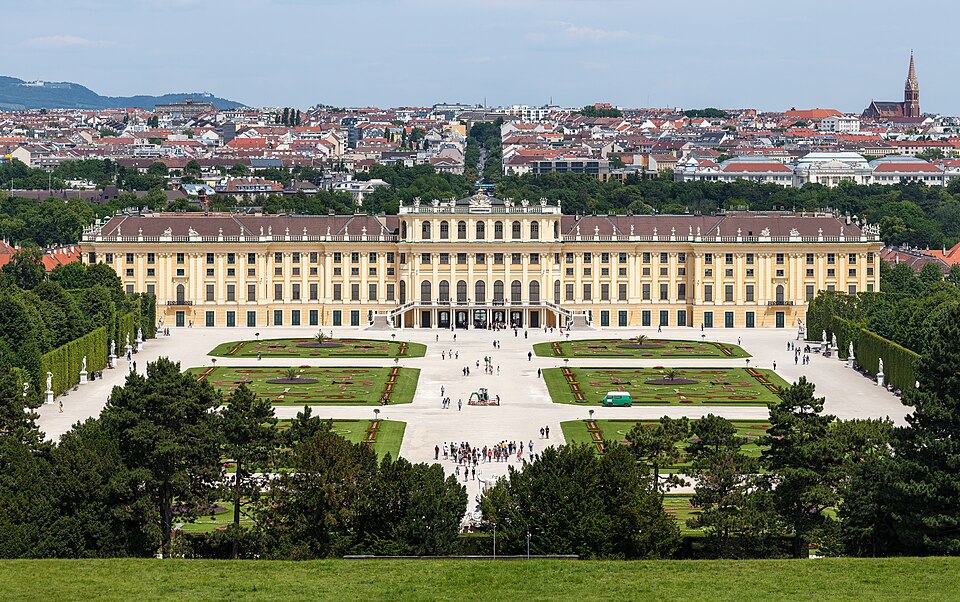
1713 · Johann Bernhard Fischer von Erlach
The palace is identified less by any single ornament than by its scale: a symmetrical Baroque block of 1,441 rooms fronted by vast formal gardens.
Schönbrunn Palace was the main summer residence of the Habsburg rulers, in Hietzing, the 13th district of Vienna. Its Baroque design is credited principally to Johann Bernhard Fischer von Erlach, with Nicolò Pacassi also named among the palace's architects. The complex holds 1,441 rooms and is set within extensive formal gardens. It has been a major tourist attraction since the mid-1950s and today functions as a museum, its history and grounds spanning more than three centuries of changing Habsburg tastes.
- Its name means "beautiful spring", after an artesian well whose water was drunk by the court.
Photo: Thomas Wolf, www.foto-tw.de (CC BY-SA 3.0 de)
St. Stephen's Cathedral
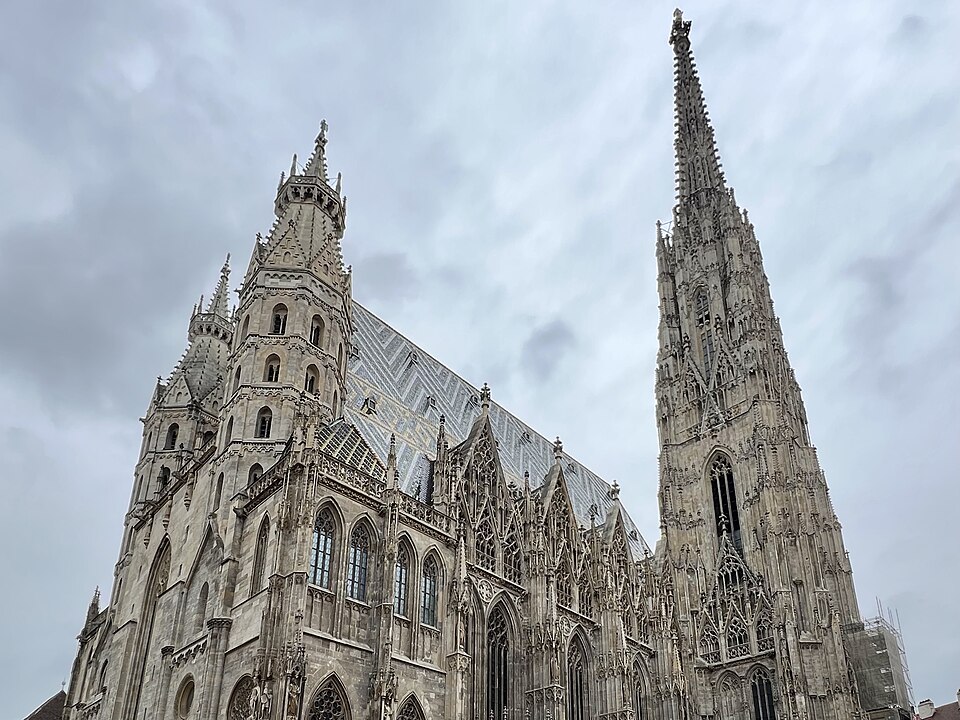
1433
Its steep, multi-coloured tiled roof and Gothic profile — climbed by 256 internal stairs — set it apart from the rest of the skyline around it.
Rising over Stephansplatz, St. Stephen's Cathedral serves as the mother church of the Archdiocese of Vienna and the seat of its Archbishop. Its present Romanesque and Gothic form was largely commissioned under Duke Rudolf IV in the mid-fourteenth century, raised over the remains of two earlier churches, the first a parish church consecrated in 1147. Known also as Stephansdom, it has witnessed major events in Habsburg and Austrian history, and it is reached by 256 stairs from its base to the top.
- The cathedral has 256 stairs between its base and the top.
- It stands over the remains of two earlier churches, the first consecrated in 1147, almost two centuries before the present building began.
Photo: Sharon Hahn Darlin (CC BY 2.0)
Hofburg
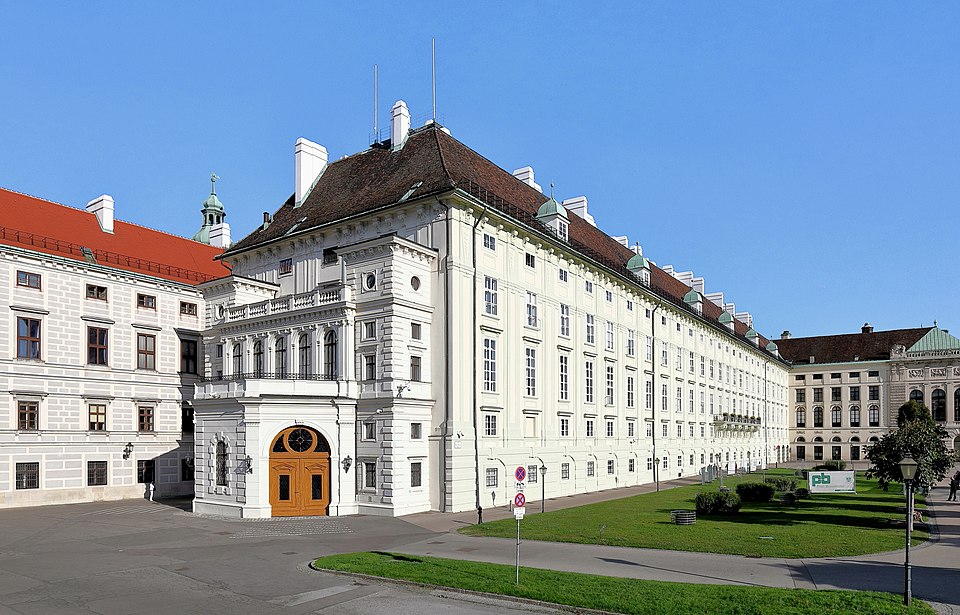
1279
It reads not as one façade but as a continuous sprawl of wings and internal courtyards, opening onto the wide Heldenplatz that was meant to anchor a larger imperial forum.
Built from the thirteenth century onward as the Habsburg dynasty's principal winter residence, the Hofburg was founded by Ottokar II of Bohemia and expanded repeatedly over the following centuries. Numerous architects contributed to later phases, among them Filiberto Lucchese in the seventeenth century; the complex today holds courtyards, an imperial chapel, an imperial library, a treasury, a theatre and a riding school. It has served as the residence and workplace of the president of Austria since 1946, and it faces Heldenplatz, part of an imperial forum plan that was never completed.
- It has been the official residence and workplace of Austria's president since 1946.
- The square it faces, Heldenplatz, was meant to be part of a grand imperial forum that was never completed.
Photo: C.Stadler/Bwag (CC BY-SA 4.0)
Belvedere Palace
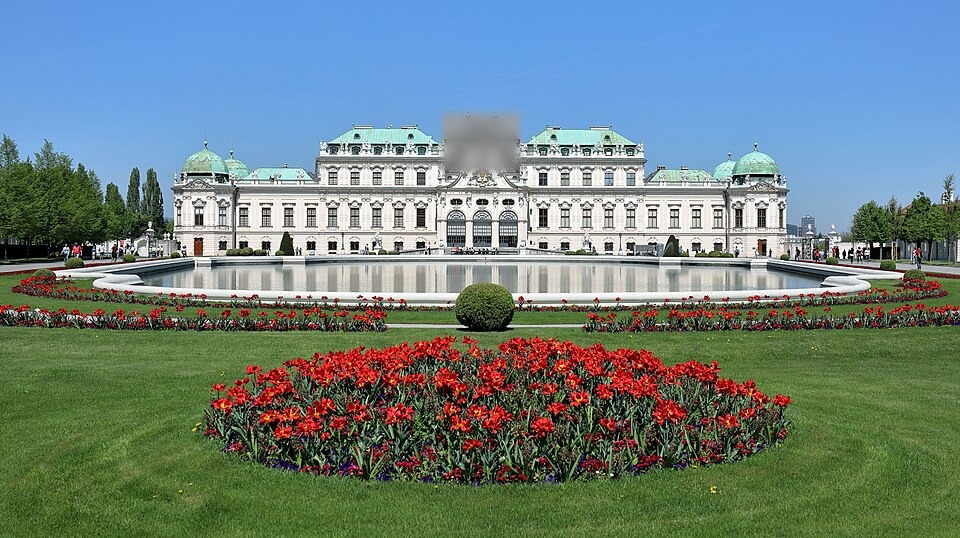
1723 · Johann Lukas von Hildebrandt
The complex presents as two separate Baroque palace buildings facing one another across a formal garden, with an orangery and stables completing the grounds.
Two Baroque palaces, the Upper and Lower Belvedere, make up this complex, raised as the summer residence of Prince Eugene of Savoy and designed principally by Johann Lukas von Hildebrandt. It was completed in the early eighteenth century, during a period of prosperity that followed Eugene's successful campaigns against the Ottoman Empire. The grounds also include an Orangery, the Palace Stables and a formal Baroque garden, in Vienna's third district, Landstraße. Today the complex is one of Austria's major art museums, with the Upper Belvedere housing the permanent collection and the Lower Belvedere used for special exhibitions.
- It was built as the summer residence of a general, Prince Eugene of Savoy, funded in part by his campaigns against the Ottoman Empire.
Photo: C.Stadler/Bwag (CC BY-SA 4.0)
Vienna State Opera
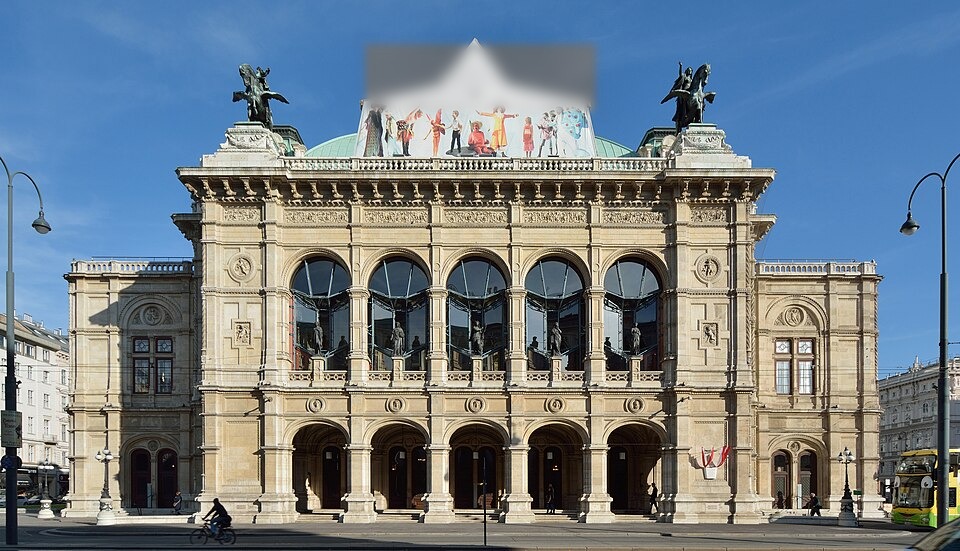
1869 · August Sicard von Sicardsburg and Eduard van der Nüll
A Renaissance Revival building holding a 1,709-seat auditorium, its historicist style distinguishing it from the Baroque and Gothic buildings nearby.
The Vienna State Opera opened in 1869 as the Vienna Court Opera, the first major building completed on the Ring Road. It was designed by August Sicard von Sicardsburg and Eduard van der Nüll in Renaissance Revival style, and seats 1,709. The building is also home to the Vienna State Ballet, and it took its current name after the founding of the First Austrian Republic in 1921. Its orchestra supplies the musicians who play in the Vienna Philharmonic.
- Both of its original architects died in 1868, the year before the building they designed opened.
- It succeeded an earlier court opera built in 1636 inside the Hofburg.
Photo: P e z i (CC BY-SA 3.0 at)
Austrian Parliament Building
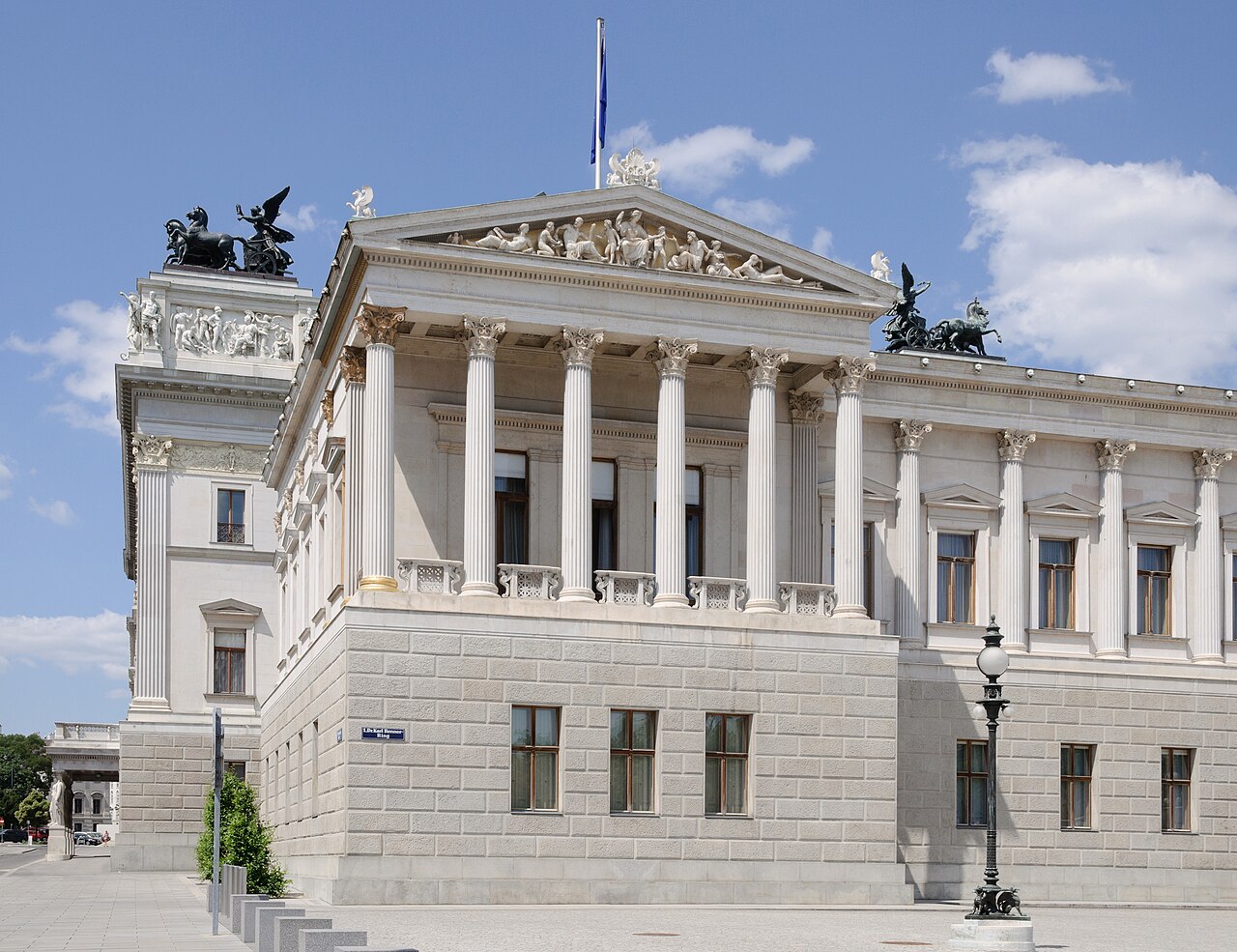
1874–1883 · Theophil Hansen
A colonnaded, pedimented Greek Revival facade fronts the building along its boulevard, faced across the forecourt by the Pallas Athena Fountain, a sculptural centrepiece completed in 1902.
The Austrian Parliament Building houses the two chambers of Austria's federal legislature, on the Ringstraße near Hofburg Palace. Theophil Hansen designed it in Greek Revival style, chosen for its association with the birthplace of democracy, after ground was broken in 1874; construction finished in 1883, first housing the Imperial Council of Austria-Hungary. The building sustained heavy damage in the Second World War, and most of its interior has since been restored. It reopened in 2023 after a five-year renovation, and its forecourt fountain, the Pallas Athena Fountain, was completed in 1902.
- Architect Theophil Hansen based the design partly on his own earlier plans for the Zappeion Hall in Athens, reinforcing the building's link to ancient Greek democracy.
- Deputies could be so quarrelsome that a Viennese joke held the bronze goddess on the fountain outside had turned her back on the building in disgust, after brawls and thrown inkwells in its chambers.
- Emperor Franz Joseph made Hansen a Freiherr (baron) after the building's completion.
Photo: MrPanyGoff (CC BY-SA 3.0)
Burgtheater
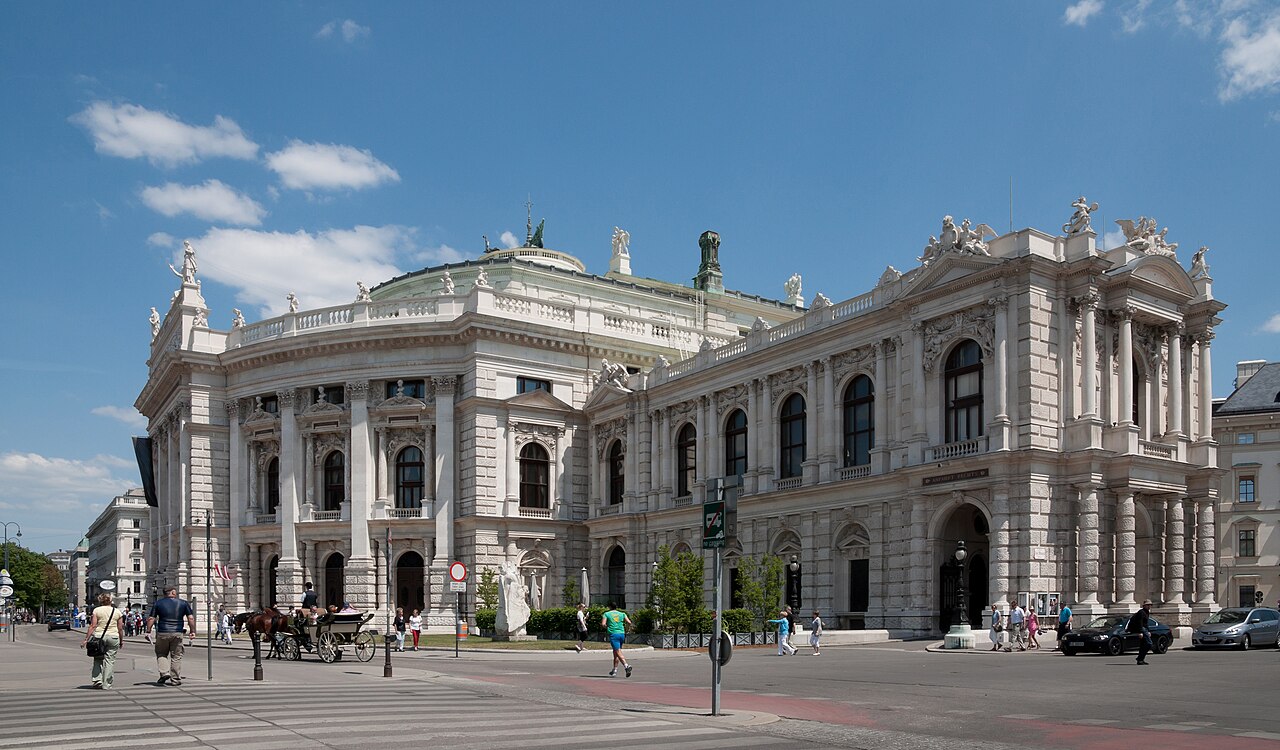
1888–1955 · Gottfried Semper
Twin ceremonial staircases at either end of the building, facing an adjoining park, carry the names of its most honoured actors engraved in marble at their base; inside, its grand stairway and foyer are painted with frescoes by Gustav Klimt, Ernst Klimt and Franz von Matsch.
The Burgtheater is Austria's national theatre, considered the most important German-language stage in the world. It grew out of a court theatre founded in 1741 beside the Hofburg, where three Mozart operas and Beethoven's First Symphony had their premieres. The company moved into a new building on the Ringstraße in 1888, designed by Gottfried Semper with Karl von Hasenauer. A bombing raid in March 1945 destroyed most of the structure, and a fire the following month caused further damage; the theatre reopened after reconstruction between 1953 and 1955.
- The original theatre began inside a royal tennis court, or "ball house", that Emperor Ferdinand I had built in 1540.
- Despite its exceptional acoustics, the old building was so small that an 1884 account said its auditorium "can hardly contain half the spectators who should like to enter."
- In 1943, under Nazi rule, the theatre staged an antisemitic production of The Merchant of Venice starring Werner Krauss as Shylock.
Photo: MrPanyGoff (CC BY-SA 3.0)
Graben
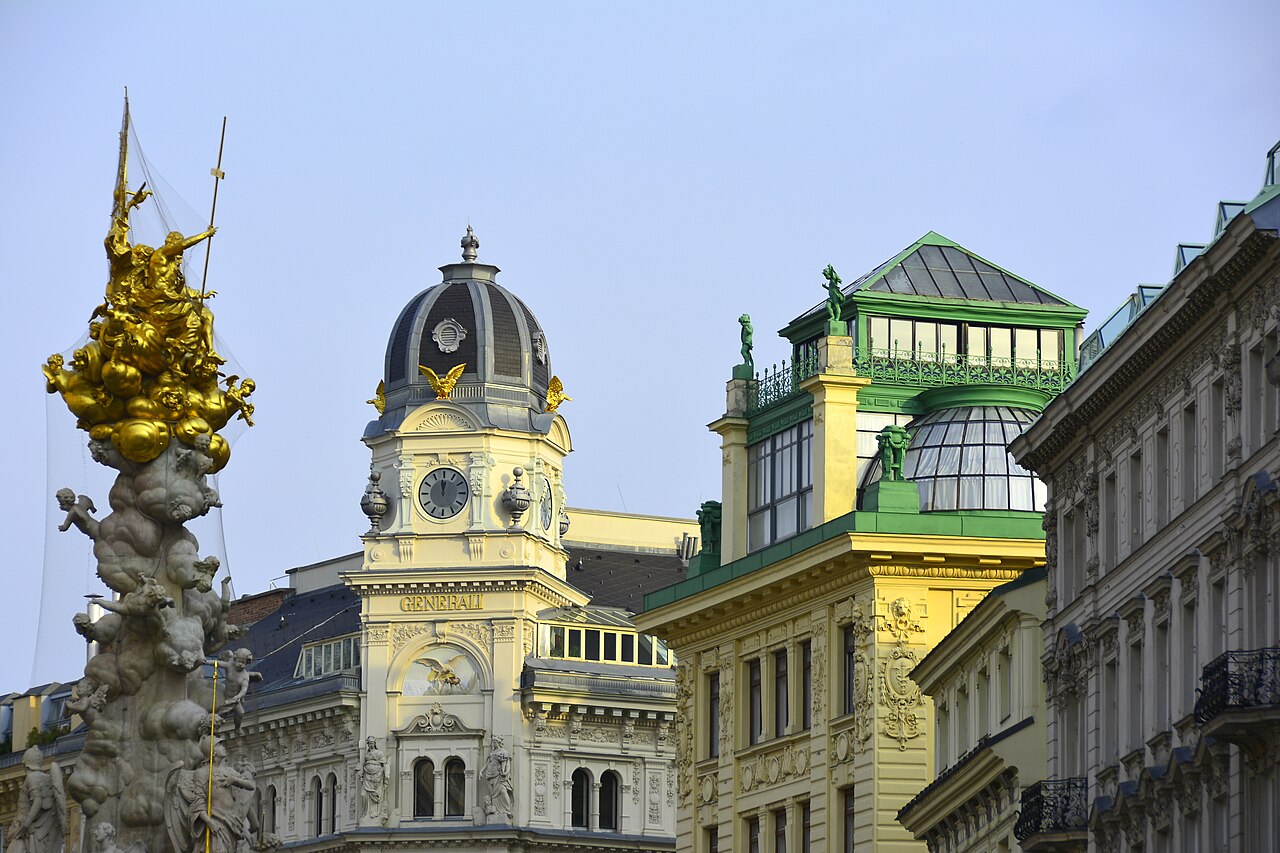
A broad pedestrian street of ornate nineteenth- and early twentieth-century shopfronts is crossed midway by a bridge, the Hohe Brücke, spanning it about ten metres above street level; it was fitted with the city's first neon signs in 1950.
The Graben is a square and pedestrian street in Vienna's city centre, its name meaning "ditch" after the defensive trench that ran outside the old Roman camp of Vindobona and, later, the medieval town wall. Babenberg dukes filled in and levelled that ditch at the end of the twelfth century, funded partly by the ransom paid for Richard the Lionheart's release, turning the strip into one of the new district's first residential streets. It grew steadily more fashionable through the Baroque era and the nineteenth century, lined with luxury shops, and became Vienna's first pedestrian zone, provisionally, in 1974.
- A fire that broke out in a priest's house on Wallnerstraße in 1327 spread across Kohlmarkt and destroyed the Graben completely.
- The street's night-time trade in the eighteenth century gave rise to a nickname for its prostitutes, the "Grabennymphen".
- The first neon lights in Vienna were installed here on 4 December 1950.
Photo: Fotoalfred (CC BY-SA 4.0)
Karlskirche
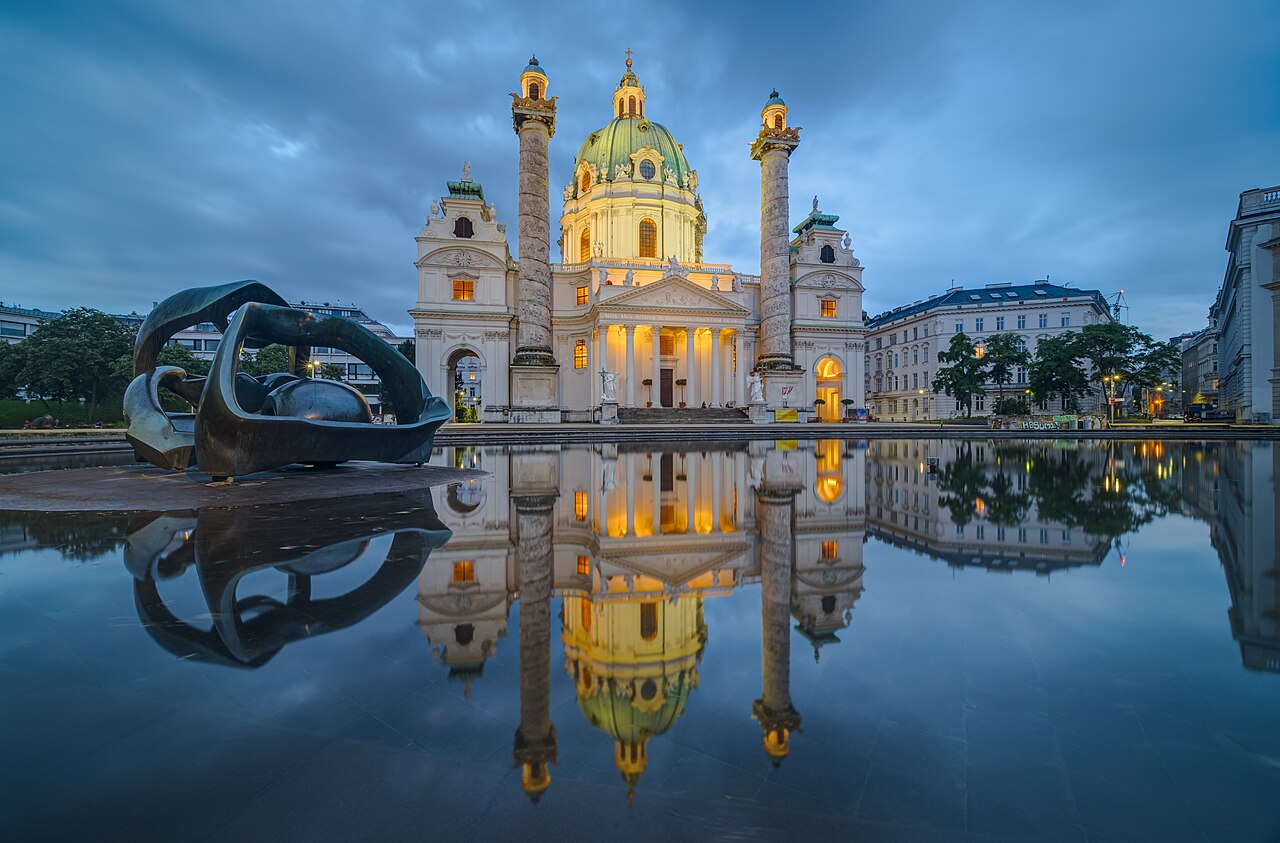
1716–1737 · Johann Bernhard Fischer von Erlach
A pedimented, temple-like portico is flanked by two tall freestanding columns carved in spiral relief, with a narrow tower pavilion at each outer edge and a high-drummed dome rising behind, all set before a shallow reflecting pool.
Emperor Charles VI vowed to build this church in 1713, a year after Vienna's last major plague epidemic, dedicating it to a saint venerated as a healer of plague sufferers. Johann Bernhard Fischer von Erlach won an architectural competition for the design, and construction began in 1716 under the site supervision of Anton Erhard Martinelli. After Fischer's death in 1723, his son Joseph Emanuel Fischer von Erlach completed the building in 1737, shortening and altering the dome. Composer Antonio Vivaldi was buried in the adjoining cemetery in 1741, though his grave has since been lost.
- The two spiral-relief columns are also meant to recall Boaz and Jachim, the pillars said to have stood before the Temple in Jerusalem, and the Pillars of Hercules, as symbols of imperial power.
- Inventor and actress Hedy Lamarr married an Austrofascist industrialist in the church's chapel in 1933, aged nineteen, wearing a black-and-white print dress and carrying white orchids.
- Between 2006 and 2007, an oversized rim added to the pulpit's canopy around 1860 was removed after long debate, restoring its original swirling proportions.
Photo: Moahim (CC BY-SA 4.0)
Votivkirche
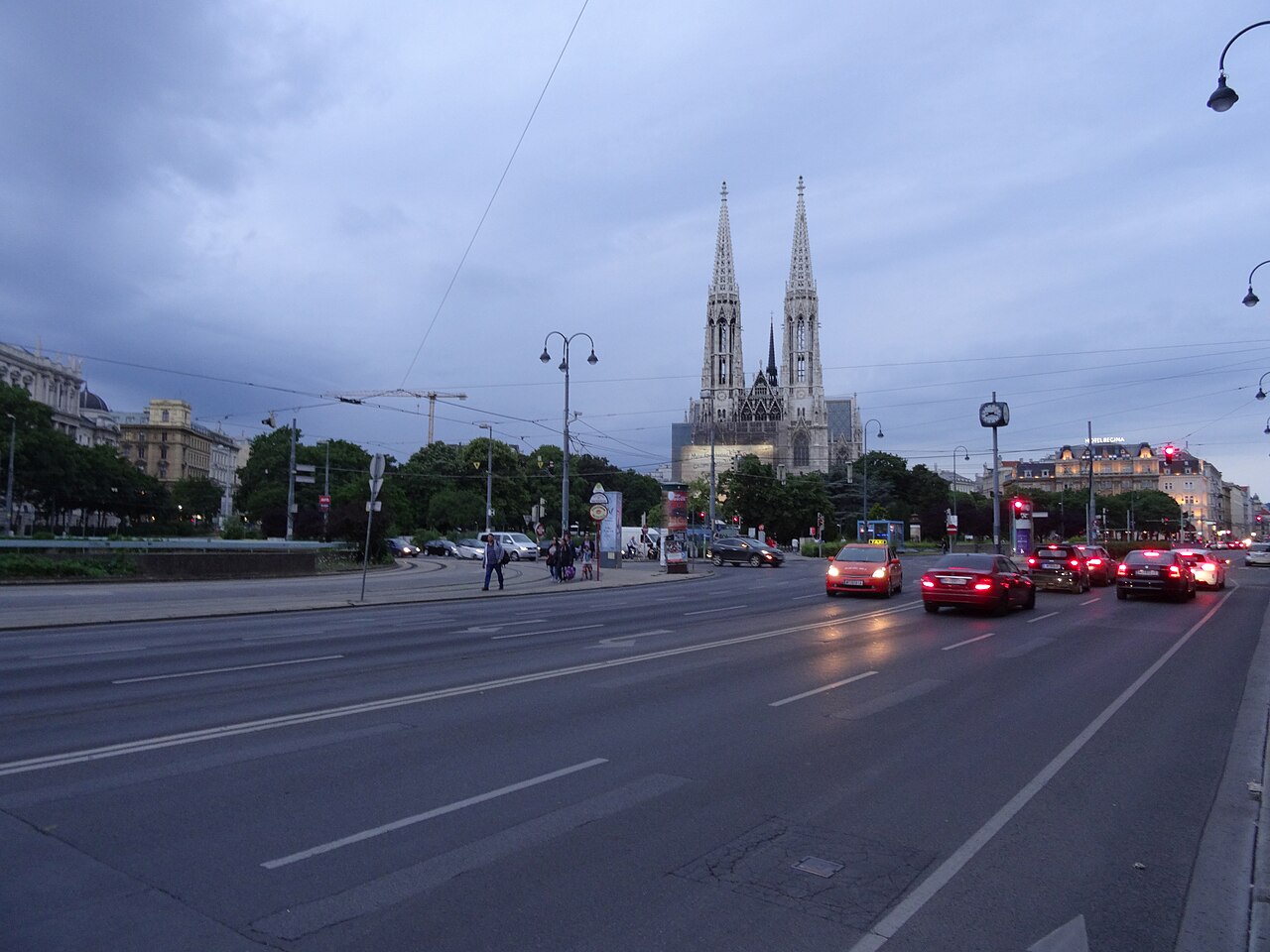
1856–1879 · Heinrich von Ferstel
Two slender, matching towers with steeply pointed spires and gabled portals rise from a stark white sandstone facade, patterned tile covering its roof, giving it a strong resemblance to a much older cathedral nearby despite the two buildings differing in age by more than seven centuries.
After János Libényi's failed knife attack on Emperor Franz Joseph in 1853, the emperor's brother, Archduke Ferdinand Maximilian, launched an empire-wide fundraising campaign for a votive church on the site. An 1854 competition drew 75 entries; the jury chose the neo-Gothic design of Heinrich von Ferstel, then only twenty-six. Construction began in 1856, and the church was dedicated on 24 April 1879, the silver anniversary of Franz Joseph's marriage to Empress Elisabeth. Built of white sandstone, it originally served as a garrison church, since the district still lay outside the city walls and had no parish of its own.
- The assassin's blade was deflected by the heavy gold embroidery on the emperor's stiff collar, saving his life.
- The bystander who overpowered the attacker and the officer who struck him down were both elevated to the nobility for their roles.
- The church's design has been closely imitated elsewhere, including the Gedächtniskirche in Speyer, Germany, and the Cathedral of Saint Helena in Montana.
Photo: Sjaak Kempe from Groningen, The Netherlands (CC BY 2.0)
Imperial Crypt
A burial chamber beneath the Capuchin Church, founded in 1618 and dedicated in 1632, the principal Habsburg burial place since 1633. It holds 145 Habsburg royals, including 12 emperors and 18 empresses, in 107 sarcophagi ranging from plain to rococo, the most recent in 2023.
Natural History Museum
A large natural history museum, one of Austria's biggest museums and research institutions, with 39 exhibition rooms covering 8,460 square metres and displaying more than 100,000 objects. Its total holdings run to 30 million objects, used by more than 60 scientists and numerous guest researchers.
MuseumsQuartier
An arts and culture complex opened in 2001 on the site of former imperial court stables, mixing Baroque buildings with contemporary architecture. With about five million visitors a year, it is one of the largest arts complexes in Europe, housing the Leopold Museum and MUMOK.
Prater
A 6-square-kilometre public park in Vienna's 2nd district, Leopoldstadt. The name is often used to refer to the Wurstelprater, an amusement park within the grounds.
Kunsthistorisches Museum
The largest art museum in Austria, in a palatial building on the Ring Road crowned with an octagonal dome, built from 1871 to 1891. Emperor Franz Joseph I opened it around 1891 alongside the similarly designed Natural History Museum, directly across Maria-Theresien-Platz.
Musikverein
A concert hall designed by Theophil Hansen on land granted in 1863 by Emperor Franz Joseph I, home to the Vienna Philharmonic since 1870. Its Great Hall's acoustics rank it alongside the Konzerthaus in Berlin, the Concertgebouw in Amsterdam and Symphony Hall in Boston.
Albertina
A museum in the Innere Stadt holding one of the world's largest print rooms, with about 65,000 drawings and a million old master prints. It also holds Impressionist and early 20th-century art on loan, and drew over a million visitors in 2025.
Plague Column
A Baroque Holy Trinity column on the Graben, erected after the Great Plague epidemic of 1679. Historian Christine M. Boeckl called it one of the most ambitious and innovative sculptural ensembles created anywhere in Europe in the post-Bernini era.
Stadttempel
An Orthodox Jewish synagogue at Seitenstettengasse 4 in the Innere Stadt, completed in 1826 as Vienna's main synagogue. Its congregation worships according to the Ashkenazi rite.
Museum of Applied Arts
An arts and crafts museum at Stubenring 5, at its current location since 1871, illuminated evenings since 2004 by James Turrell's "MAKlite" installation. In 2015 it became the first museum to use bitcoin to acquire art, and it now presents Austria's largest online museum collection.
Austrian National Library
The largest library in Austria, with more than 12 million items, housed in the Neue Burg Wing of the Hofburg. Founded by the Habsburgs as the Imperial Court Library, it took its name in 1920 after the monarchy's fall, and its complex includes four museums.
Imperial Treasury
A treasury at the Hofburg Palace holding secular and ecclesiastical treasures spanning a thousand years, entered through the Schweizerhof, the palace's oldest part. Affiliated with the Kunsthistorisches Museum, its 21 rooms display Habsburg treasures including Austria's Imperial Crown and the Holy Roman Empire's Imperial Crown.
Winter Palace of Prince Eugene
A high-Baroque palace built as Prince Eugene of Savoy's winter residence by Fischer von Erlach from 1695 and completed by Hildebrandt by 1724. Empress Maria Theresa acquired it at auction in 1738, and it later housed the Austrian Empire's finance ministry from 1848 to 1918.
Mozarthaus Vienna
Also known as the Figaro House, Mozart's residence from 1784 to 1787, near St. Stephen's Cathedral in Vienna's Old Town. It is his only surviving Viennese residence and now operates as a museum.
Hotel Sacher
A five-star luxury hotel facing the Vienna State Opera, famous for the Original Sachertorte, a chocolate cake with apricot filling. It stands near Antonio Vivaldi's former residence and is a member of The Leading Hotels of the World.
Judenplatz
A town square that was the centre of Vienna's medieval Jewish community, its medieval synagogue ruins viewable underground via the Misrachi-Haus museum. It holds a statue of Gotthold Ephraim Lessing and a memorial to Austrian Holocaust victims by Rachel Whiteread, unveiled in 2000.
Church of Saint Michael
One of Vienna's oldest churches and few surviving Romanesque buildings, a late Romanesque, early Gothic structure dating from about 1220 to 1240. Once the parish church of the Imperial Court, it stands at Michaelerplatz across from the Hofburg's St. Michael's Gate, unchanged since 1792.
Looshaus
A commercial and residential building at Michaelerplatz 3, also known as the Goldman & Salatsch Building. Designed by Adolf Loos and completed in 1912, it is considered a major building of Viennese Modernism.
Haus des Meeres
A public aquarium in Esterhazy Park, housing more than ten thousand aquatic animals inside a tall concrete flak tower built during World War II. It drew a record 650,000 visitors in 2012, though maintenance costs for the former flak tower are paid by taxpayers.
Konzerthaus
A concert hall in the third district, at the edge of the first, opened in 1913 after construction from 1911. Early plans for the site, called the Olympion, included an ice rink and bicycle club; though unbuilt, an ice rink now sits beside the building.
History
Vienna grew from Vindobona, a Roman castrum granted city rights in 212, into the seat of the Habsburg dynasty, whose court settled around the Hofburg after Ottokar II of Bohemia built there in the thirteenth century. St. Stephen's Cathedral's present Gothic form was begun under Duke Rudolf IV in the mid-fourteenth century, over parish churches dating back to 1147. Habsburg wealth and military success — including Prince Eugene of Savoy's campaigns against the Ottoman Empire — financed a wave of Baroque building in the early eighteenth century, producing Schönbrunn Palace and the Belvedere. The nineteenth century brought a further transformation: the Vienna State Opera rose as the first major building on the new Ring Road, opening in 1869 as the Vienna Court Opera.