Landmarks in Rhodes
Knights' ramparts, an Ottoman mosque and a Sephardi synagogue share one walled town.
Almost everything here stands inside or against a single defensive ring: the crescent of walls the Knights Hospitaller raised from 1309 over older Byzantine fortifications, in rubble masonry thick enough to absorb cannon fire. Within that perimeter, a former Hospitaller hospital begun in 1440 now holds the archaeological collection, while the Marine Gate of 1478 pierced the same walls toward the harbour. Ottoman rule from 1522 added a mosque commemorating the conquest, rebuilt in 1808 after the original fell into disrepair, and a small Jewish quarter kept its own synagogue, finished in 1577 and still the oldest in Greece. Knights, Ottomans and a Sephardi community each left a building without displacing the others.
Fortifications of Rhodes
1309–1522
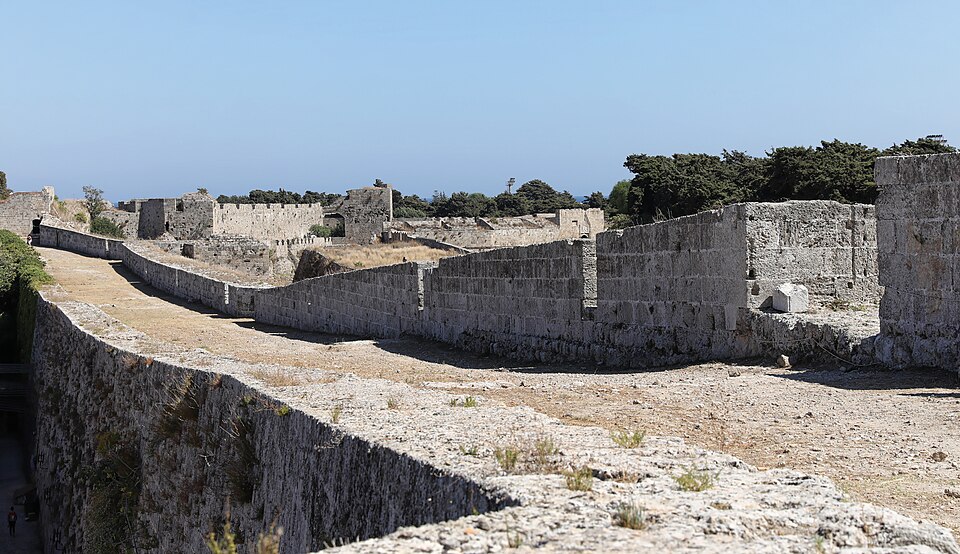
The walls form a continuous crescent around the old town, an earthen core faced in smooth-cut stone, with a crenellated stretch along the harbour and towers rising from the moles; individual bastions still carry the names of the medieval order's national divisions, such as the Bastion of Italy.
The fortifications form the defensive perimeter of the medieval town, built up by the Knights Hospitaller from 1309 over earlier Byzantine walls. The circuit combines an earth-filled rampart faced in stone with scarps, bastions, a moat and a glacis, while a crenellated wall and towers on the moles guard the harbour side. Each stretch was defended by a different national group, or Langue, within the order, and several bastions and terrepleins still bear their names.
- Bastions and terrepleins still carry the names of the Langues, the knightly order's national divisions that once defended them, such as the Bastion of Italy and the terreplein of Spain.
- The rampart's core is an earthen embankment packed between stone faces, a technique called rubble masonry, built to absorb cannon fire rather than simply block it.
Photo: Burkhard Mücke (CC BY-SA 4.0)
Marine Gate
1478
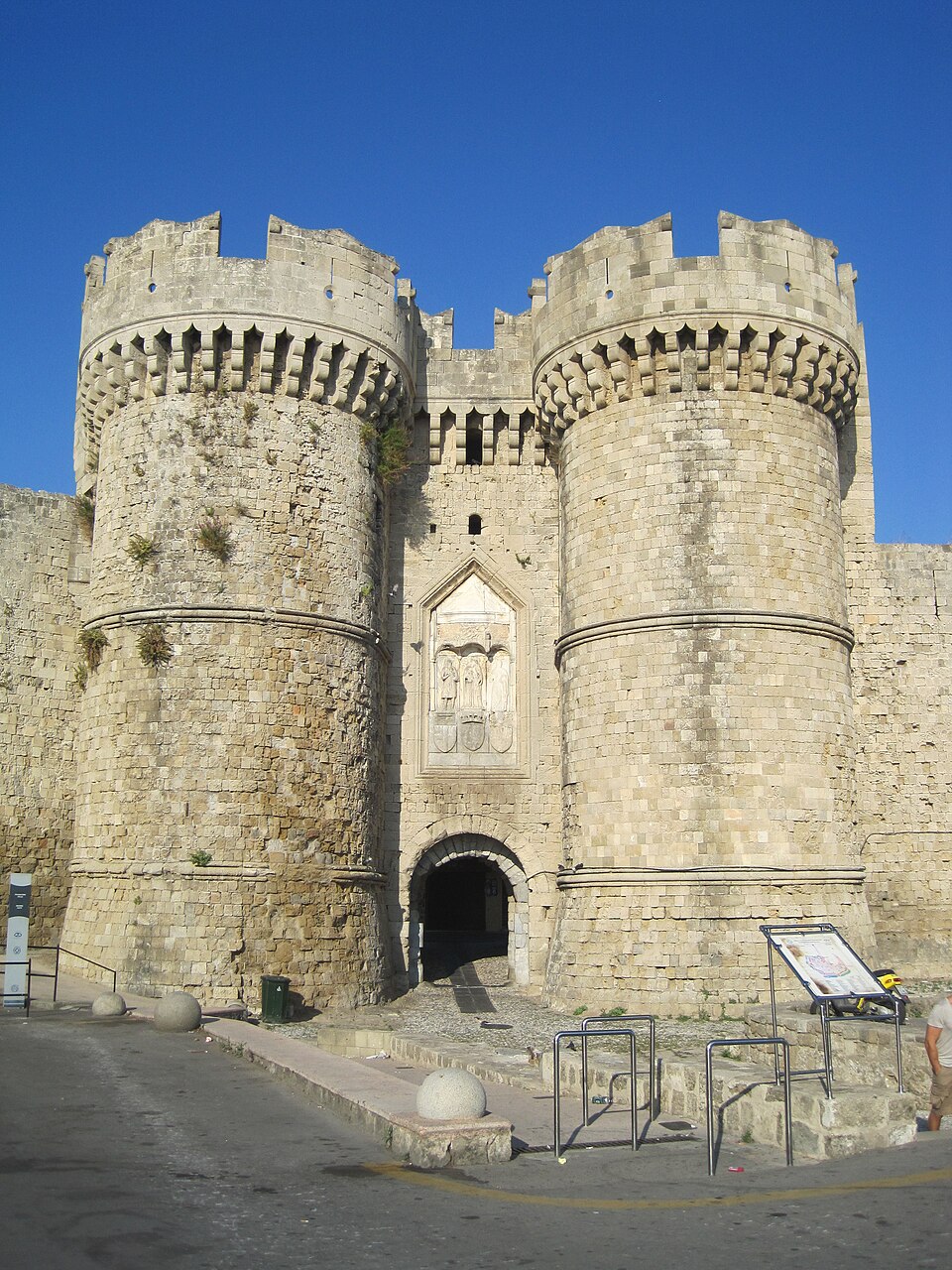
Little of its appearance is documented beyond its role as a fortified opening through the town's perimeter walls, dated to 1478.
The Marine Gate is a fortified gateway through the walled perimeter of the town, dated to 1478 and built during the two centuries in which the Knights Hospitaller held Rhodes (1310–1522). Beyond its name and date, the surviving record gives no architect, decorative detail or description of its structure, so its exact appearance and precise function within the fortifications are not documented here.
Photo: ianpudsey (CC BY 3.0)
Archaeological Museum of Rhodes
1440–1503
Inside, the marble Crouching Aphrodite and the carved Head of Helios stand out; the head became widely recognisable after appearing on the cover of the 2011 album Floral Shoppe, adopted as a symbol of the Vaporwave movement.
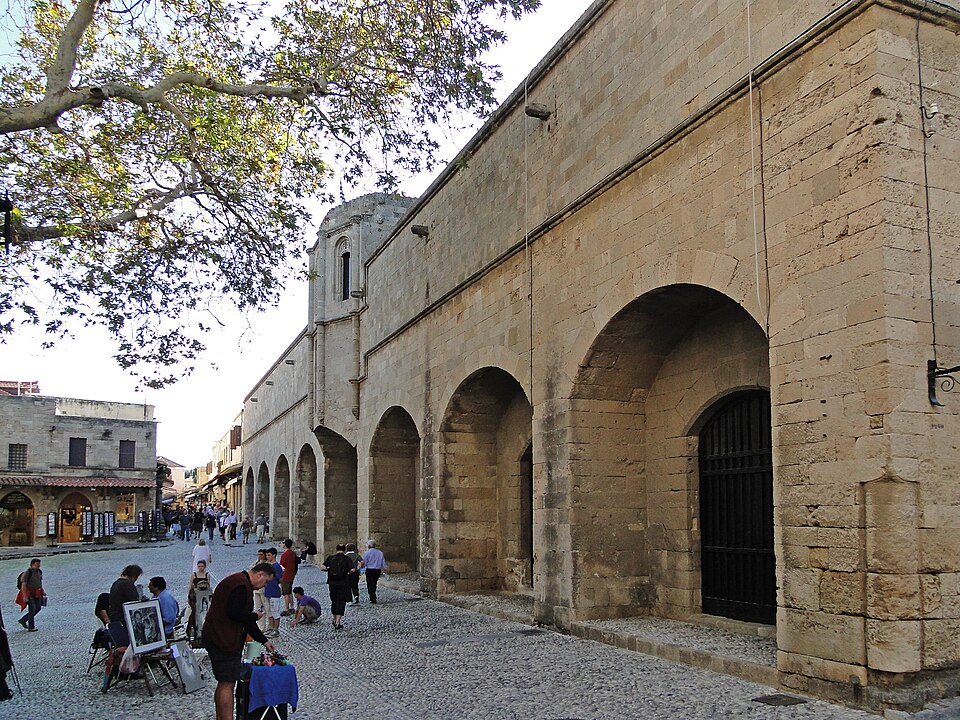
Built as the hospital of the Knights of Saint John, the museum's home was begun in 1440 and finished during the rule of Grand Master d'Aubusson, between 1476 and 1503. It now houses archaeological finds from Rhodes and neighbouring islands, among them the Crouching Aphrodite, a 1st-century-BC marble copy of an earlier Hellenistic statue by the sculptor Doidalsas, and a mid-6th-century-BC Fikellura-style pyxis.
- The museum's Head of Helios appeared on the cover of the 2011 album Floral Shoppe and became an emblem of the Vaporwave movement.
- Its Crouching Aphrodite is a 1st-century-BC marble version of an earlier work by the sculptor Doidalsas, made roughly three centuries before it.
Photo: Bernard Gagnon (CC BY-SA 4.0)
Suleymaniye Mosque
1808
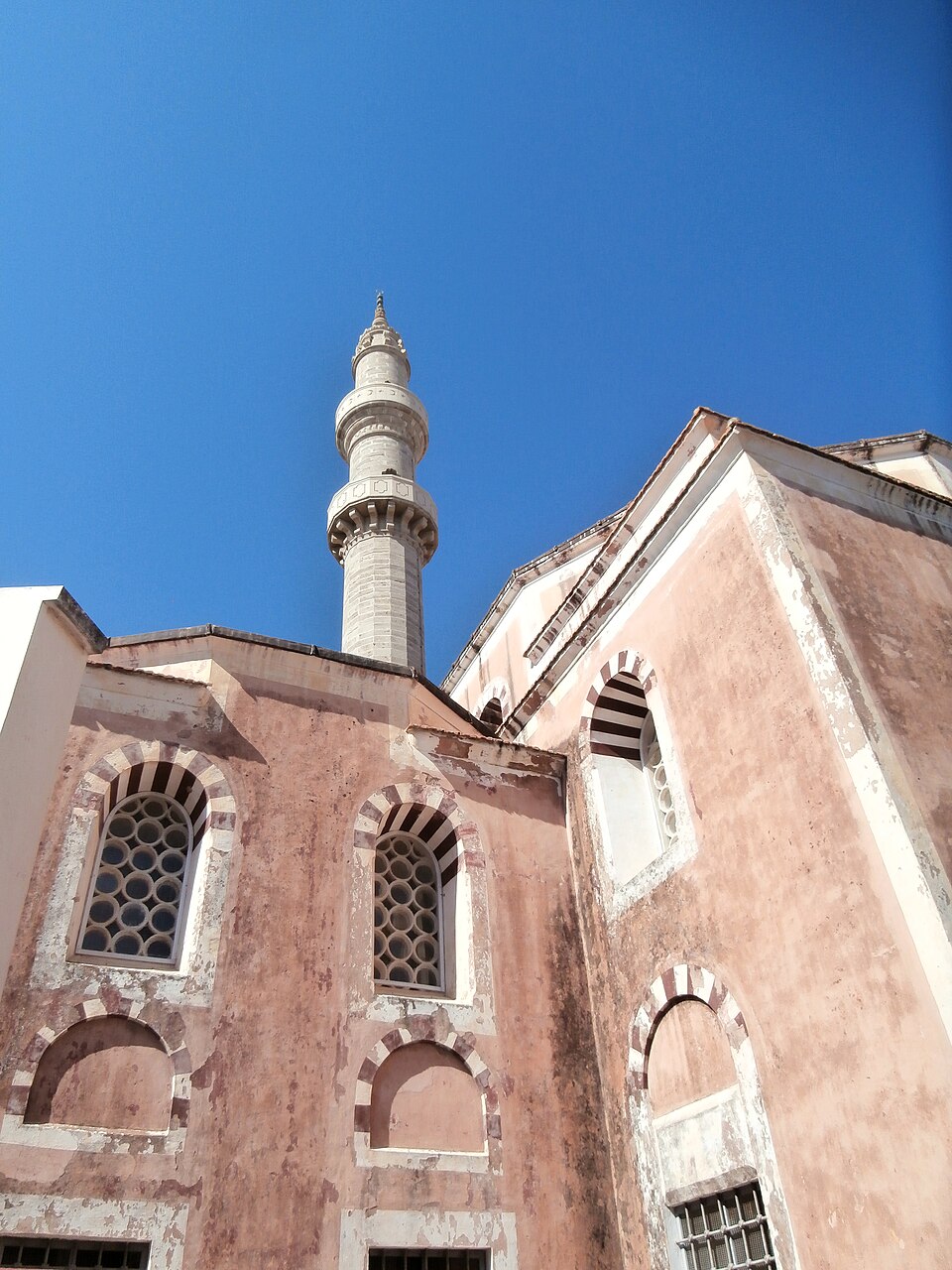
Built in the Ottoman style and reconstructed in 1808, it stands as the most significant Ottoman-era monument still standing in the old town, though it has been silent, closed to worshippers, since 2014.
Originally raised after the Ottoman conquest of 1522 and named for Sultan Suleiman to mark that victory, the mosque was rebuilt in 1808 after the first structure fell into disrepair. It has been restored more than once since, and although services stopped in 2014 pending further work, it is regarded as the most significant Ottoman-era monument still standing in Rhodes.
- It was named for Sultan Suleiman specifically to commemorate his conquest of Rhodes in 1522.
- It has been closed for worship since 2014, pending restoration.
Photo: Lunar sea n (CC BY-SA 4.0)
Kahal Shalom Synagogue
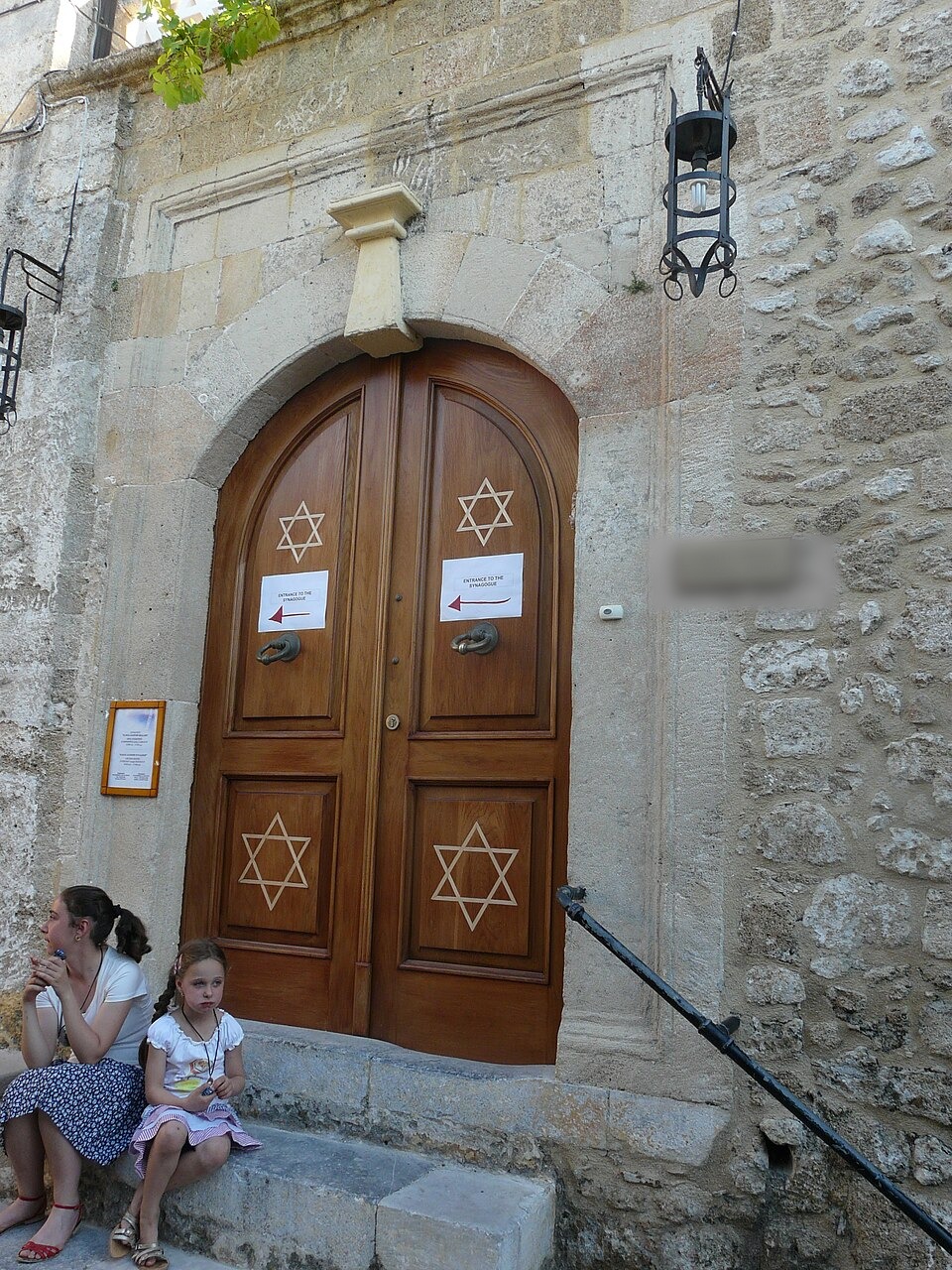
1577
Set in the old Jewish quarter, the building also houses the small Jewish Museum of Rhodes; modest from the outside, it remains one of Greece's few surviving working synagogues, used mainly in summer.
The synagogue stands in La Juderia, the old Jewish quarter of the city, and was completed in 1577, making it the oldest synagogue in Greece. Its Sephardi Orthodox congregation worships mainly in the summer months, and the building also houses the Jewish Museum of Rhodes, which documents the community's history. It continues to be used for holidays and community events beyond regular services.
- It is the oldest synagogue in Greece, completed in 1577.
- Its congregation follows the Eastern Sephardi rite and holds services mainly in summer.
Photo: User:Piotrus (CC BY-SA 3.0)
Panagia tou Kastrou
The largest surviving Byzantine church on the island of Rhodes, inside the old walled city. Over the centuries it has also served as a Roman Catholic church and a Muslim mosque, as the island passed between different rulers.
Acropolis of Rhodes
The upper town of ancient Rhodes, dating from the 5th century BC, set on Monte Smith southwest of the modern city. The site includes the Temple of Apollo, a stadium, an odeon, and a gymnasium, and unlike most acropoleis it has no walled citadel.
Mustafa Pasha Mosque
A former mosque in the old walled town, standing on a small square next to the town's hamam, completed around 1765. Abandoned in the 1940s, it is preserved for cultural use and occasionally opened to the Muslim community for weddings.
Murat Reis Mosque
A former mosque completed around 1623 and named for Murat Reis the Elder, an admiral of the Ottoman Navy. Abandoned in the 1940s, it has an unusual minaret added later, under Italian administration, to replace the original Ottoman one.
Recep Pasha Mosque
A historical Ottoman mosque, one of seven mosques inside the old walled city of Rhodes. As of 2025 it is closed to both worship and visitors because of its poor condition.
Ibrahim Pasha Mosque
The oldest of the seven mosques inside the old walled city, completed around 1541. It is the only one still open for worship, serving the Turkish-Muslim community of Rhodes today.
St. Francis of Assisi Cathedral
A Roman Catholic cathedral, also known as the Catholic Cathedral of Rhodes, near the gate of St. Athanasius between the Acandia and St. John districts. It serves as the seat of the Archbishop of Rhodes.
Aquarium of Rhodes
A research centre, aquarium, and museum also known as the Hydrobiological Station of Rhodes, built in the 1930s under Italian rule. It is now administered by the Hellenic Centre for Marine Research.
Hagios Spyridon
A Byzantine-era Greek Orthodox church built in the 13th century within the old walled city. It was converted into a mosque, the Kavaklı Mescidi, during the Ottoman era, before returning to Christian worship in the early 20th century.
Holy Trinity Church
A Greek Orthodox church on the Street of the Knights, one of two churches in the old town dedicated to the Holy Trinity. It was converted into a mosque during the Ottoman era and later reconsecrated as a church.
Hamza Bey Mosque
A former mosque, one of the smaller and simpler mosques on the island, built around 1887. It was later abandoned and is no longer used for worship.
Mehmet Agha Mosque
A former mosque on Sokratous street in the old walled town, built in 1819. It was abandoned, most likely in the 1940s, and is not open for worship.
History
Byzantine walls already circled the town when the Knights Hospitaller took the island in 1309 and spent the next two centuries rebuilding them into the fortified circuit that still stands, complete with bastions assigned to the order's different national contingents. During that rule the knights built a hospital, begun in 1440, and pierced the walls with the Marine Gate in 1478. The Ottomans took Rhodes in 1522, ending two centuries of Hospitaller control, and marked the conquest with a mosque named for Sultan Suleiman; it was rebuilt in 1808 after the original structure deteriorated and has been closed to worship since 2014. Rhodes' Jewish community, settled in its own quarter, completed the Kahal Shalom Synagogue in 1577, later the oldest in Greece and still used for services in summer.