Landmarks in Paramaribo
Timber Dutch colonial landmarks line a UNESCO-listed river-port centre.
Paramaribo's protected landmarks cluster in the historic inner city beside the Suriname River, the core that earned UNESCO recognition in 2002. Timber remains the material that defines much of the skyline: the Saint Peter and Paul Cathedral is built almost entirely of wood, its Gothic Revival towers rising above streets of matching colonial houses. Older still is Fort Zeelandia, begun as a stronghold in 1640 and passed between French, British and Dutch hands before taking its present name in 1667. Facing the main square, the Presidential Palace applies the same Dutch Baroque idiom to government rather than worship or defence, its grounds opening onto a garden of palms behind. Together the three span roughly three centuries of colonial building.
Saint Peter and Paul Cathedral
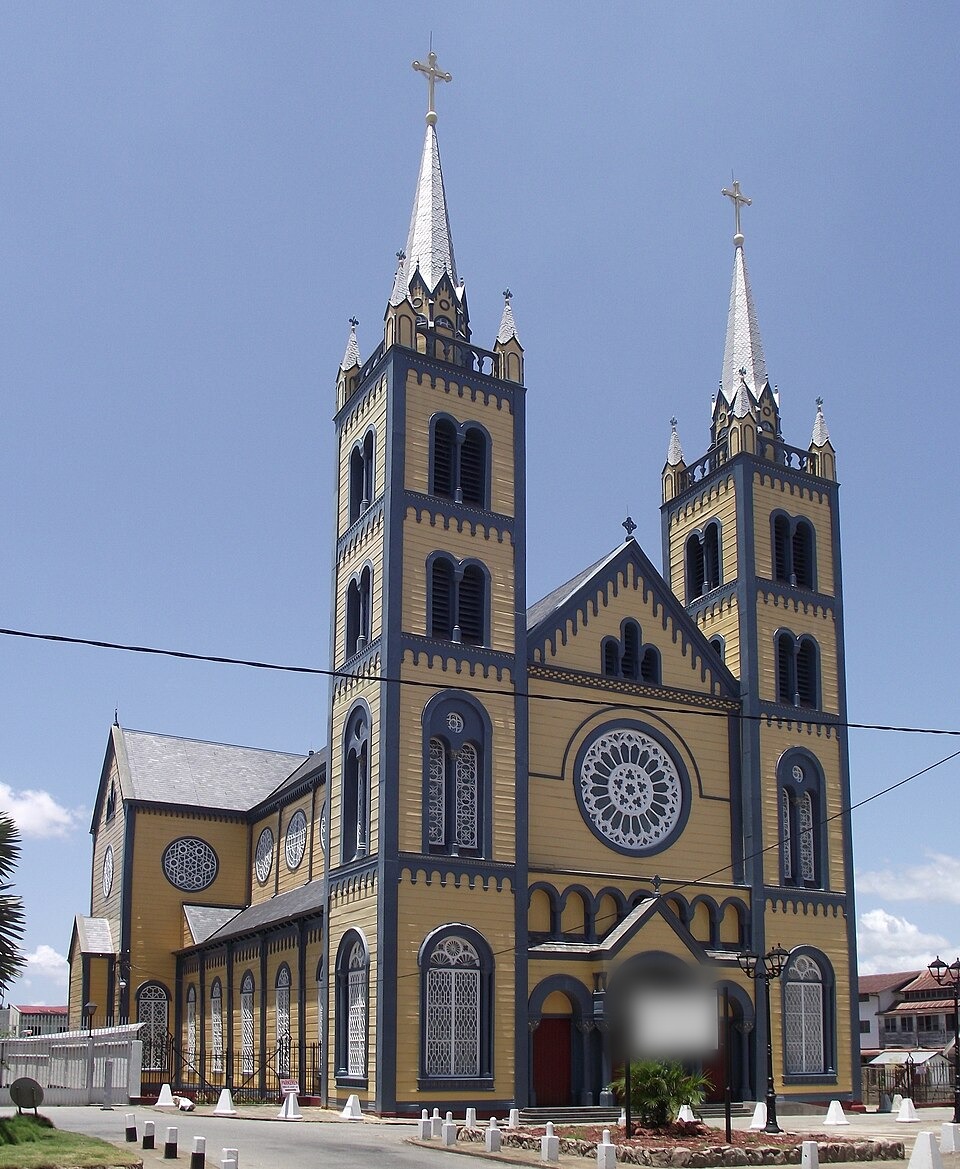
1885–1901
Built almost entirely of wood rather than stone, it carries pointed Gothic Revival windows and two matching towers rising side by side above the surrounding streets.
The cathedral replaced an earlier Catholic church adapted in 1826 from a Dutch Jewish theatre built in 1809, which had grown too small for the congregation. The diocese decided to build a new church in 1882; it was consecrated in 1885, though its two towers were not finished until 1901. A major restoration was completed in 2010, after which the building reopened, and in 2014 Pope Francis raised its status to that of a minor basilica.
- Its congregation had previously worshipped in a converted Dutch Jewish theatre originally built in 1809.
- The two towers were not completed until 1901, sixteen years after the building itself was consecrated.
- Pope Francis designated it a minor basilica in 2014.
Photo: Davidsoe (shifted by Rabanus Flavus) (CC BY-SA 4.0)
Fort Zeelandia
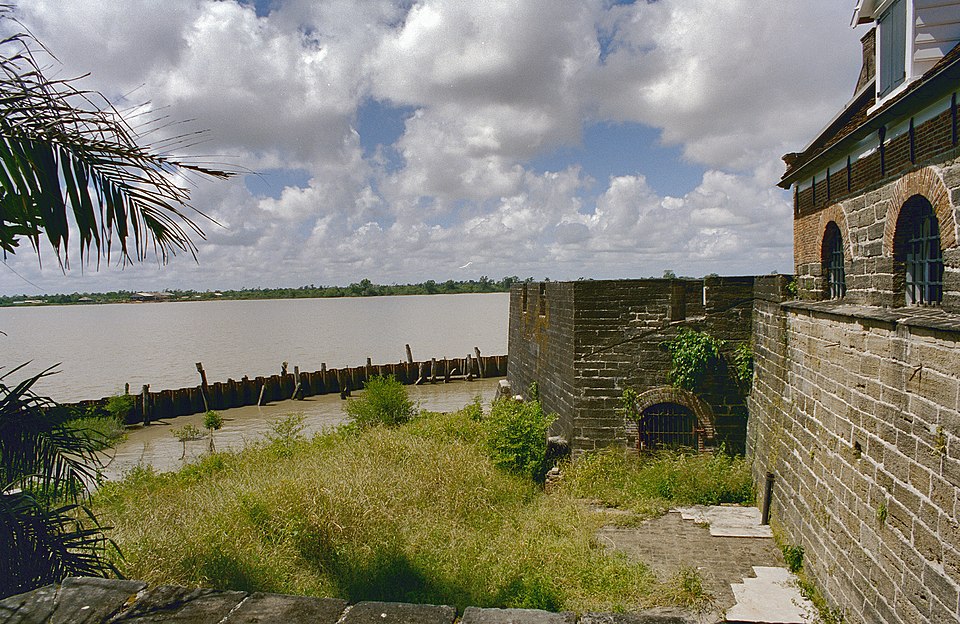
1667
What stands today is the fortification rebuilt and renamed by the Dutch after 1667, occupying the same ground as the original 1640 timber fort raised by French settlers and later reinforced under British rule.
The fort began in 1640 as a wooden stronghold built by French settlers on the site. During a period of British colonial control it was strengthened and known as Fort Willoughby. The Dutch captured it in 1667 and gave it the name it still carries today. Long used for defence and administration, the fort is now protected as a cultural heritage monument, its history tracing the succession of colonial powers that once held the settlement.
- The fort began in 1640 as a wooden stronghold built by French colonists.
- Under British rule it was known as Fort Willoughby, decades before it was renamed under Dutch control in 1667.
Photo: Loek Tangel (CC BY-SA 4.0)
Presidential Palace of Suriname
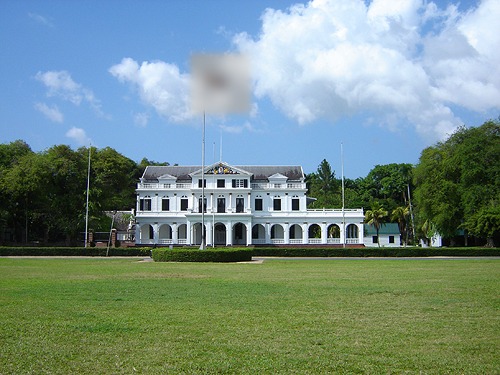
1730
Fronted in the Dutch Baroque style considered one of the best-preserved examples of Dutch colonial architecture in the country, it forms one side of a large public square and opens at the rear onto a garden of palm trees.
Facing Independence Square, alongside the National Assembly, the Congress building, the Court of Justice and the Ministry of Finance, the palace serves as the official residence of the head of state. Built in the Dutch Baroque style, it is considered one of the best-preserved examples of Dutch colonial architecture in the country. The Garden of Palms lies behind it, and the building forms part of the UNESCO-listed historic inner city.
Photo: Ian Mackenzie from Ottawa, Canada (CC BY 2.0)
Neveh Shalom Synagogue
A Reform Jewish congregation and synagogue in Paramaribo. The congregation was originally established as an Orthodox community that worshipped in the Ashkenazi rite.
Mosque Keizerstraat
A mosque on the Keizerstraat, officially the Ahmadiyya Anjuman Isha'at Islam Mosque Keizerstraat, and headquarters of the Lahore Ahmadiyya Movement. It stands directly next to the Neveh Shalom Synagogue.
Arya Diwaker
The biggest Hindu mandir in Suriname, built by the Arya Diwaker association in the city centre fields of Paramaribo. It draws many visitors, both Hindu and non-Hindu, from Suriname and abroad.
Santa Rosa Church
A Roman Catholic church whose current building dates from 1911, making it the second-largest church in Paramaribo. It stands in the city centre and forms part of the UNESCO World Heritage Site.
Grote Stadskerk
A church of the Moravian Church, also known by its Sranan Tongo name Mamakerki, on Steenbakkerijstraat in the historic centre. It is the first and largest church of the Moravian congregation in Suriname.
Kwakoe
A statue in Paramaribo commemorating the abolition of slavery. It was made by the sculptor Jozef Klas.
Fort Nieuw-Amsterdam
A fort built between 1734 and 1747 at the confluence of the Suriname and Commewijne rivers. It is open to the public as an open-air museum.
Central Market
A two-floor marketplace on Waterkant, beside the Suriname River in the centre of Paramaribo. The ground floor sells fruit, vegetables, meat, and fish, while the top floor offers clothing, cigarettes, and other retail goods, open Monday to Saturday.
Garden of Palms
A palm garden behind the Presidential Palace, opened to the public in 1685 by Governor Cornelis van Aerssen van Sommelsdijck. Home to tropical birds and capuchin monkeys, it was cited when Paramaribo's historic centre joined the UNESCO World Heritage List in 2002.
Thalia Theatre
A theatre in Paramaribo that opened on 20 January 1840.
Court Charity
A meeting house of the Foresters Friendly Society, on Burenstraat in the centre of Paramaribo. The building is a declared monument.
Waag
A former weigh house on the Waterkant in the historic centre of Paramaribo. It is a declared monument and part of the UNESCO World Heritage Site.
Memre Boekoe barracks
A military installation built during World War II as barracks for American soldiers stationed in Suriname, originally called Kampement Gemenelandsweg. Renamed Prins Bernhard kampement in 1950 and then Memre Boekoe barracks after independence in 1975, it now serves as headquarters of the Surinamese Land Forces.
Tzedek ve-Shalom
A historic former synagogue, known as Tzedek ve-Shalom, or 'Peace and Justice.' It was built in 1736 for a Sephardic Jewish congregation in Paramaribo.
Elisabeth Samson House
A residential building on Wagenwegstraat once owned by Elisabeth Samson, the first Afro-Surinamese millionaire. Bought by the Elisabeth Samson Foundation on 19 January 2021 after years of neglect, it is being turned into a museum.
Centrumkerk
A church of the Dutch Reformed Church of Suriname on Kerkplein, the state church until Suriname's independence in 1975. It is octagonal and has no church tower, and is a monument on the UNESCO World Heritage list.
Martin Luther Church
A church of the Evangelical Lutheran Church in Suriname, on Waterkant in the historic centre. The first building burned down in 1832, and the current church dates from 1834.
Buiten-Sociëteit Het Park
A park and former social club on Onafhankelijkheidsplein. After the National Assembly's building burned down on 1 August 1996, the Assembly moved into the former clubhouse there.
Congress Hall
A convention and exhibition centre on Onafhankelijkheidsplein, completed in 1999.
History
Paramaribo grew up on the bank of the Suriname River as a Dutch colonial port, and its oldest surviving structure begins the story: a fort raised by French settlers in 1640, reinforced under British rule as Fort Willoughby, then captured and renamed Fort Zeelandia when the Dutch took the colony in 1667. Government building followed around a new central square, where the Presidential Palace displays the Dutch Baroque style favoured for official architecture. As the Catholic population outgrew its converted theatre chapel, the diocese commissioned a new wooden cathedral in 1882, consecrated in 1885 and completed with its towers in 1901. That mix of fort, palace and church, largely intact, underpins the historic inner city's UNESCO World Heritage listing since 2002.