Landmarks in Dar es Salaam
A sultan's coral-stone fort and German-built churches line one working harbourfront.
Dar es Salaam's landmarks sit close together along the old harbourfront, within a few streets of Sokoine Drive, tracing the city's shift from a nineteenth-century sultan's port to the administrative centre of German East Africa. The oldest structure, the Old Boma, is built of coral stone in a Swahili-coast idiom, with a carved wooden door. Within three decades the same waterfront gained two European-built churches: a Lutheran church roofed in red tile and finished in Bavarian style, and a Gothic Revival Catholic cathedral of stone with stained-glass windows. All three face the water, a legacy of a port town whose earliest substantial buildings were raised to be seen from the harbour they served.
Azania Front Lutheran Church
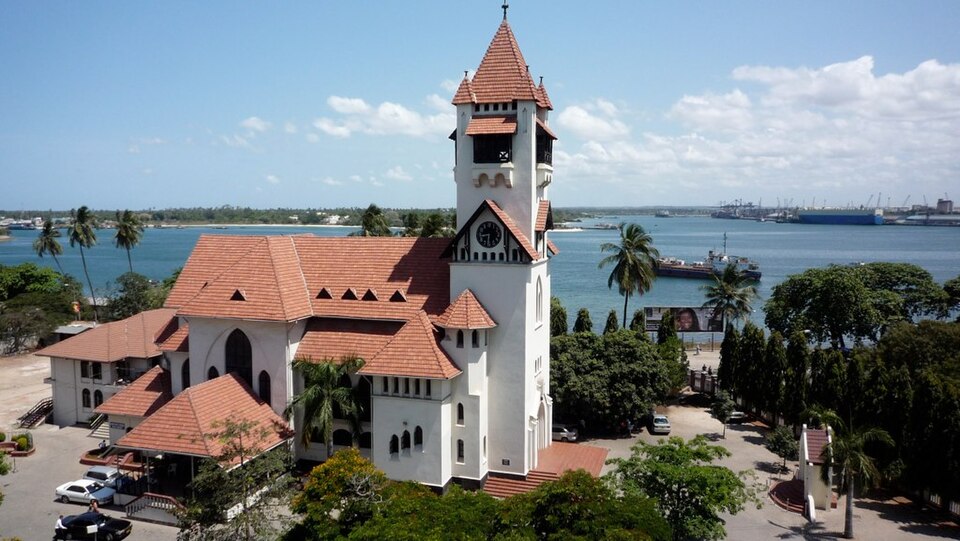
1898
It shows a steeply pitched, red-tiled roof with tiled canopies over each window and bright white walls, the Bavarian-inflected style German builders used in the eighteen-nineties; it stands at the edge of the city centre, facing the harbour.
Built in 1898 by German missionaries, this Lutheran church now serves as the cathedral of the local diocese and is one of the city's best-known landmarks. It stands in the city centre close to the ocean, facing the harbour. Constructed in the Bavarian style current among German builders of the period, it has a red-tiled roof, tiled canopies over the windows and bright white walls. More than a century after it was built it remains in active use as a place of worship and a fixture of the waterfront.
Photo: RIGHT TO HEALTH (CC BY 2.0)
St. Joseph's Cathedral
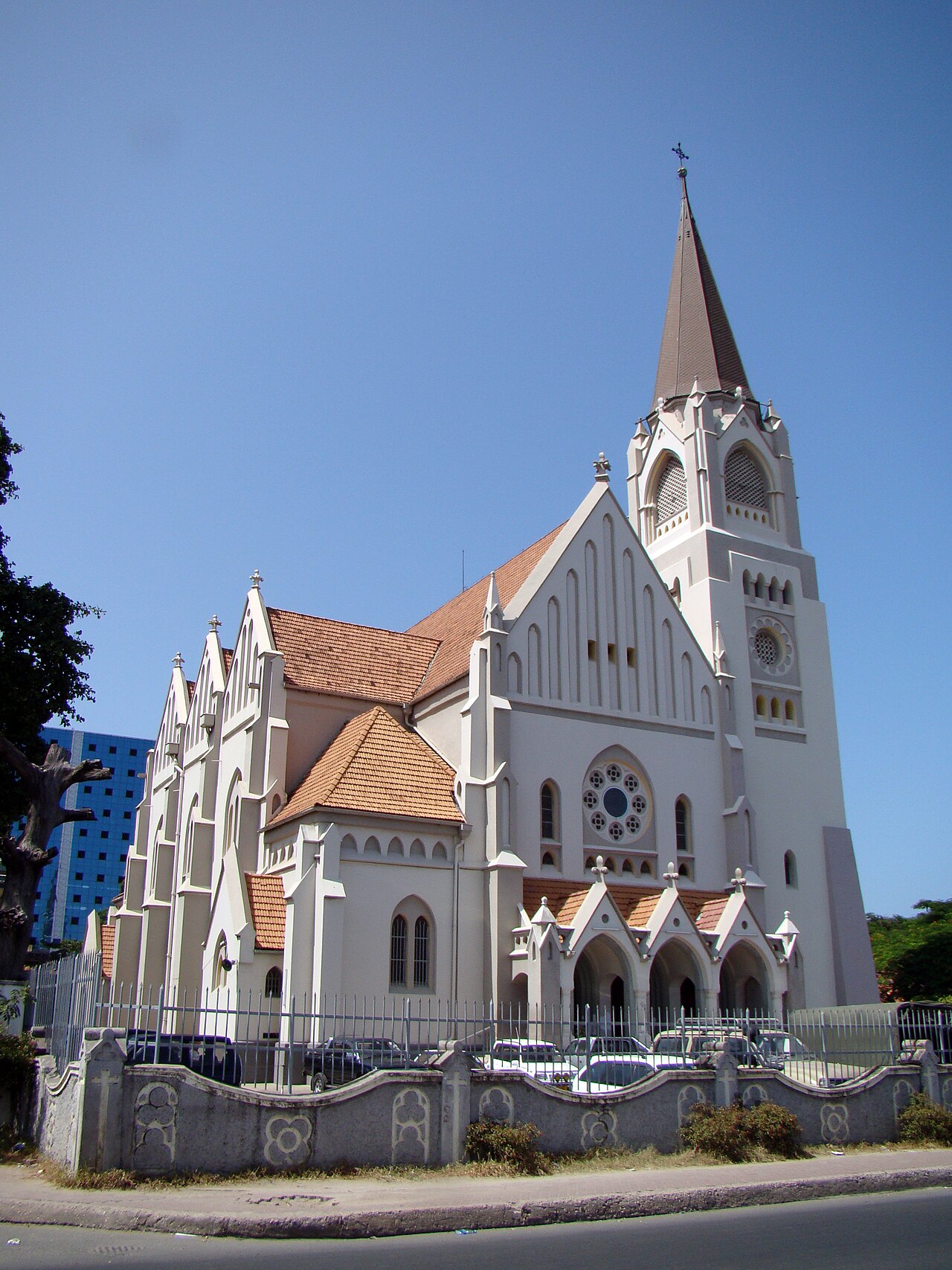
1897–1902
Built of stone in the Gothic Revival style, it stands directly on the harbourfront road, its pointed-arch windows including a set of stained glass behind the altar, close to a former mission house.
This Roman Catholic cathedral was built by German colonists between 1897 and 1902 and consecrated in 1905. Standing on Sokoine Drive facing the harbour, close to the former White Fathers' House, it is a Gothic church of stone and serves as the seat of the Dar es Salaam archdiocese. Among its most notable features are the stained-glass windows set behind the altar. It has remained a working cathedral for well over a century, one of the oldest church buildings on this stretch of coast.
- Although built by 1902, it was not consecrated as a Catholic church until 1905.
Photo: aj82, shifted by Rabanus Flavus (CC BY-SA 2.0)
Old Boma
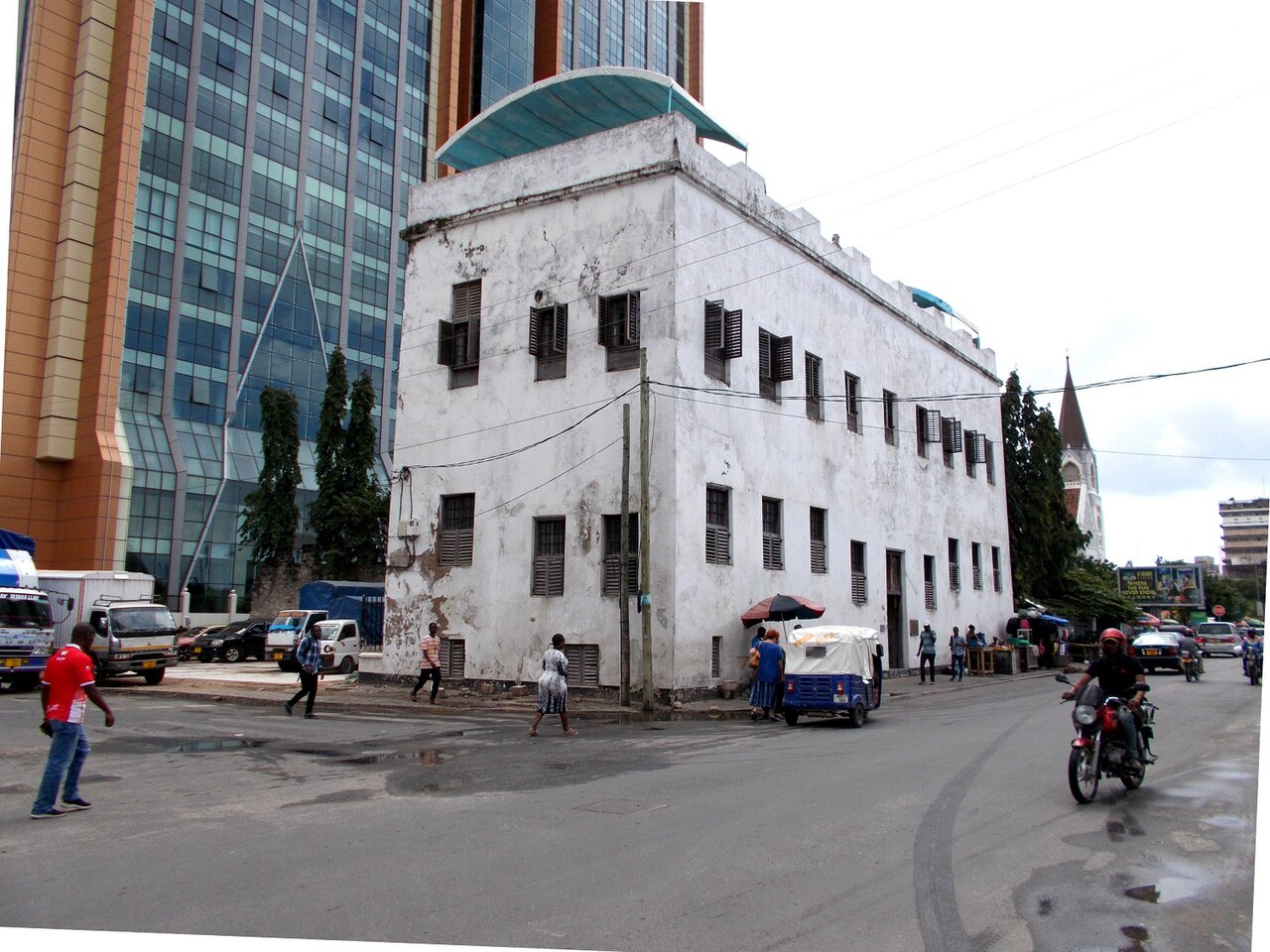
1866–67
Its walls are built of coral stone, with a carved wooden door in Zanzibari style set into the entrance; it sits at the corner of Morogoro Road and Sokoine Drive, facing the harbour beside the City Hall.
One of the oldest buildings in Dar es Salaam, the Old Boma was built in 1866–67 for Majid bin Said, sultan of Zanzibar, near a palace of his that has since been demolished. He also commissioned other nearby structures, including the White Fathers' House, and German colonial administrators later restored and enlarged the building. It stands at the junction of Morogoro Road and Sokoine Drive, facing the harbour beside the City Hall, and now houses a centre for architectural heritage, with a permanent exhibition on the city's building history.
- The sultan's own palace, once next door, has since been demolished, leaving the Boma standing alone.
- It now houses a heritage centre with a permanent exhibition on the city's own architectural evolution.
Photo: Kipala (CC BY-SA 4.0)
Askari Monument
A memorial to the askari soldiers who fought for Britain against German forces in East Africa during World War I, unveiled in 1927 at a central downtown roundabout. Its bronze figure, 'The Askari', was cast in the United Kingdom by sculptor James Alexander Stevenson.
National Museum of Tanzania
A consortium of Tanzanian museums preserving objects from the country's history and nature, grown from the National Museum of Dar es Salaam, founded in 1934 by governor Harold MacMichael. Six more museums later joined, including the Village Museum and the Arusha Declaration Museum in Arusha.
Tanzanite Bridge
A hybrid cable-stayed-girder bridge crossing the Msimbazi Delta, formerly known as the New Selander Bridge and built to relieve congestion on the original Selander Bridge. Construction began in 2018 under GS Engineering & Construction, and it officially opened on 1 February 2022.
Ikulu
The official residence of the president of Tanzania, founded by Majid bin Said of Zanzibar in 1865, blending African and Arabian architecture with wide verandahs. White-walled with African terrazzo floors, it stands on more than 33 acres overlooking the Indian Ocean and the city.
Mwalimu Nyerere Memorial House
A museum dedicated to Tanzania's founding father Julius Nyerere, located on Makumbusho street in the Mzimuni ward of Kinondoni District.
Nyumba ya Sanaa
A cultural centre, art workshop and gallery also known as the Mwalimu Nyerere Cultural Centre, established in 1972 to promote local modern art and craftsmanship. It was replaced in 2010 by a tower building with residential and commercial facilities.
Mohammed VI Mosque
A Friday mosque whose complex also serves as the headquarters of the National Muslim Council of Tanzania.
Selander Bridge
A bridge connecting the north west of the city centre to the south eastern Oyster Bay neighbourhood.
Kinondoni Cemetery
A historic civil cemetery in the Hananasif ward of Kinondoni District, holding the graves of ten Commonwealth soldiers from the Second World War. It also includes four non-war graves and one Belgian war grave.
Tanzania Buddhist Temple and Meditation Center
A Buddhist temple in Dar es Salaam.
History
Dar es Salaam was founded in the mid-nineteenth century, and its earliest surviving landmark, the Old Boma, was built in 1866–67 for Majid bin Said, sultan of Zanzibar, near a palace of his that no longer stands. After German East Africa made the town its main administrative and commercial centre, missionaries and colonial officials added stone churches: a Lutheran church in 1898 and a Catholic cathedral raised between 1897 and 1902. These buildings, and others added under German and then British rule, kept Dar es Salaam as the territory's principal city, a role it held for Tanganyika and independent Tanzania even after the capital officially moved to Dodoma in 1974, a transfer completed in 1996.